

Crocevia di rotte e di fedi la città di George Town, capoluogo dello stato federale malese del Penang, è un luogo di grande fascino.
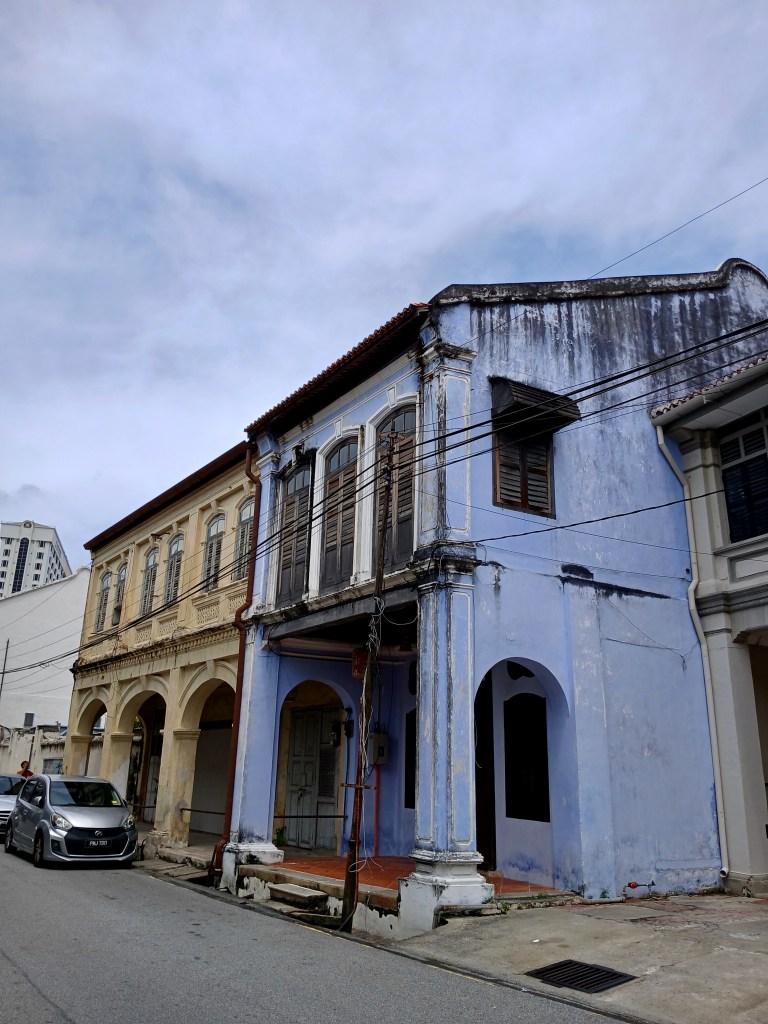
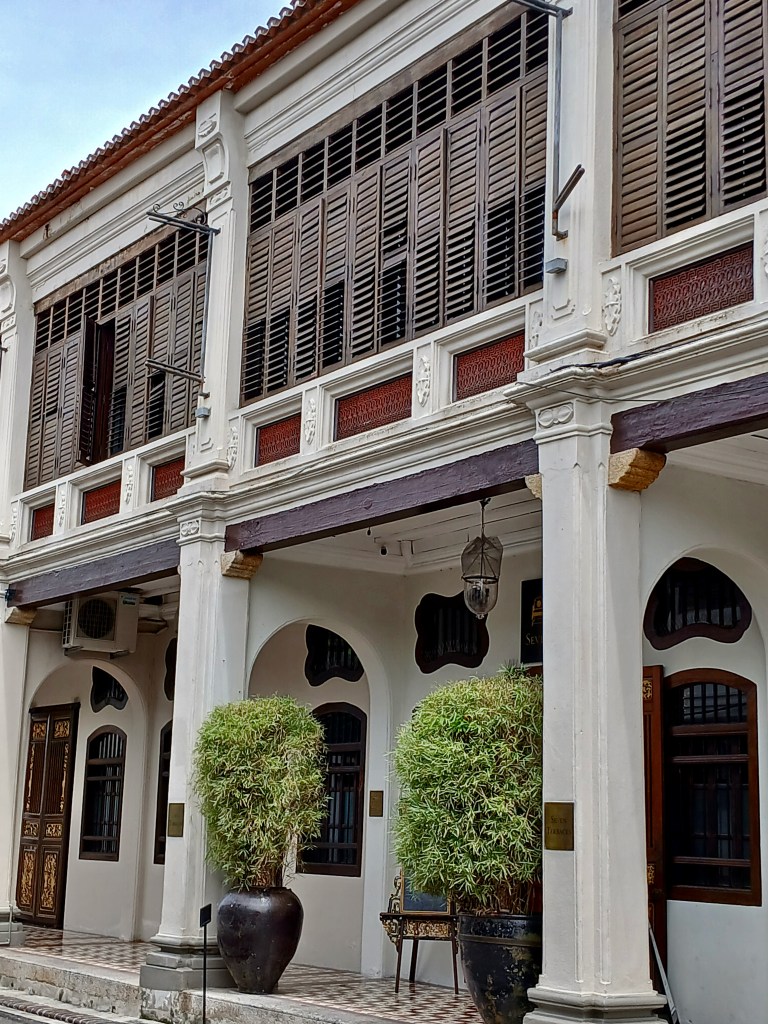
Camminando nelle strade del suo centro storico (Patrimonio dell’Umanità UNESCO) incontri edifici curiosi in cui stile coloniale e forti influenze cinesi si fondono creando un mix particolare.
Sentivo da tempo una forte attrazione per questo luogo che letture e racconti mi avevano dipinto come un angolo di mondo in cui la auspicabile convivenza tra etnie e fedi diverse è stata resa possibile.
Questa “armonia”, che si rende evidente nella presenza di alcune strade dove convivono fianco a fianco templi di fedi diverse, non è una prerogativa della sola Penang essendo condivisa da molte città della Malesia da Singapore link (ora indipendente ma storicamente e culturalmente malese) a Malacca, da Ipoh a Kuching, oltre che naturalmente dalla capitale Kuala Lumpur a cui ho dedicato un post che ribadiva questa peculiarità (Le tante anime di Kuala Lumpur/Kuala Lumpur’s diverse souls) link.
Pur essendo la Malesia uno stato formalmente mussulmano la presenza di una forte e dinamica comunità cinese e di una numerosa comunità di indiani Tamil ha permesso di creare un equilibrio difficilmente riscontrabile altrove anche se non mancano e non sono mancati episodi di contrasto, discriminazione, scontro. Del resto siamo pur sempre sul pianeta Terra e non in una fortunata terra ideale generata da qualche illuminato romanziere.
A crossroads of routes and faiths, the city of George Town, capital of the Malaysian federal state of Penang, is a place of great charm.
Walking through the streets of its historic centre (a UNESCO World Heritage Site), you come across intriguing buildings where colonial style and strong Chinese influences blend to create a unique mix.
I had long felt a strong attraction to this place, which books and stories had painted for me as a corner of the world where the desirable coexistence of different ethnic groups and faiths had been made possible.
This ‘harmony’, evident in certain streets where temples of different faiths stand side by side, is not unique to Penang alone, but is shared by many cities in Malaysia – from Singapore link (now independent but historically and culturally Malay) to Malacca, from Ipoh to Kuching, as well as, of course, the capital Kuala Lumpur, to which I dedicated a post that highlighted this distinctive feature (The Many Souls of Kuala Lumpur/Kuala Lumpur’s diverse souls) link.
Although Malaysia is a formally Muslim state, the presence of a strong and dynamic Chinese community and a large Tamil Indian community has allowed for the creation of a balance rarely found elsewhere, even if there have been, and continue to be, episodes of conflict, discrimination and clashes. After all, we are still on planet Earth and not in some idealised utopia conjured up by some enlightened novelist.
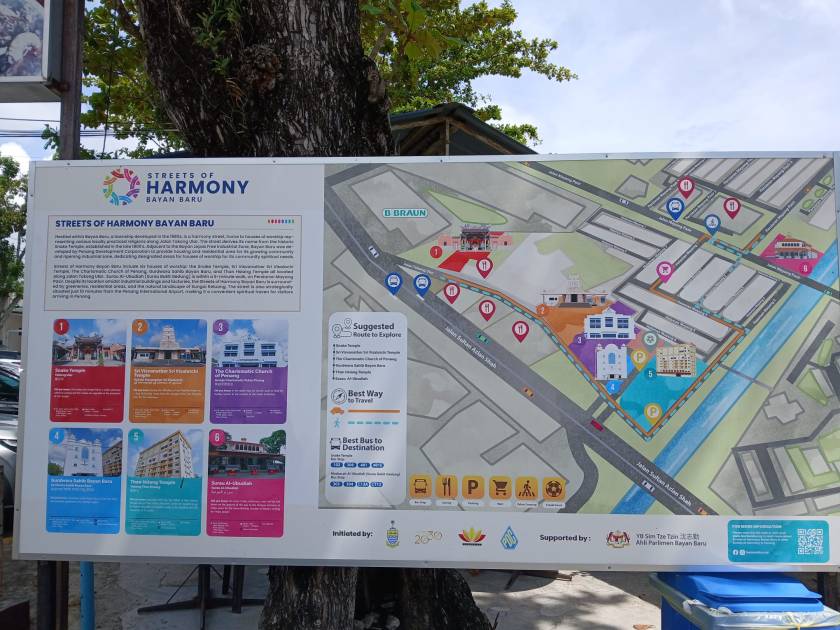
Il concetto di Armonia, bellissimo, adattabile ma potenzialmente ambiguo viene comunque concretamente coltivato a Penang anche attraverso associazioni e progetti ufficiali che lo rendono un po’ meno astratto attraverso incontri, esperienze condivise, scambi, eventi culturali.
Un luogo utopico dunque, un fortunato e irripetibile esempio? Ecco alcune mie impressioni di viaggio.
The concept of harmony beautiful, adaptable yet potentially ambiguous is nevertheless actively fostered in Penang through official associations and projects that make it feel a little less abstract, thanks to meetings, shared experiences, exchanges and cultural events.
A utopian place, then a fortunate and unique example? Here are some of my impressions from the trip.
Luogo Meticcio – A melting pot
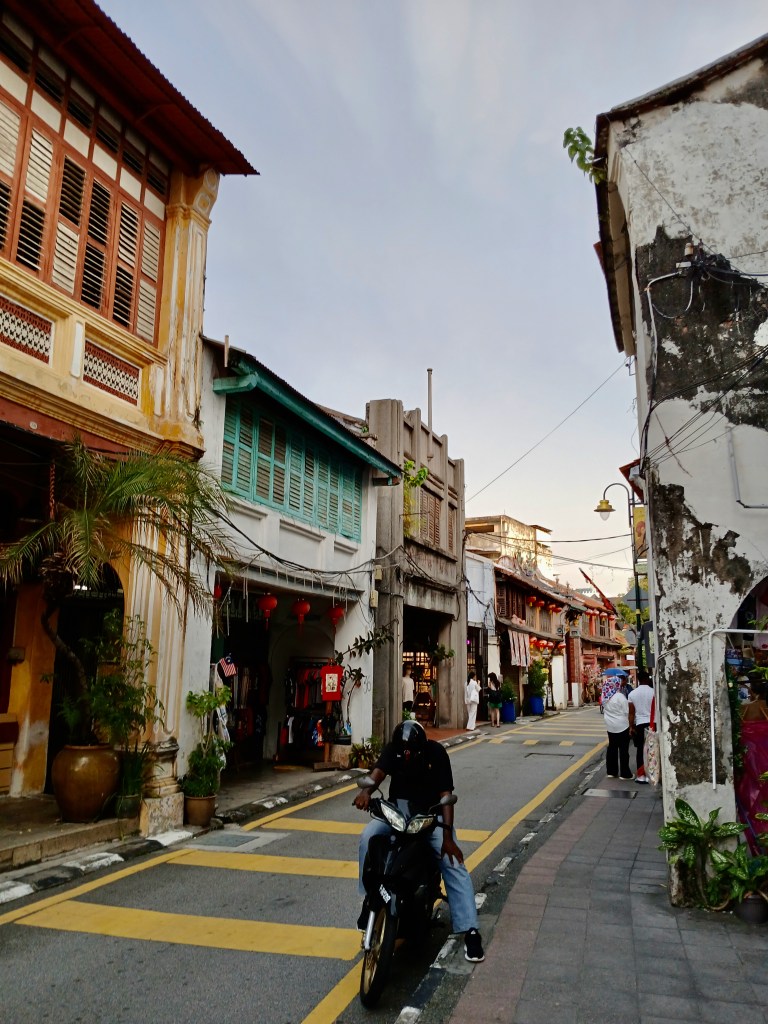
George Town è un luogo meticcio, in cui si intrecciano lingue, stili, feste, cucine (è considerato un vero paradiso anche per i foodies) espressi dalle sue componenti etniche: l’anima malese mussulmana; quella cinese con la sua religione popolare che fonde buddismo, taoismo e confucianesimo; quella indiana di ispirazione Tamil; quella europea frutto della secolare dominazione britannica.
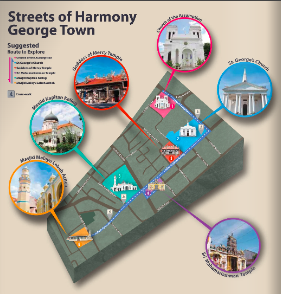
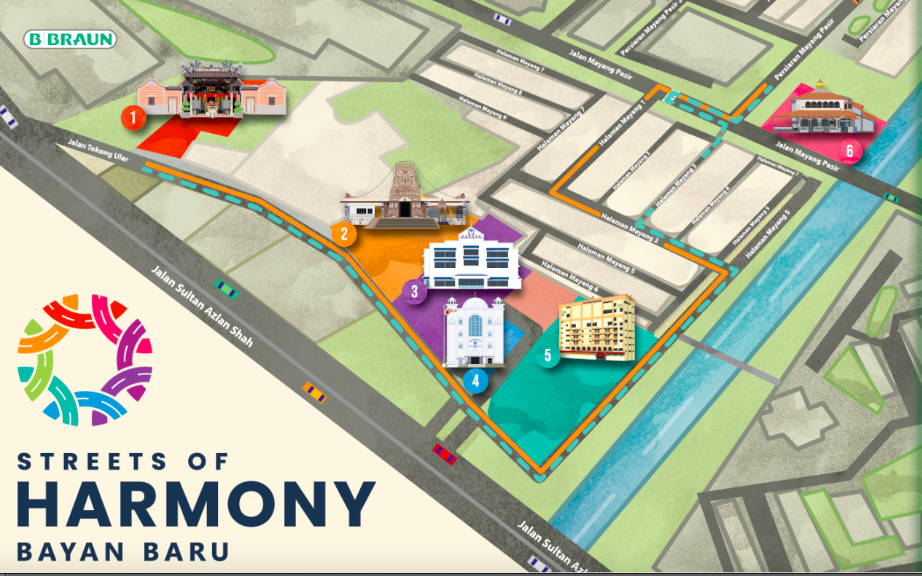
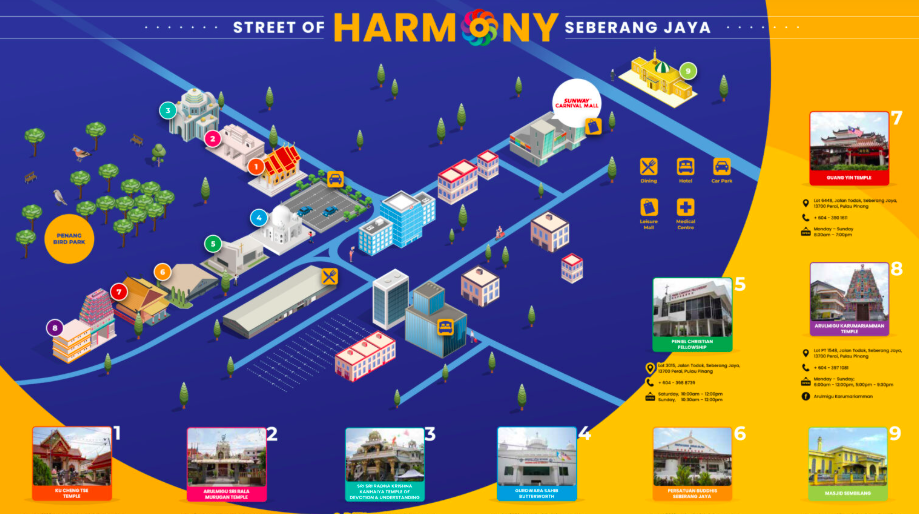
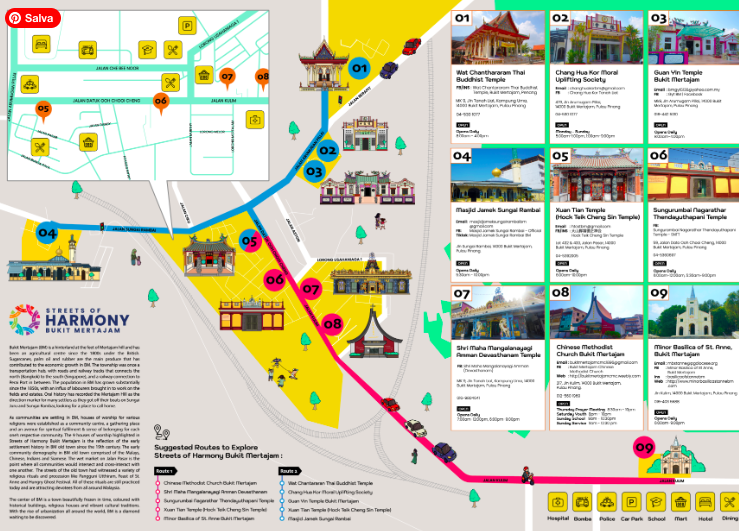
Questa percezione di fusione culturale, estetica e spirituale si manifesta in alcune Strade dell’Armonia in cui chiese, moschee, templi cinesi o indiani, sia induisti che sikh si susseguono, permettendo a chi le visita di compiere una vera esperienza multi religiosa in un centinaio di metri.
George Town is a melting pot where languages, styles, festivals and cuisines (it is considered a true paradise for foodies too) intertwine, reflecting its ethnic makeup: the Malay Muslim community; the Chinese community with its folk religion blending Buddhism, Taoism and Confucianism; the Tamil-inspired Indian community; and the European community, a legacy of centuries of British rule.
This sense of cultural, aesthetic and spiritual fusion is evident in certain ‘Streets of Harmony’, where churches, mosques, Chinese and Indian temples both Hindu and Sikh stand side by side, allowing visitors to experience a truly multi-faith journey within a hundred metres.
Templi Ancestrali – Ancestral shrines
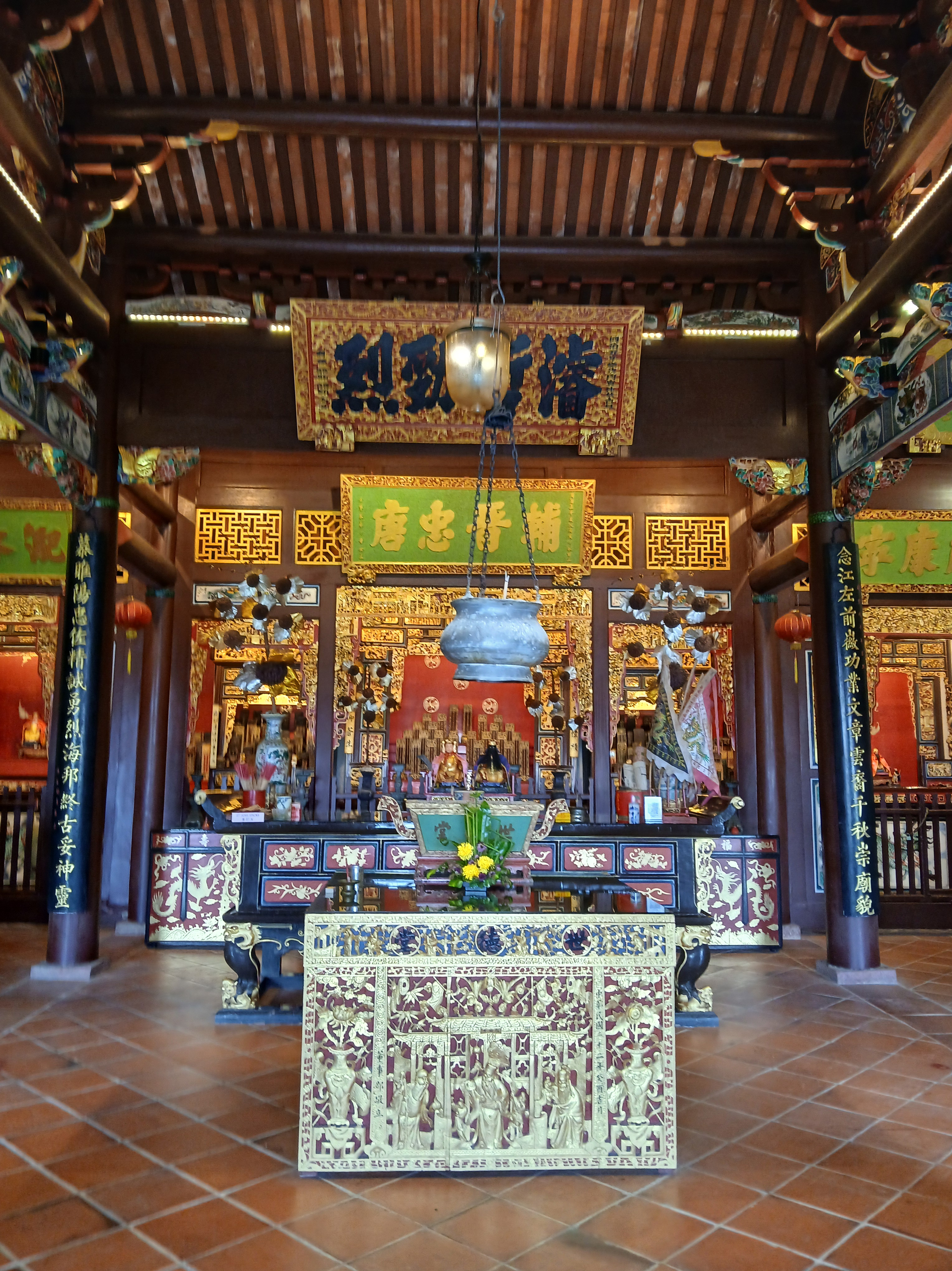
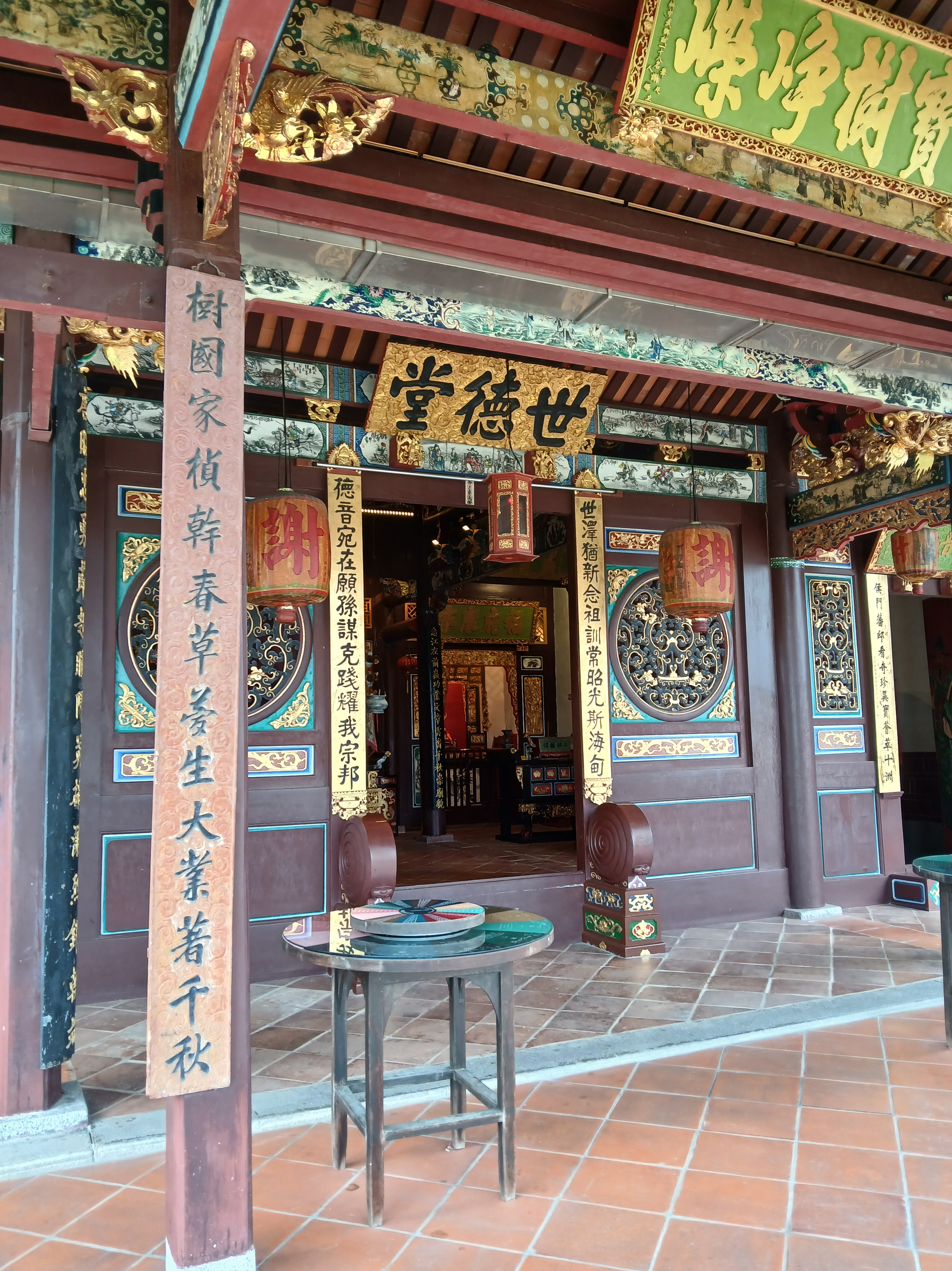
Quando lasciavano le loro case nelle provincie meridionali della Cina, specialmente il Fujian e il Guangdong, gli emigranti portavano con sé un forte spirito di appartenenza che fortificava e li aiutava a inserirsi nelle nuove realtà che li accoglievano. Al centro di questa vita sociale c’erano case e templi in cui si ritrovavano i membri del clan, persone che condividevano cognome o nascita in un’area geografica, e in cui si coltivava la memoria degli antenati.
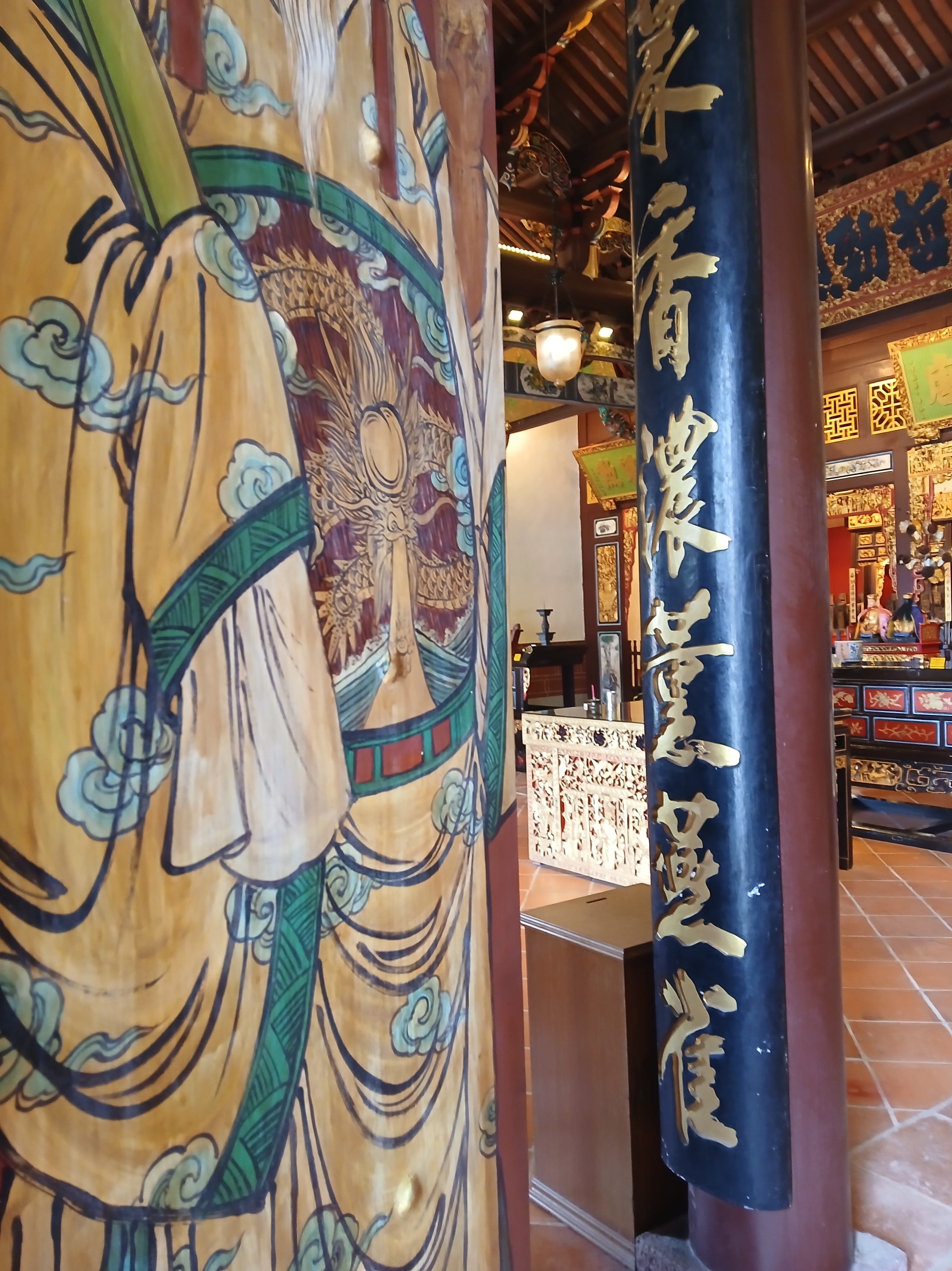
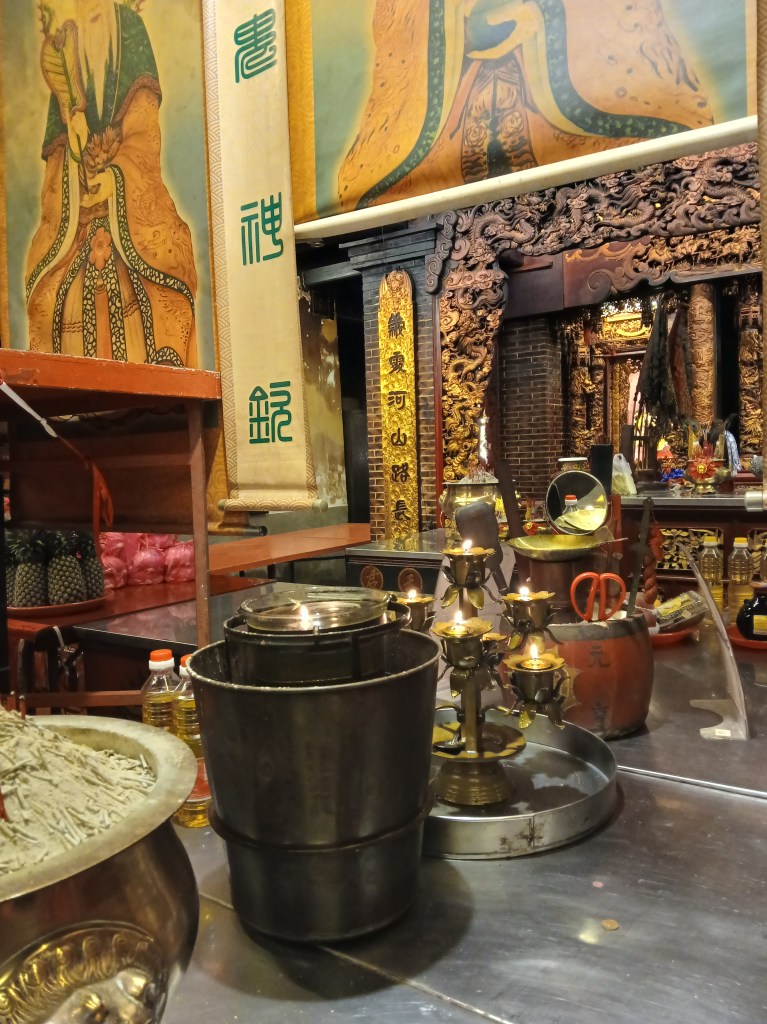
Visitare le case dei clan, con le loro fantastiche decorazioni, sia pittoriche che, soprattutto scultoree, gli spazi spiazzanti, fatti come sono di un susseguirsi di stanze, di altari con divinità misteriose (sempre assai venerate), di immagini a ricordo dei defunti, di spazi conviviali, è una delle più belle e peculiari esperienze che si possono fare a George Town.
When they left their homes in the southern provinces of China, particularly Fujian and Guangdong, the emigrants brought with them a strong sense of belonging that sustained them and helped them settle into the new communities that welcomed them. At the heart of this social life were clan houses and temples where members of the clan people who shared a surname or were born in the same geographical area would gather, and where the memory of their ancestors was cherished.
Visiting the clan houses, with their fantastic decorations both pictorial and, above all, sculptural and their bewildering spaces, consisting as they do of a succession of rooms, altars with mysterious deities (always deeply revered), images commemorating the deceased, and communal areas, is one of the most beautiful and unique experiences one can have in George Town.
Sfidando i serpenti – Challenging the snakes
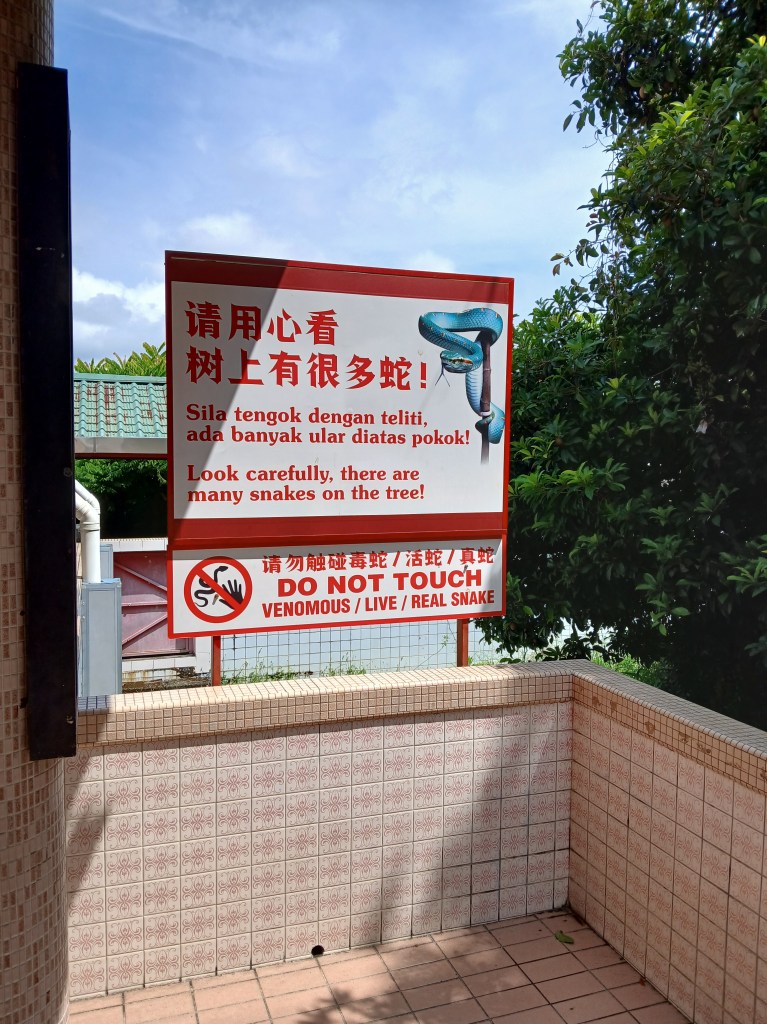
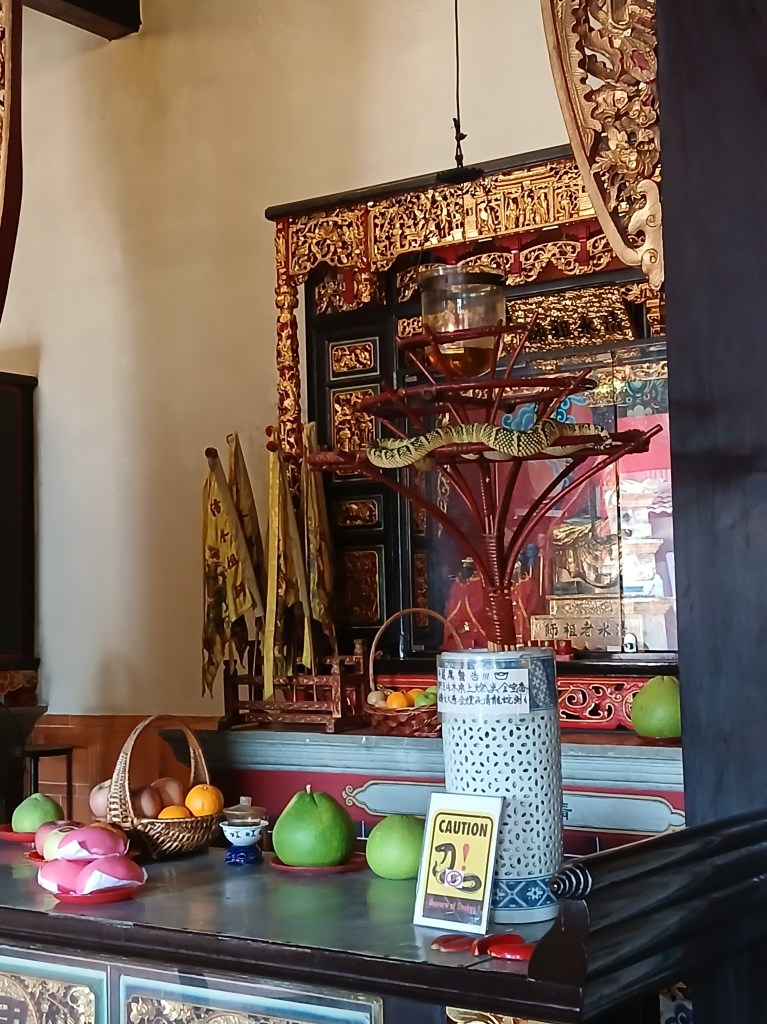
A George Town c’è un luogo che mi attrae e intimorisce al tempo stesso. Mi armo di coraggio e decido di visitarlo. Il famoso ma in realtà piuttosto deludente Tempio dei Serpenti, come viene comunemente conosciuto lo Shé Miào è una delle mete che ogni viaggiatore include nelle sue visite a Georgetown. Si trova in realtà in posizione defilata, vicino all’aeroporto, e si può raggiungere con un taxi o un Grab. Scopro così che i serpenti ci sono, certamente, ma sono talmente inerti e inebetiti da sembrare finti. Anche chi, come me, nutre per i rettili un vero quanto immotivato terrore, si può muovere all’interno della piccola sala di preghiera e nel retrostante giardino, dove i serpenti dormicchiano pacifici sui rami, senza avvertire mai alcun pericolo. Pare infatti che tutti i serpenti accolti nel complesso siano stati privati dal veleno, cosa che nessuno credo desideri verificare!
In George Town, there is a place that both draws me in and fills me with trepidation. I pluck up my courage and decide to visit it. The famous but actually rather disappointing Temple of the Snakes, as Shé Miào is commonly known, is one of the destinations every traveller includes in their visit to Georgetown. It is actually tucked away, near the airport, and can be reached by taxi or Grab. I discover that the snakes are certainly there, but they are so inert and dazed that they look fake. Even those who, like me, harbour a genuine yet unfounded fear of reptiles can move about freely within the small prayer hall and the garden behind it, where the snakes doze peacefully on the branches, without ever sensing any danger. It seems, in fact, that all the snakes housed in the complex have had their venom removed – something I doubt anyone would wish to verify!
Splendori cinese – Chinese magnificence
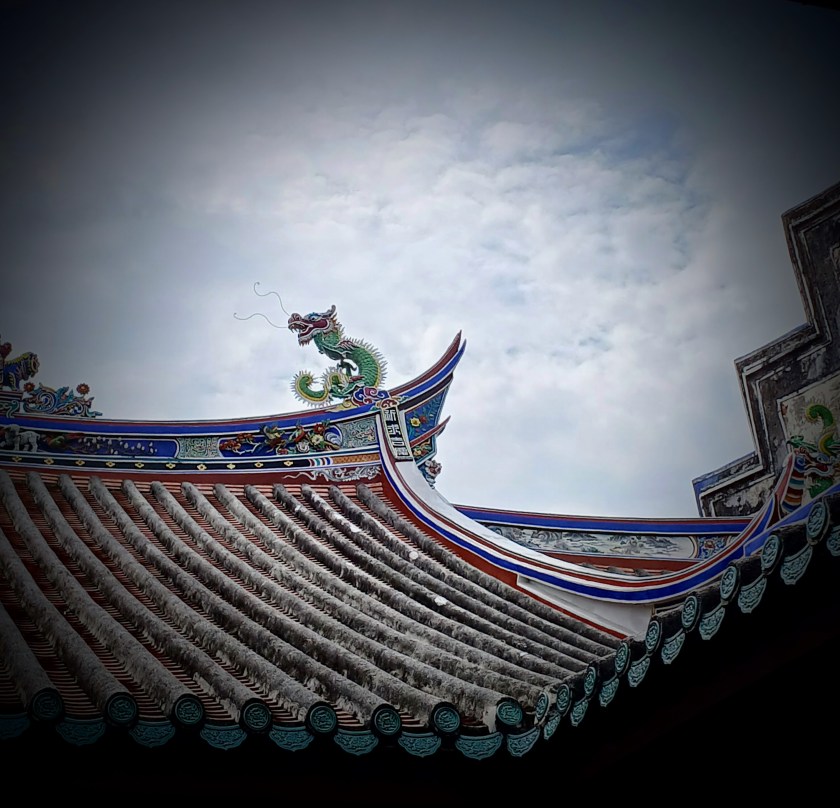
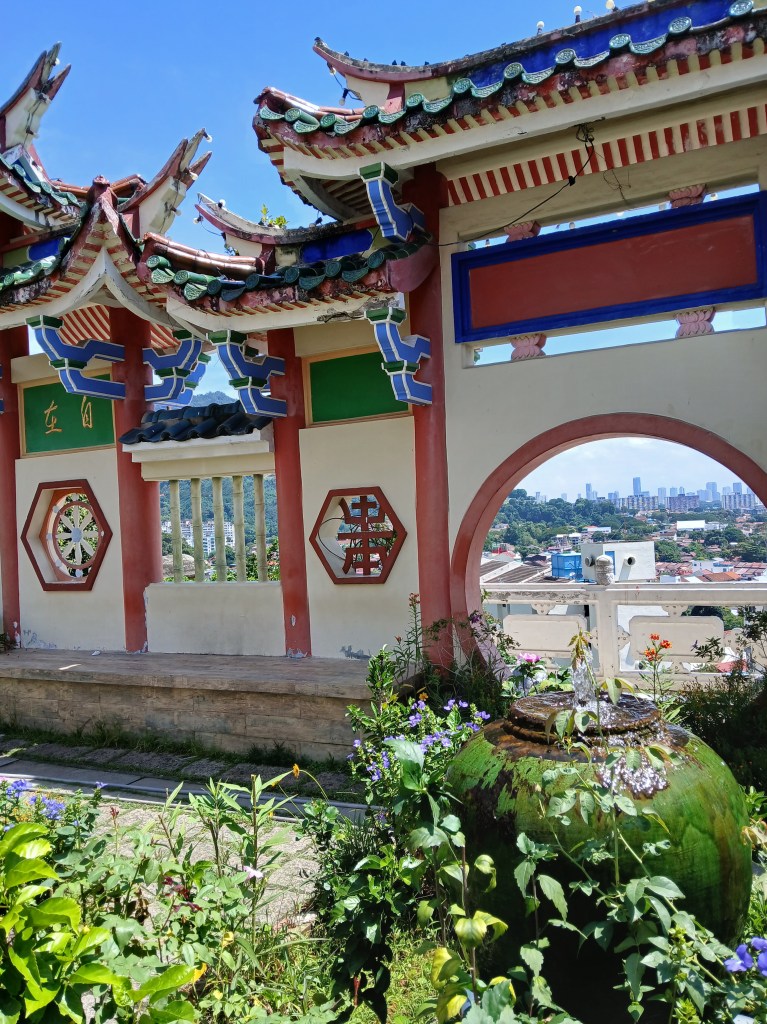
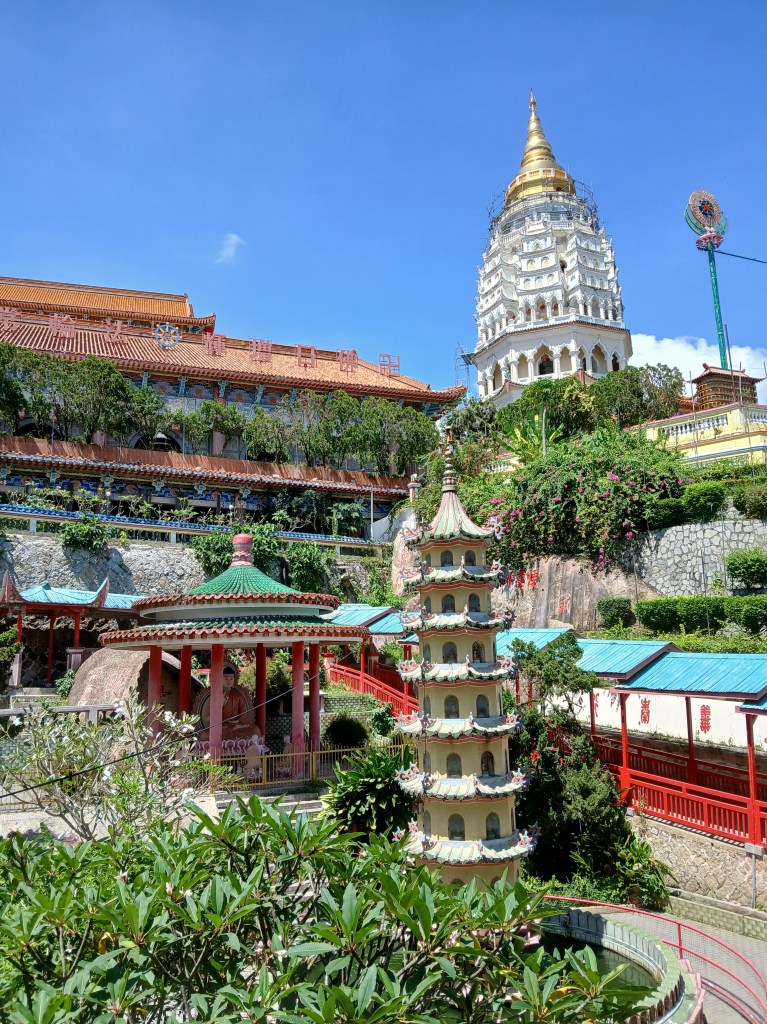
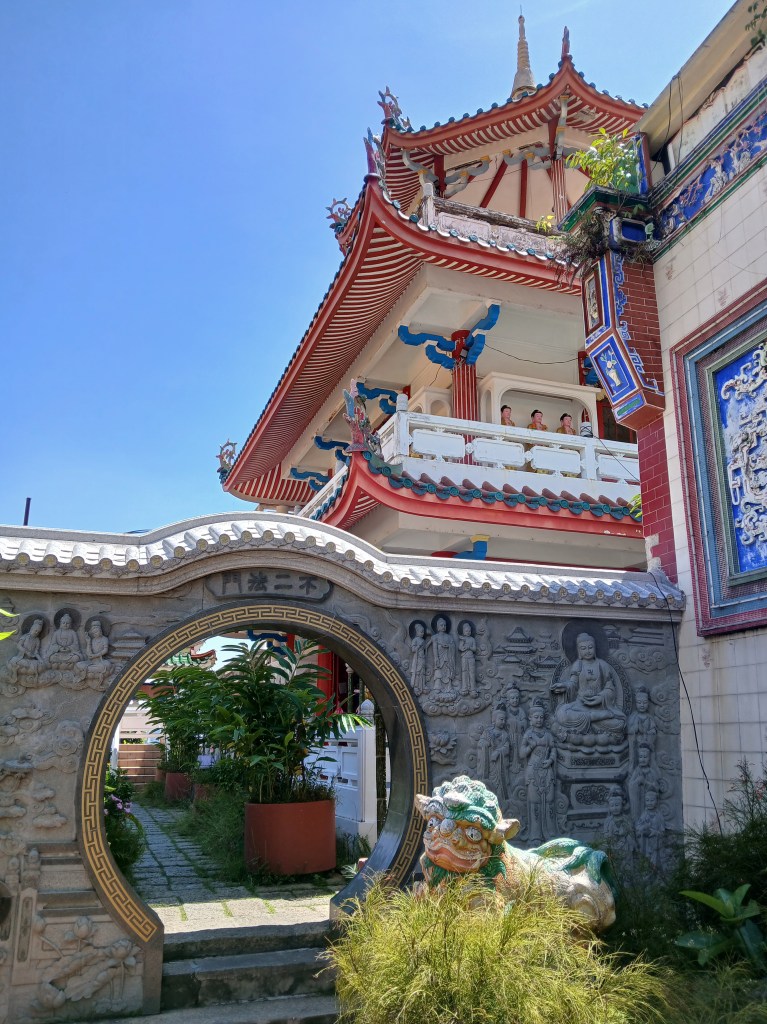
Alto su una collina che si raggiunge con una piccola camminata, Kek Lok Si è un grande e pittoresco tempio buddista, il più grande della Regione, fatto di padiglioni, scale, passaggi, gallerie e giardini fioriti popolati da migliaia di sculture, teste di drago, ghirighori floreali ed è un altro dei “must to see” a Penang.
Lo confesso: mi piacciono troppo questi eccessi, le colorazioni violente, le riproduzioni spesso ingenue delle divinità che fanno inorridire i puristi occidentali che solitamente li liquidano con la superficiale affermazione: “Sembrano Disneyland!
In realtà sono un’espressione rispettabile e interessante di una cultura religiosa e visiva diversa, forse un po’ kitch ma chi ha stabilito che le espressioni della fede debbano essere per forza raffinate? E quale sarebbe il criterio universale di tale raffinatezza? Come insegna la grande statua della compassionevole Guanyn, raggiungibile anche in funicolare, che domina il complesso, ognuno ha il proprio modo di approcciarsi al divino.
Perched on a hill accessible via a short walk, Kek Lok Si is a large and picturesque Buddhist temple the largest in the region comprising pavilions, staircases, passageways, galleries and flower-filled gardens dotted with thousands of sculptures, dragon heads and floral motifs; it is another of Penang’s ‘must-see’ attractions.
I’ll admit it: I’m absolutely smitten with this excess, the garish colours, the often naive depictions of deities that horrify Western purists, who usually dismiss them with the superficial remark: ‘They look like Disneyland!
In reality, they are a respectable and interesting expression of a different religious and visual culture; perhaps a bit kitsch, but who decided that expressions of faith must necessarily be refined? And what would be the universal criterion for such refinement? As the great statue of the compassionate Guanyin which can also be reached by funicular and dominates the complex teaches us, everyone has their own way of approaching the divine.
C’è sempre una festa! – It’s always celebration time!
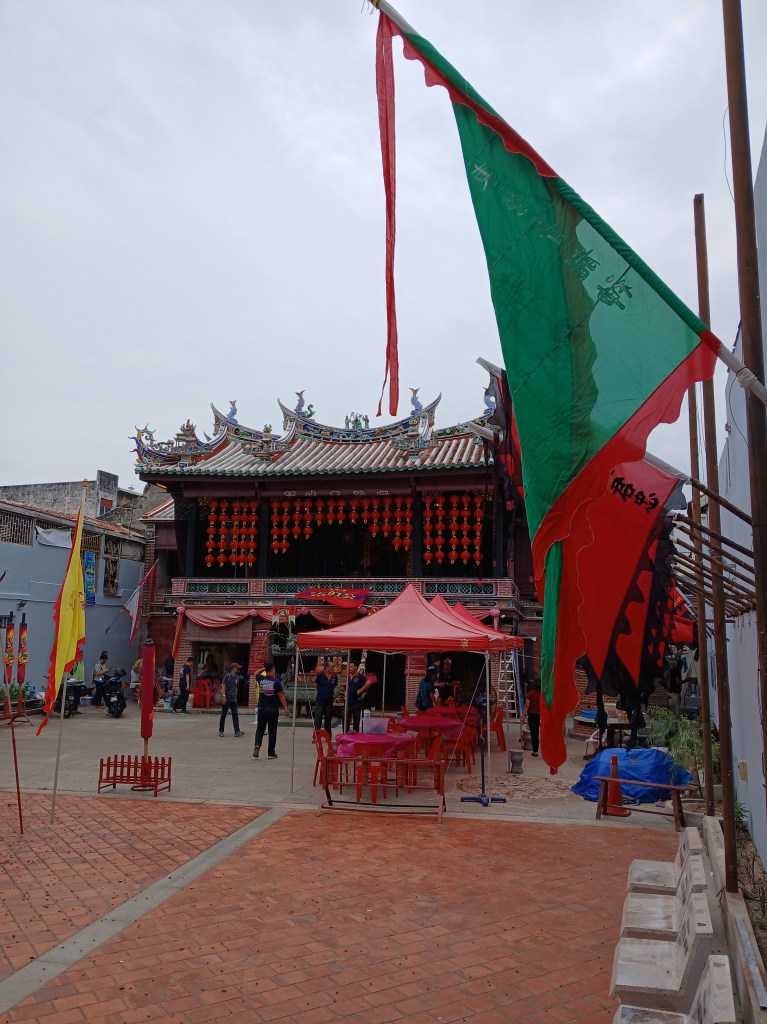
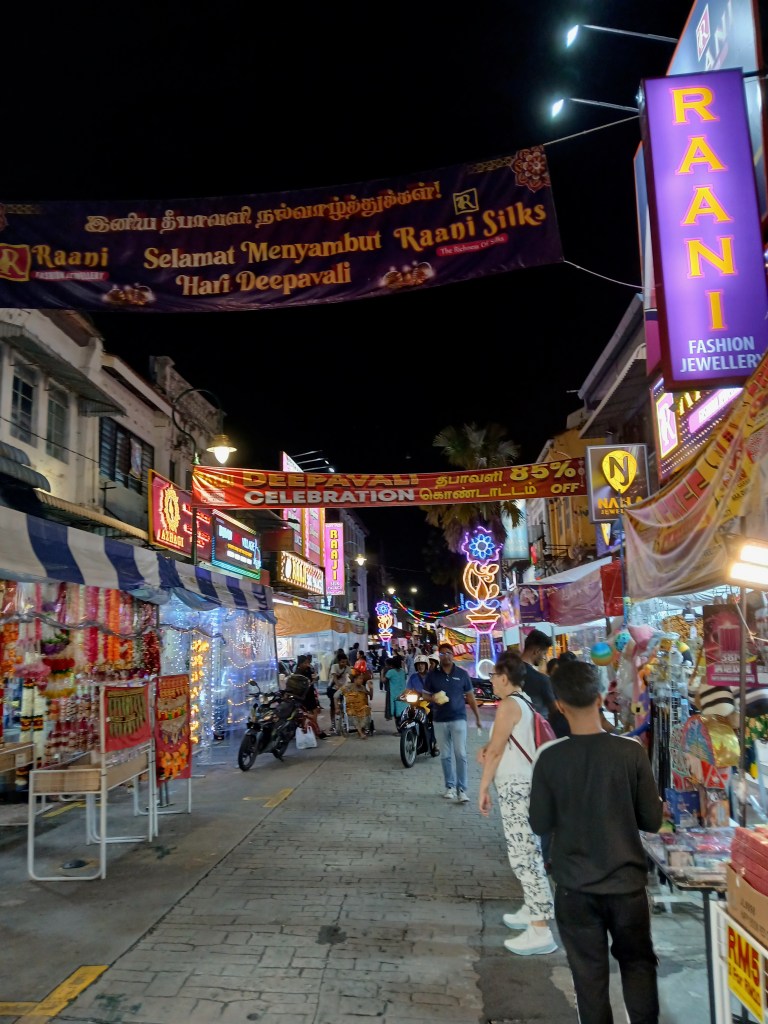
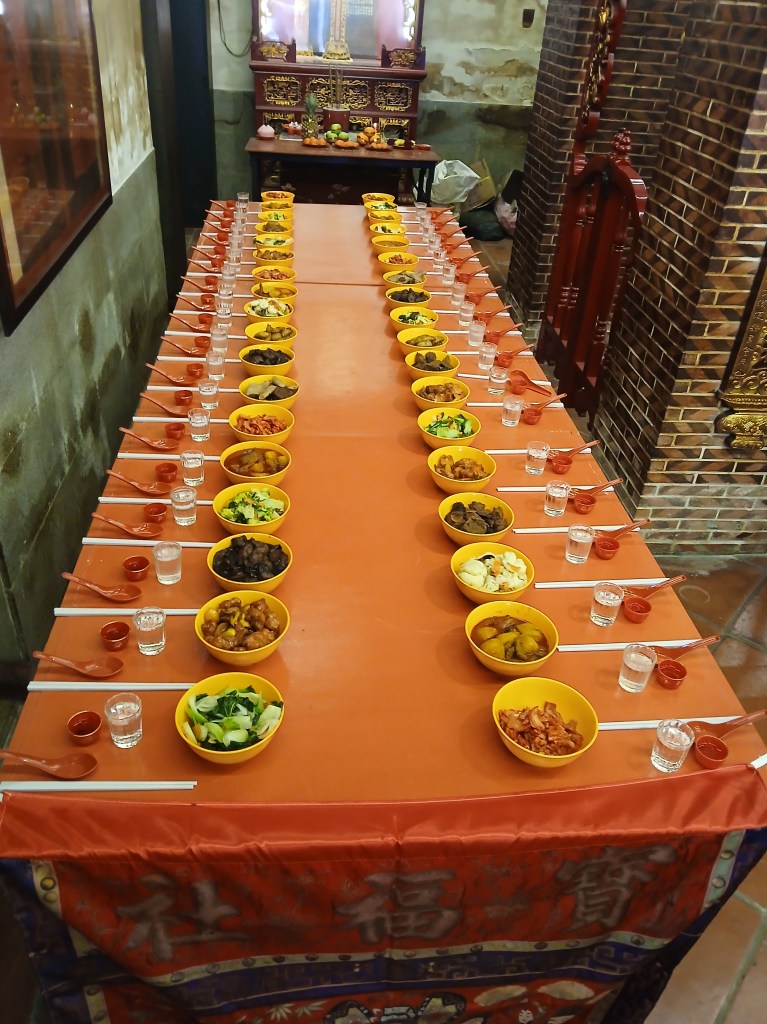
Una cosa bella di Penang e della Malesia in generale è che i templi sono talmente tanti, tante le festività religiose ( lo stato riconosce come festivi i giorni di festa di ciascuna religione!) che è quasi impossibile non essere testimoni di qualche rito o celebrazione particolare. In un tempio cinese si celebrano simposi, in un altro si onora un’immagine, nelle vie della città gli indù celebrano Deepavali con fuochi d’artificio e petardi. Basta camminare, scoprire, lasciarsi sorprendere, per entrare davvero nello spirito di George Town!
One of the wonderful things about Penang and Malaysia in general is that there are so many temples and so many religious festivals (the state recognises the holy days of every religion as public holidays!) that it’s almost impossible not to come across some kind of ritual or special celebration. In one Chinese temple, symposia are held; in another, an image is honoured; in the city streets, Hindus celebrate Deepavali with fireworks and firecrackers. You simply need to walk, explore and let yourself be surprised to truly get into the spirit of George Town!
Bianche moschee – White mosques
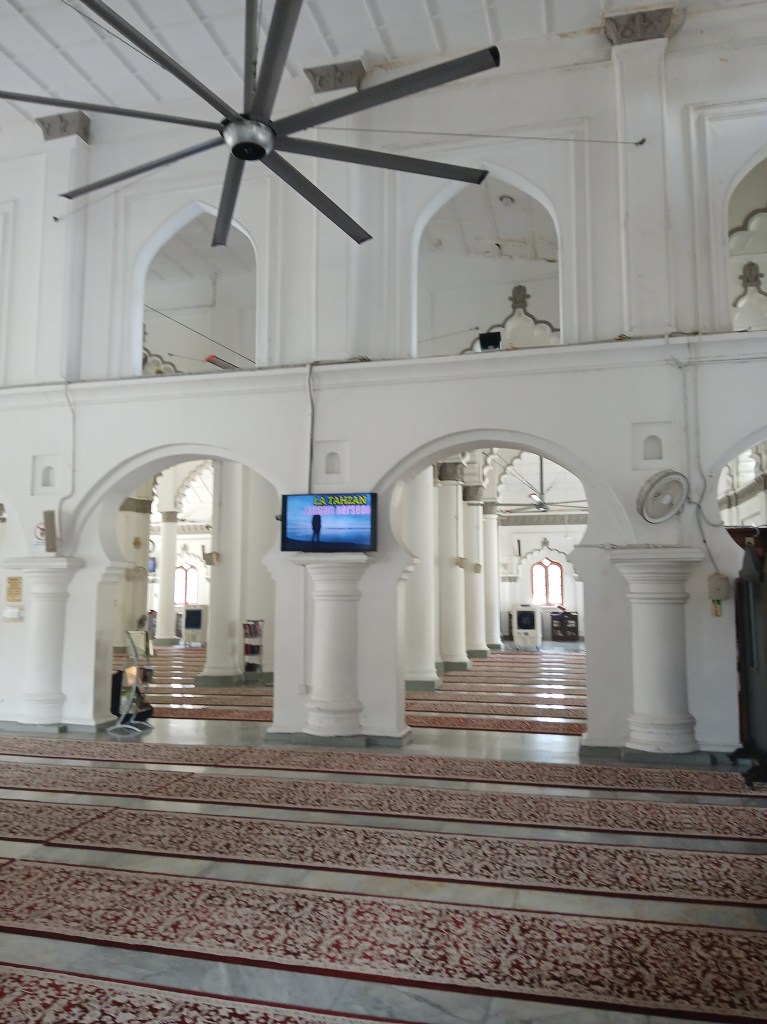
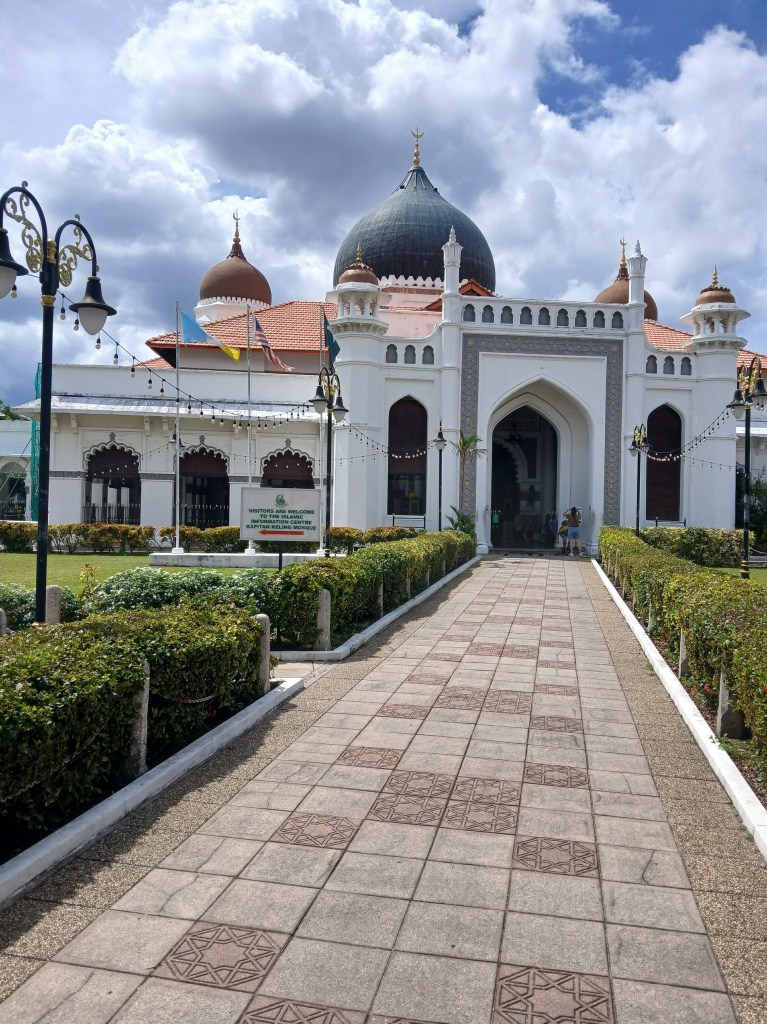
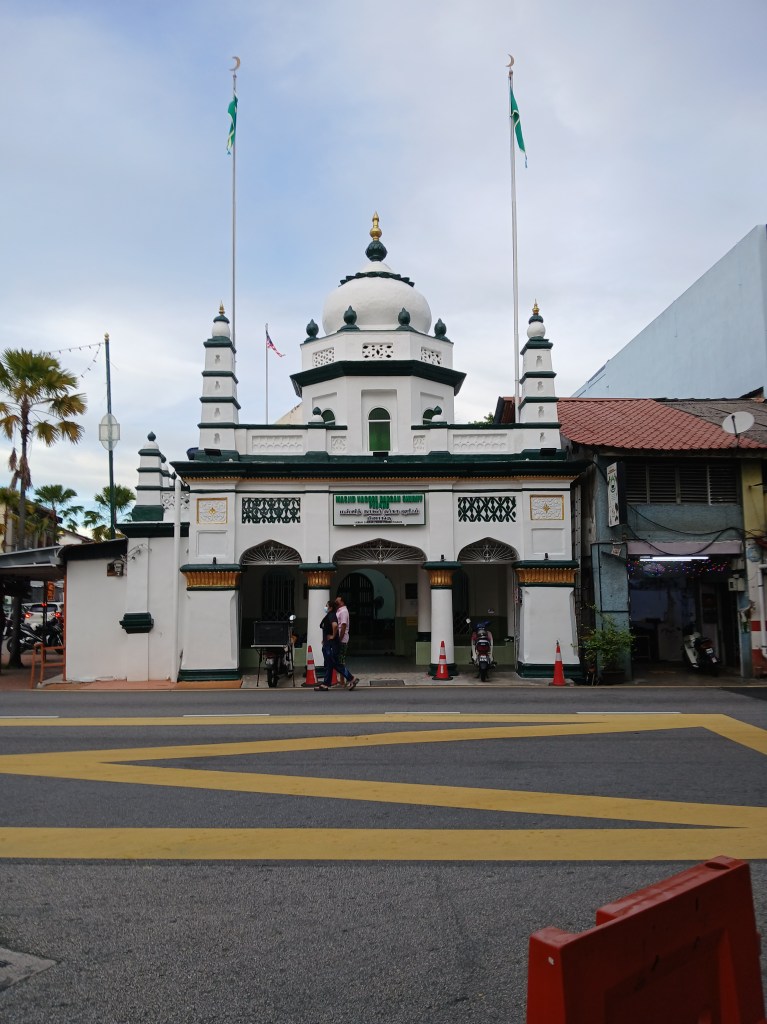
La Malesia è un paese mussulmano. L’Islam è praticato soprattutto dagli abitanti della autoctona etnia malese, convertiti da mercanti arabi qui giunti nel XIV e XV secolo, ma anche indiani, arabi e indonesiano.
Quello che si pratica in Malesia è un Islam tollerante e sereno, che si esprime con bianche moschee di epoca coloniale o avveniristiche costruzioni contemporanee dove architetti di tutto il mondo si sono cimentati nel fondere tradizione e nuovi materiali con risultati non sempre apprezzabili.
Malaysia is a Muslim country. Islam is practised mainly by members of the indigenous Malay ethnic group, who were converted by Arab traders who arrived here in the 14th and 15th centuries, but also by Indians, Arabs and Indonesians.
The form of Islam practised in Malaysia is a tolerant and peaceful one, expressed through white colonial-era mosques or futuristic contemporary buildings where architects from all over the world have attempted to blend tradition with new materials, with results that are not always to everyone’s taste.
Colori birmani – Burmese colours
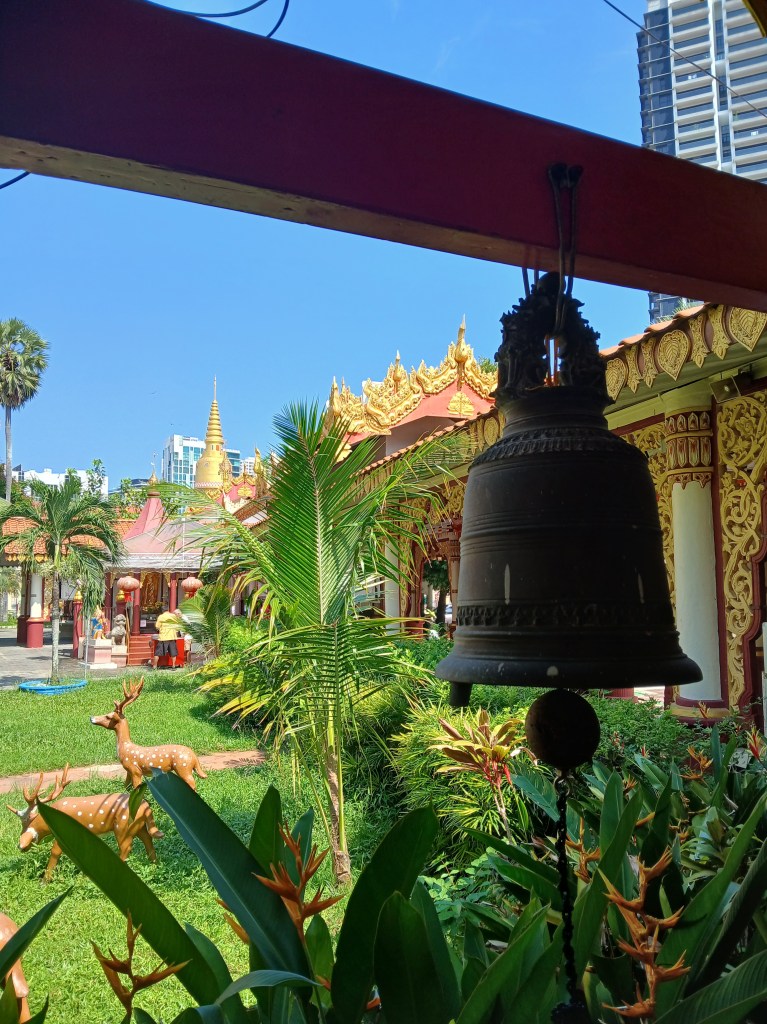
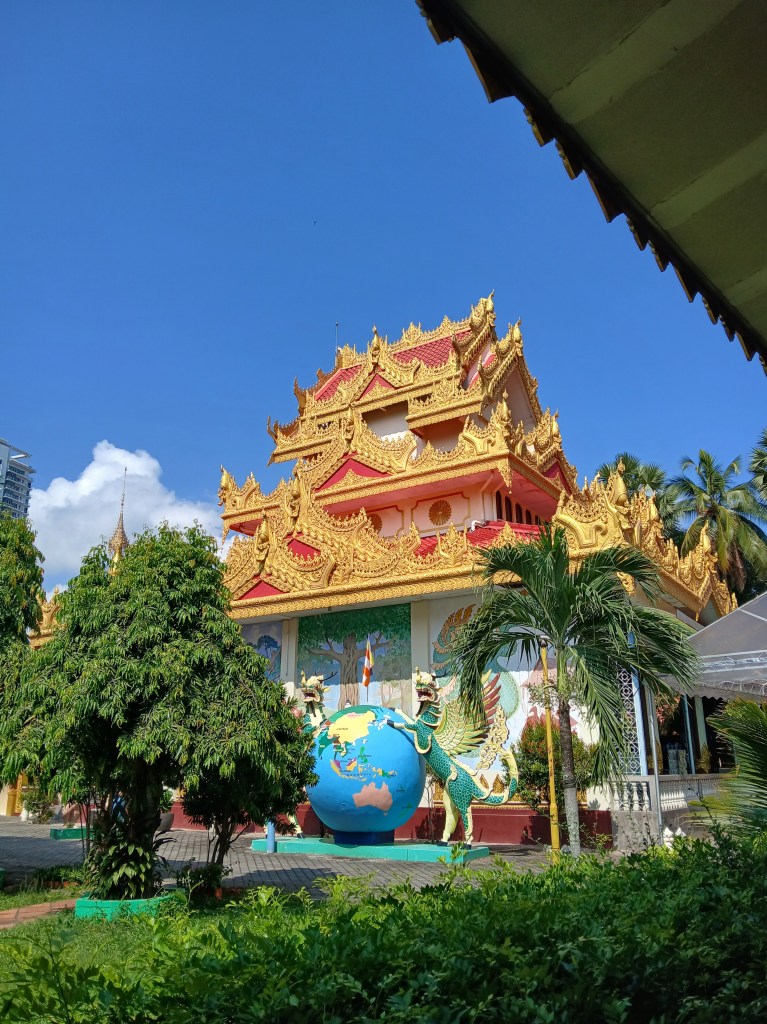
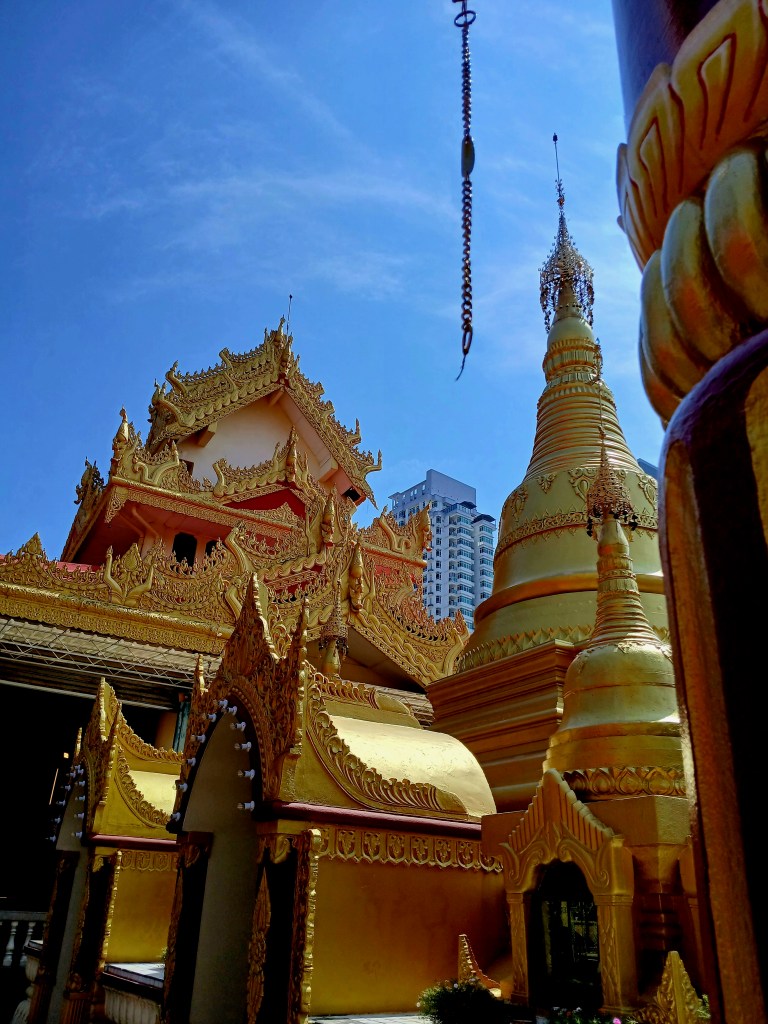
Un’altra cosa avvincente che ho scoperto a George Town è che ogni etnia arrivata su questa isola, crocevia di traffici e calamita di manodopera a caccia di fortuna, si è costruita un proprio tempio. Assai divertente è quello che la comunità birmana ha creato in un bel giardino esasperando le forme dorate ed eccessive dei templi della madrepatria e privilegiando, ancora una volta, gli aspetti eclatanti funzionali alla religione popolare a finezze stilistiche che per un immigrato birmano non avrebbero ovviamente senso.
Another fascinating thing I discovered in George Town is that every ethnic group that has arrived on this island – a crossroads of trade and a magnet for labourers seeking their fortune – has built its own temple. Particularly amusing is the one created by the Burmese community in a beautiful garden, exaggerating the gilded and opulent forms of the temples in their homeland and, once again, prioritising the striking features essential to popular religion over stylistic subtleties that would obviously make no sense to a Burmese immigrant.
Eccessi thai – Thai extravagance
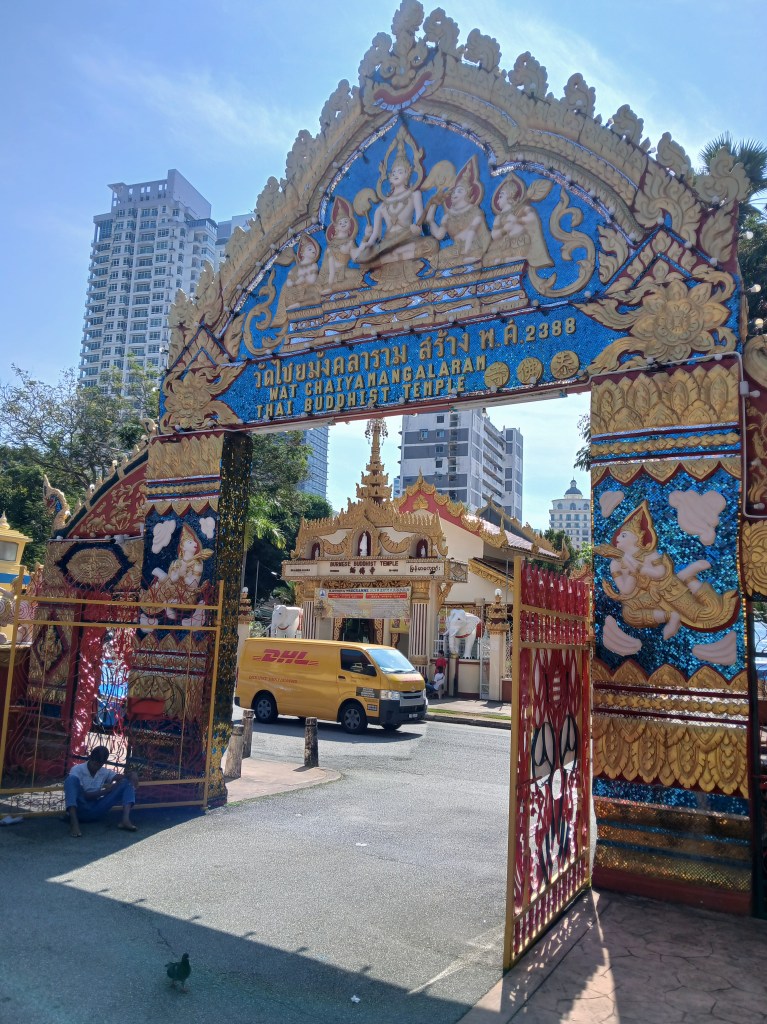
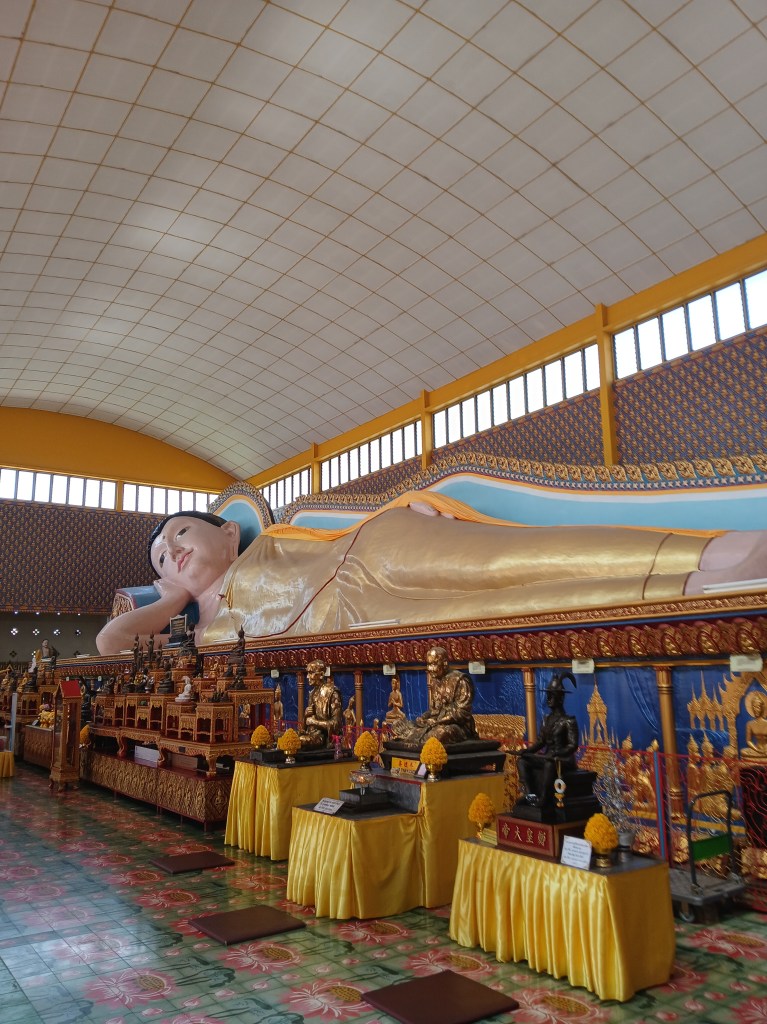
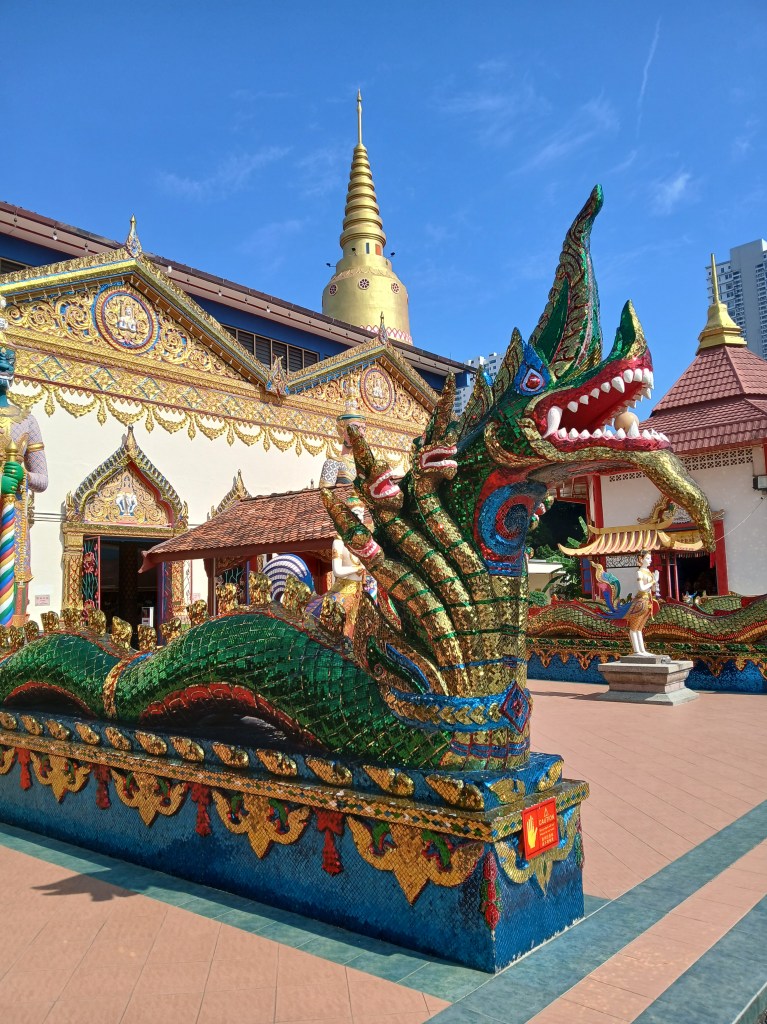
Esco dal tempio birmano, attraverso la strada e mi trovo a rivivere le medesime sensazioni nel complesso della comunità thai: dragoni, deva, Buddha dorati, tra cui l’immancabile Buddha sdraiato, occupano padiglioni che richiamano nell’estetica quelli della madrepatria ma che sono talvolta fin troppo “contemporanei” nella scelta di materiali e finiture.
I step out of the Burmese temple, cross the road, and find myself experiencing the same sensations within the Thai community complex: dragons, devas and golden Buddhas, including the ever-present reclining Buddha, fill pavilions whose aesthetic echoes that of the motherland, yet which are at times all too ‘contemporary’ in their choice of materials and finishes.
Decori indiani – Indian ornaments
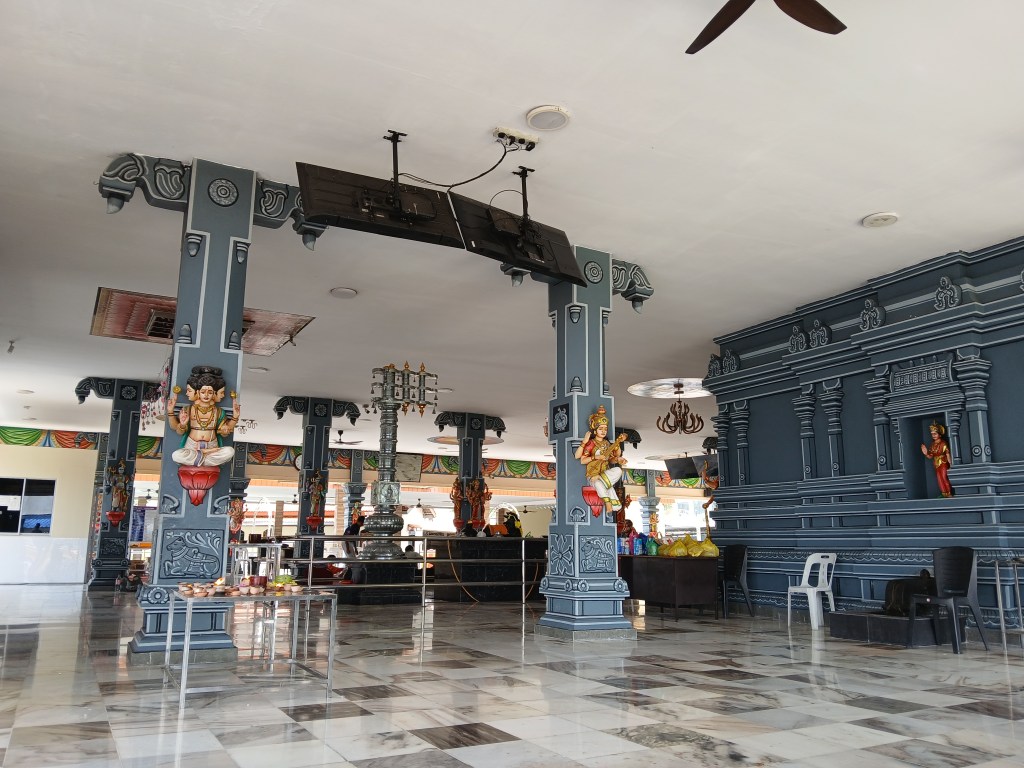
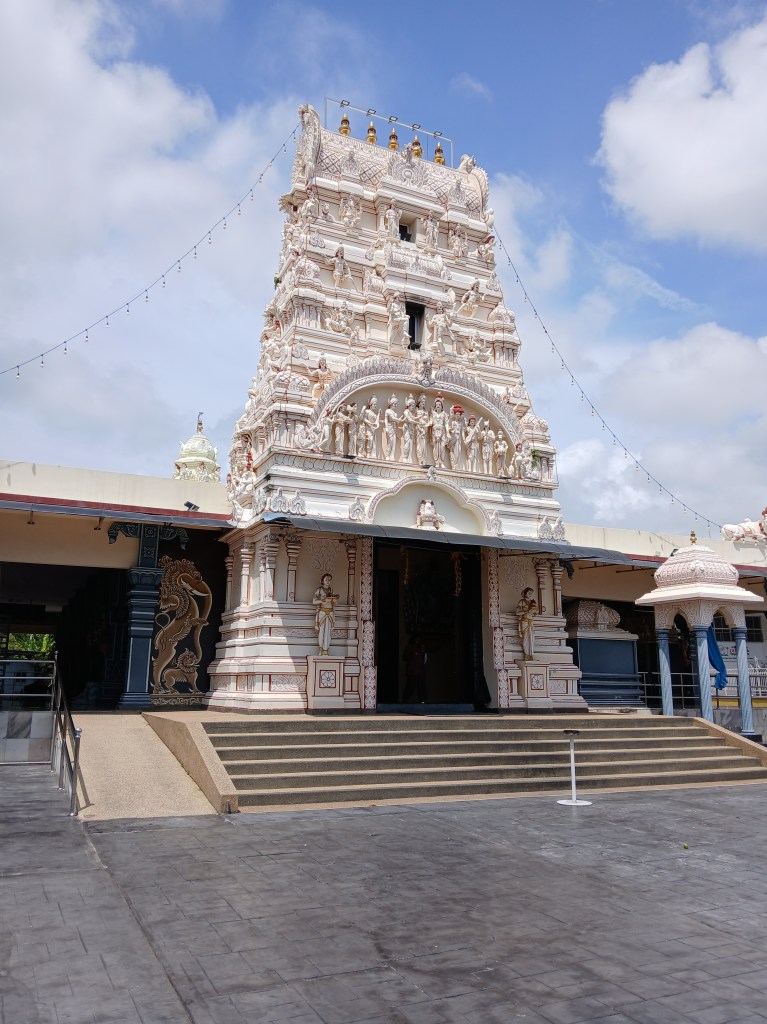
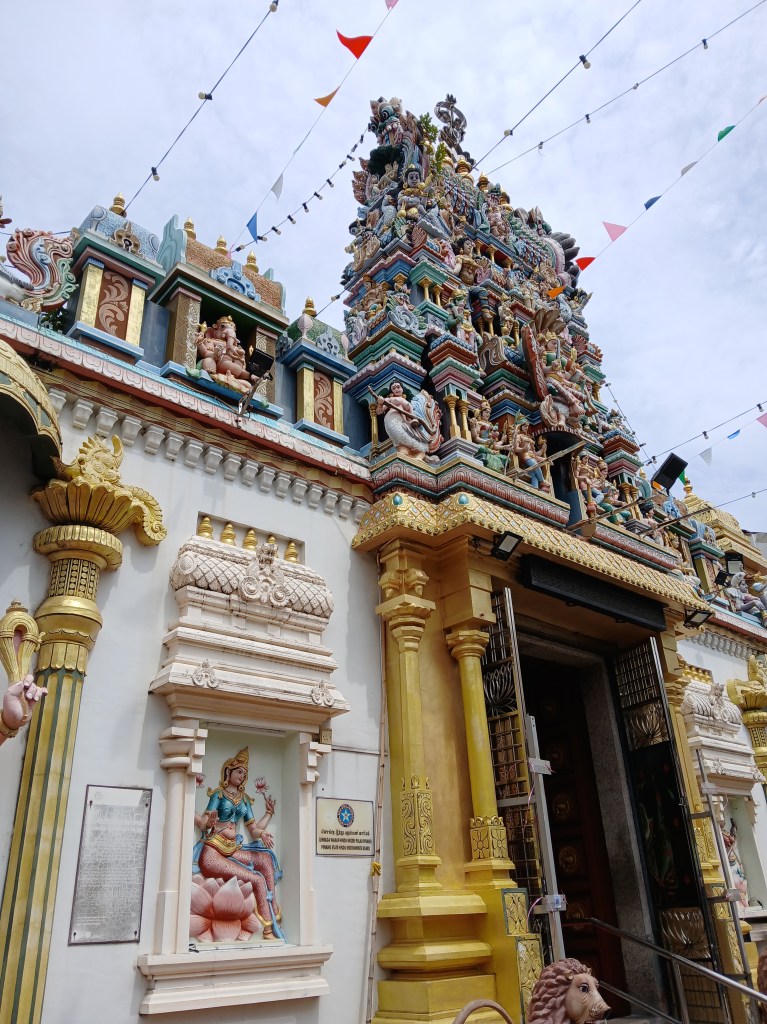
Lo stile dei templi indù è invece inequivocabilmente (fortunatamente direi vista la mia passione per il mondo dravidico) link quello tamil del sud dell’India. I loro gopuram, le tipiche torri/porte, non sono ovviamente maestosi come a Madurai o Kanchipuram link ma sono comunque spettacolarmente decorati da centinaia di piccole figure, talvolta dipinte, talvolta bianche. Gli interni, aperti e luminosi, con immacolati pavimenti, invitano a sedersi e a riflettere, magari ascoltando canti o una lezione di musica sacra impartita da un venerabile maestro a giovani membri della comunità locale.
The style of the Hindu temples, on the other hand, is unmistakably (and fortunately, I might add, given my passion for the Dravidian world) linked to the Tamil style of southern India link.
Their gopurams, the characteristic towers or gateways, are obviously not as majestic as those in Madurai or Kanchipuram link but are nonetheless spectacularly decorated with hundreds of small figures, some painted, some white. The interiors, open and bright, with immaculate floors, invite you to sit and reflect, perhaps listening to chants or a lesson in sacred music given by a venerable master to young members of the local community.
Piccole devozioni – Small devotions
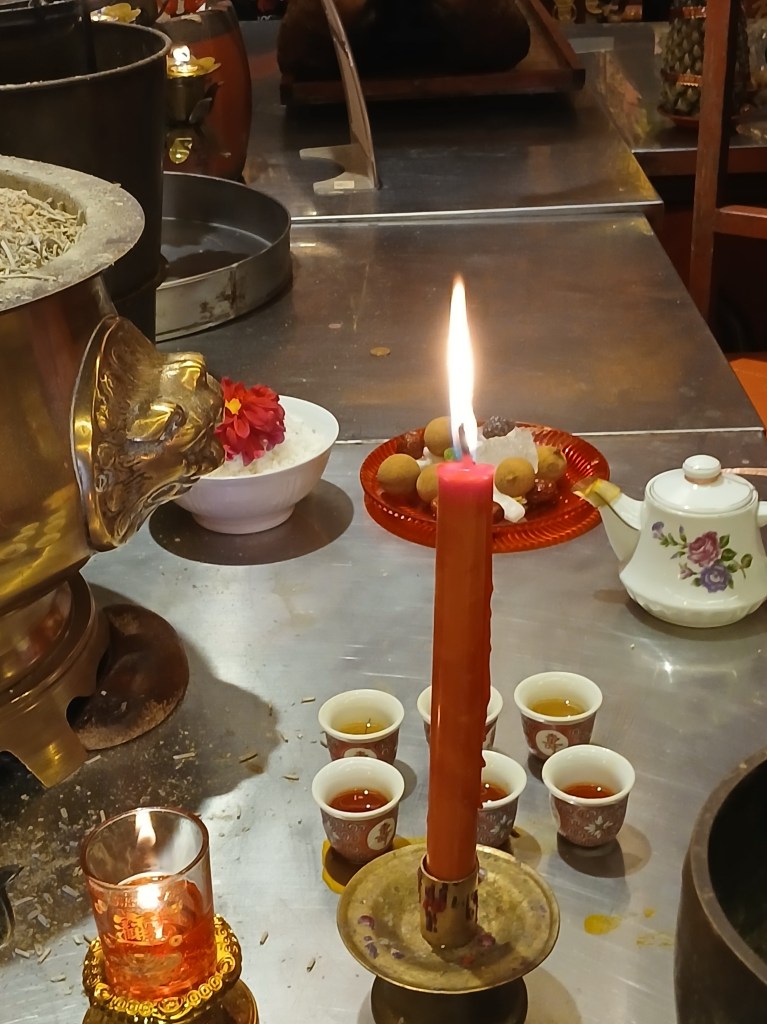
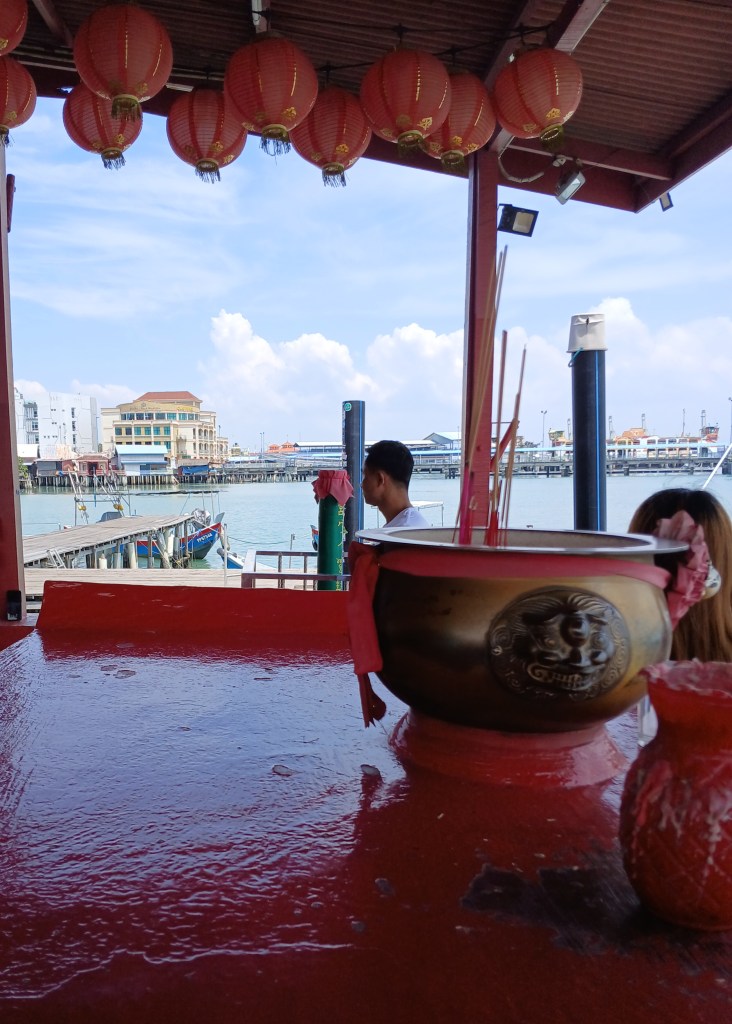
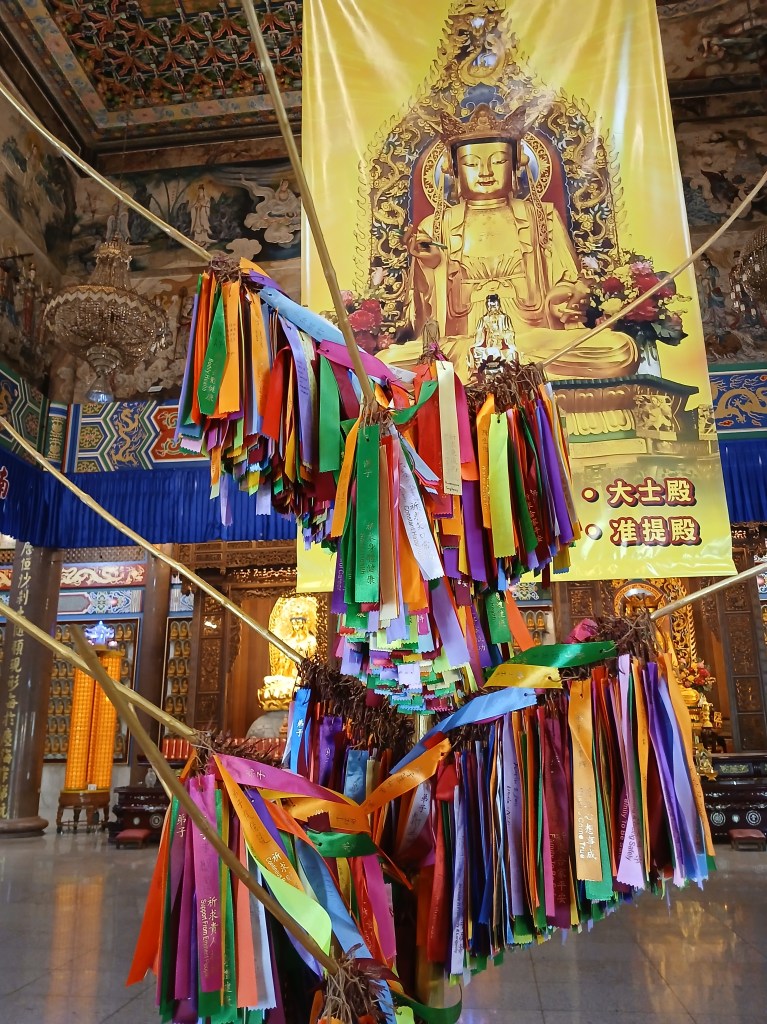
Essendoci tante religioni ci sono anche tanti modi di esprimere le proprie devozioni, che nel mondo asiatico coincidono spesso con offerte di cibi e bevande. Accendere un incenso su un altare buddista che guarda il mare, alla fine di uno dei moli che alcuni clan cinesi hanno costruito “vestendoli” con i propri villaggi, è stata per me un’esperienza di fede tranquilla che va oltre la mia appartenenza a una religione. Scegliere uno deI nastrini multicolori del tempio di Kek Lok Sì, legati ciascuno a un particolare tipo di richiesta (salute, ricchezza, studio, famiglia, professione, etc) ha comportato una riflessione e una speranza per il momento assai particolare in cui mi sono trovato a rivolgere questa richiesta.
La grande varietà di scelte testimoniata dall’arcobaleno di colori è comunque una testimonianza della grande varietà di bisogni e di risposte che ognuno cerca, qui e ovunque smentendo la teoria, generalmente sostenibile, che al primo posto per gli orientali, i cinesi in particolare, vengano sempre i soldi!
As there are so many religions, there are also many ways of expressing one’s devotion, which in the Asian world often take the form of offerings of food and drink. Lighting incense on a Buddhist altar overlooking the sea, at the end of one of the piers that certain Chinese clans have built and ‘adorned’ with their own villages, was for me an experience of quiet faith that goes beyond my own religious affiliation. Choosing one of the multicoloured ribbons at Kek Lok Si Temple, each tied to a particular type of request (health, wealth, study, family, career, etc.), involved a moment of reflection and hope for the very special moment in which I found myself making this request.
The wide variety of choices reflected in the rainbow of colours is, however, a testament to the great variety of needs and answers that everyone seeks, here and everywhere, disproving the generally accepted theory that for Easterners, and the Chinese in particular, money always comes first!
Uno spazio per ogni fede – A place for every faith
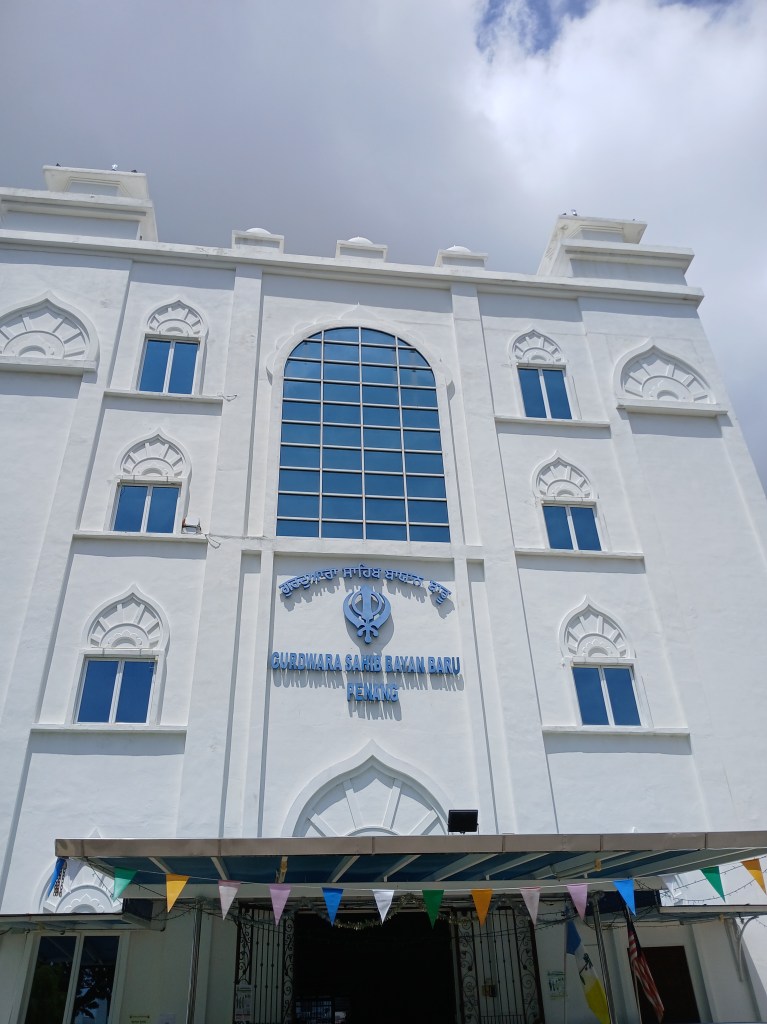
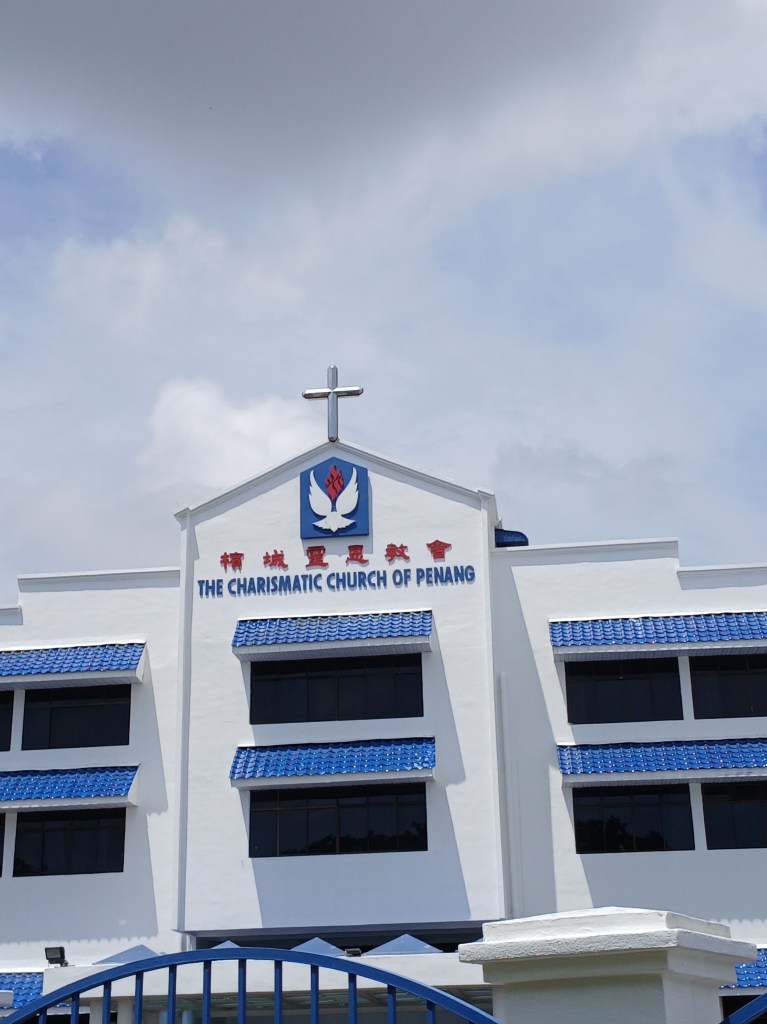
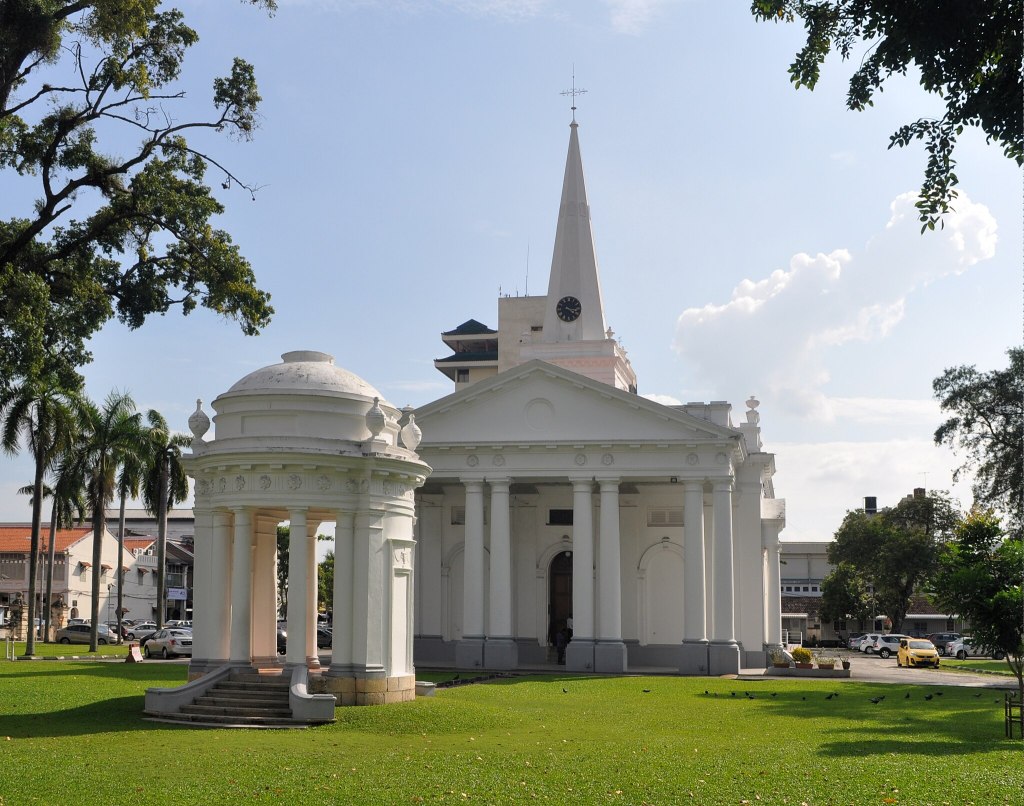
Per concludere: in una Harmony Street non mancano edifici sacri di comunità minori, come il tempio sikh nella foto a sinistra, la chiesa di un misterioso culto cristiano (al centro) e l’elegante e neoclassica cattedrale anglicana, uno dei lasciti della lunga dominazione coloniale inglese che aveva trasformato un povero villaggio di pescatori su un’isola coperta di vegetazione tropicale in uno dei centri nevralgici del commercio mondiale dando origine alla vocazione multietnica di cui oggi ammiro e apprezzo gli sviluppi.
To sum up: Harmony Street is home to a number of places of worship belonging to smaller communities, such as the Sikh temple pictured on the left, the church of a mysterious Christian sect (in the centre) and the elegant, neoclassical Anglican cathedral, one of the legacies of the long period of British colonial rule which transformed a poor fishing village on an island covered in tropical vegetation into one of the nerve centres of world trade, giving rise to the multi-ethnic character whose developments I now admire and appreciate.

