



Siamo sempre alla ricerca di vibrazioni positive. Che cosa siano davvero è difficile dirlo. Forse nemmeno esistono e si tratta solo di un’ennesima trovata del marketing spirituale. Io però posso affermare di averle provate anche se all’inizio nemmeno immaginavo che si potessero definire così. Semplicemente mi emozionavo (e ancora mi emoziono) ascoltando le campane. Campane grandi da campanile che chiamano alla preghiera, capaci di riprodurre anche articolate frasi sonore; campane più piccole agitate dalla mano di un chierichetto al momento della consacrazione o da un monaco tibetano mentre recita un sutra; campane che vibrano al vento appese davanti a un tempio o a un ramo dell’albero del tuo giardino. Le campane vibrano, muovono aria, suoni ed emozioni ed io ogni volta, ascoltandole, vibro con loro e mi sento felice.
We are always looking for positive vibrations. Exactly what they are is hard to say. Maybe even they don’t exist and are just one more spiritual marketing trick. However, I have experienced them, even though at first I did not even imagine it could be called so. I was simply moved (and still am) by listening to the bells. Large church bells call to prayer; smaller bells are shaken by the hand of an altar boy at consecration or by a Tibetan monk reciting a sutra; bells vibrating in the wind hanging in front of a temple or on a tree branch of your garden. Bells vibrate, move air, sounds, and emotions and I vibrate with them every time and I feel happy.

Sono cresciuto all’ombra di un campanile. Le campane scandivano la mia giornata. Segnavano le ore, chiamavano al vespro e alla messa ed esercitavano su di me un potere quasi magico. Passavo il tempo a guardarle mentre si slanciavano oltre lo spazio loro assegnato all’interno della cella campanaria per poi ritornare all’interno risuonando. Talvolta pensavo anche, con un po’di paura, che potessero proseguire nel loro slancio e volare nel cielo per poi ricadere su di me schiacciandomi sotto il loro peso sonoro. Tuttavia restavo, come ipnotizzato, a osservarle.
Ero letteralmente affascinato dall’azione del campanaro che guidava la trazione di funi diverse che pendevano dal cielo e davano vita a suoni diversi.
Ancora oggi vivo in un luogo dove è possibile ascoltare il suono delle campane: alle sette di ogni sera esse producono un inno mariano, segnano le morti e le agonie.
In un mondo totalmente piegato all’illusione del benessere personale, esclusivo e incurante della storia o della tradizione, rivendico il potere rinforzante del suono della campane:
Ben altre sono infatti le cacofonie, interne ed esterne, che possono disturbare i nostri fragili equilibri.
I grew up under the shadow of a bell tower. The bells marked my day. They measured the hours, called for vespers and mass, and exercised a magical power over me. I spent my time watching them as they rushed out beyond the space given to them inside the belfry and then returned inside again, ringing. Sometimes I even thought, with a bit of fear, they would continue their momentum and float into the sky before falling back on me, crushing and crushing me under their sonorous weight. Nevertheless, I remained, as if mesmerized, watching them.
I was fascinated by the bell ringer’s action as he drove the pull of different ropes hanging from the sky and making different sounds.
To this day, I still live in a place where you can hear the sound of bells: at seven o’clock every evening they produce a Marian hymn and mark deaths and agonies.
In a world totally bent on the illusion of personal, exclusive well-being, heedless of history or tradition, I claim the empowering effect of the bells’ sound:
Indeed, there are many other internal and external cacophonies that can disturb our delicate equilibria.

Anche nei templi indù (come in questo che domina il Gange a Rishikesh in India) le campane sono onnipresenti: il fedele le fa risuonare ogni volta che desideri invocare l’attenzione del divino su di sè. Stando seduti in un tempio le campane risuonano in continuazione, creando vibrazioni positive, sincopate, illogiche perché la loro attivazione è irregolare e imprevedibile e per questo ancor più sorprendente.
Even in Hindu temples (as in this one overlooking the Ganges in Rishikesh, India) bells are everywhere: worshippers ring them whenever they wish to summon the divine’s attention upon themselves. Sitting in a temple, bells continuously resound, creating positive, syncopated, illogical vibrations because their activation is irregular and unpredictable and hence more surprising.
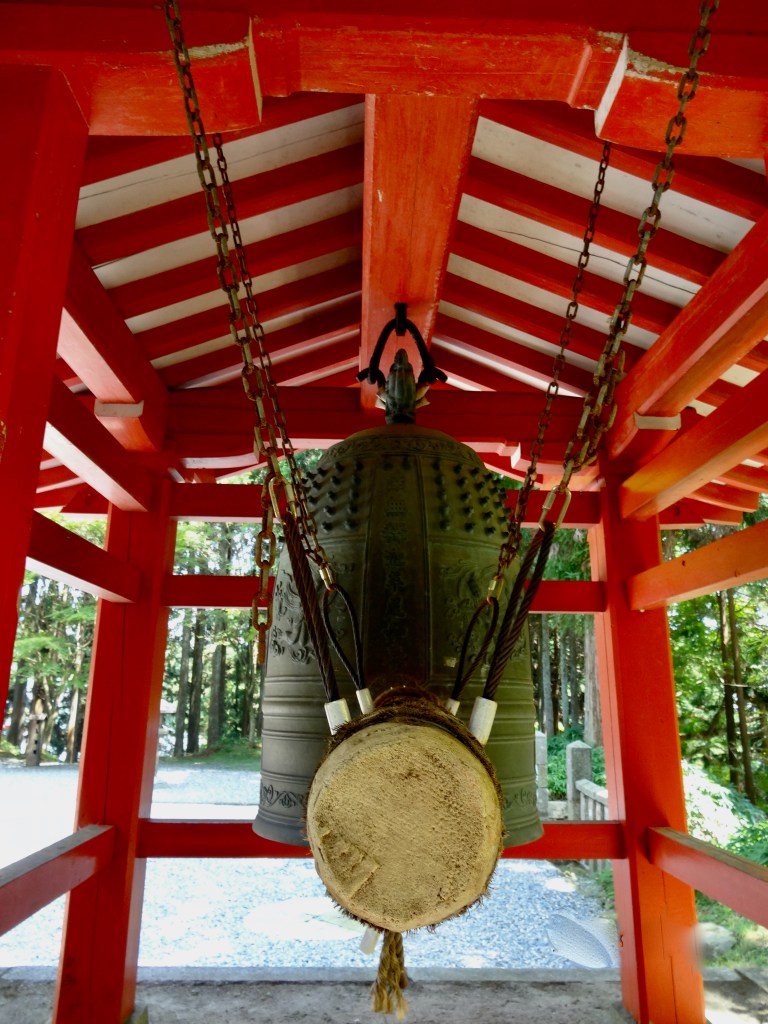
Possente come il tuono risuona la grande campana del Monte Hiei, la sacra montagna che sovrasta Kyoto. Azionata da un tronco che viene lanciato contro di essa da uomini nerboruti che pagano un’offerta per avere questo privilegio, rompe il silenzio del monte ma, al tempo stesso, produce silenzio perché il suo suono spegne immediatamente il brusio del turista distratto riportandolo immediatamente alla consapevolezza della sacralità del luogo.
As powerful as the thunder the great bell of Mount Hiei, the sacred mountain overlooking Kyoto, resounds. Driven by a log thrown towards it by brawny men paying an offer to get this privilege, it breaks the stillness of the mountain but, at the same time, it produces silence for its sound immediately shuts out the buzz of the distracted tourist bringing him back to the awareness of the place’s holiness.

Come la campana anche il gong (questi si trovano in un monastero del Nepal) ha il potere di generare vibrazioni positive. Chiunque abbia mai provato l’incredibile sensazione prodotta dai “bagni di gong”, strane esperienze di meditazione indotte dall’alternanza di suoni di percussioni, campane tibetane e gong di varie dimensioni, può comprendere il concetto di “vibrazione positiva” che non è soltanto una vaga definizione ma una sensazione tangibile e terapeutica.
Similar to the bell, the gong (these are in a Nepalese monastery) can generate positive vibrations. Whoever has experienced the amazing sensation created by ‘gong baths’, strange meditation experiences induced by the alternating sounds of drums, Tibetan bells, and gongs of various sizes, can understand the idea of ‘positive vibration’, which is not just a vague definition but a tangible and healing sensation.
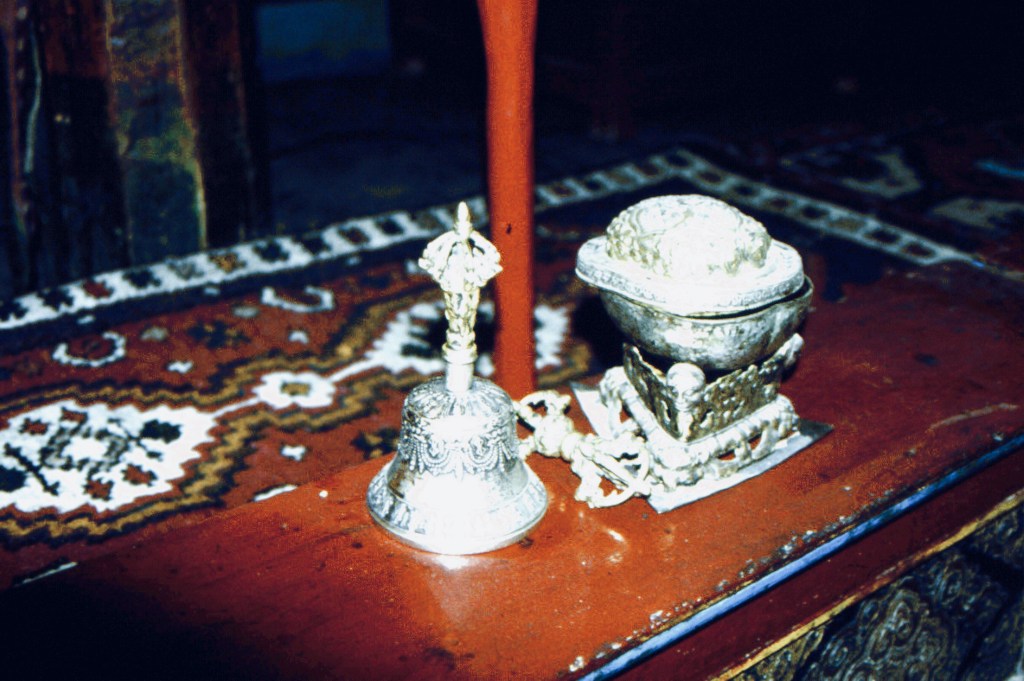
Sempre nei templi tibetani (qui siamo nella valle di Nubra nell’Himalaya Indiano) la campanella scandisce il ritmo dei sutra recitati dai monaci con ipnotica ripetitività. Così come il gong amplifica il suono, la campanella lo condensa, scatenando scosse sonore che sono piccoli lampi nell’oscurità delle sale da preghiera dei monasteri himalayani.
Still in Tibetan monasteries (here we are in the Nubra valley on the Indian Himalayas) the bell beats rhythmically to the sutras recited by the monks with hypnotic repetitiveness. Just as the gong amplifies the sound, the bell condensates it, unleashing sonic tremors that are like tiny flashes through the darkness of the prayer halls of Himalayan monasteries.

La torre della campana, unitamente a quella del tamburo, è una presenza costante nei templi cinesi (e per derivazione anche giapponesi, coreani o vietnamiti) di qualsiasi tradizione (questa si trova nel grande tempio di Confucio a Nanchino). Oggi ridotta a funzione in gran parte decorativa, la campana templare del tempio cinese aveva in passato una valenza sia spirituale che civile fungendo al tempo stesso da richiamo divino o da segnale di allarme o adunata.
Bell towers, together with the drum tower, are a permanent presence in Chinese (and by derivation also Japanese, Korean or Vietnamese) temples of all traditions (this one is in the great temple of Confucius in Nanjing). Nowadays reduced to a mostly decorative function, the Chinese temple bell had both spiritual and civil significance in ancient times, simultaneously serving both as a divine call and as an alert or rallying signal.
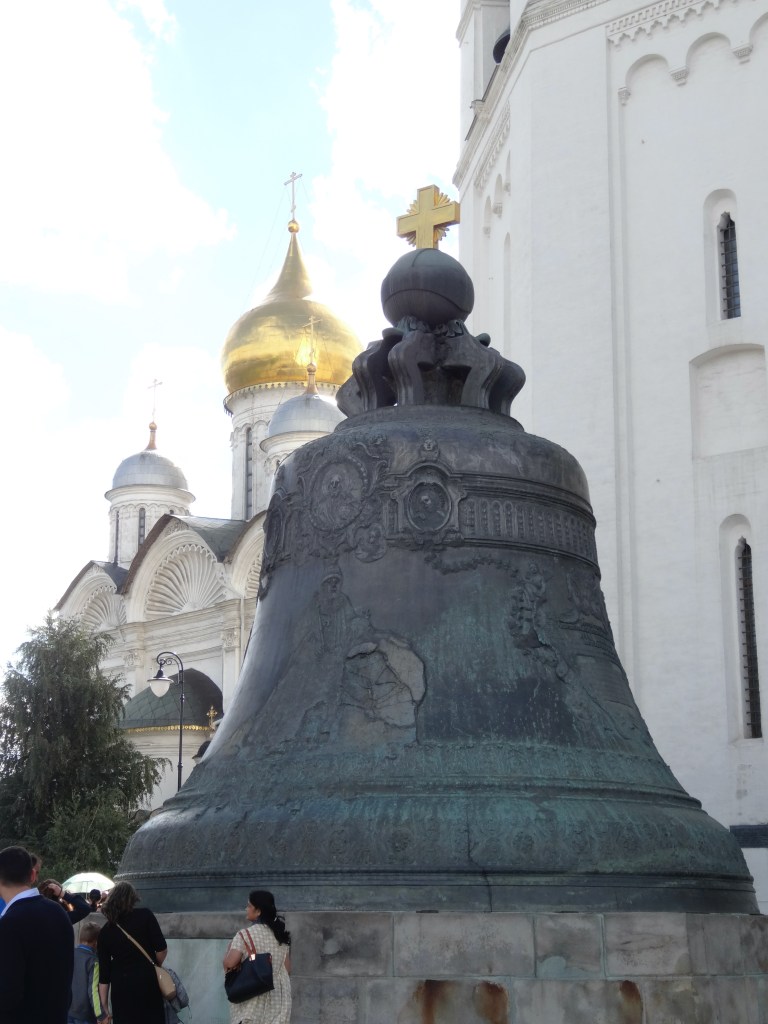
Una campana imponente, come quella che si trova all’interno del Cremlino di Mosca e che ha un diametro di sei metri, trasmette potenza e si fatica ad immaginarne il suono. Infatti non suonò mai per cui il suo potere di “vibrazione” rimane quindi misterioso. Per cosa era stata pensata vien da chiedersi, quale imponente struttura la doveva reggere? Doveva servire anche da allarme? Oppure doveva annunciare eventi speciali? Nel rintocco di una campana c’è infatti un duplice potere: quello di invitare alla gioia della festa della comunità e quello di chiamare la medesima comunità all’allarme e all’attenzione.
An impressive bell, like the one inside the Moscow Kremlin measuring six meters in diameter, communicates power and it is hard to imagine it ringing. Indeed, it never rang, so its ‘vibrating’ power still remains a mystery. What was it supposed to be used for, one may ask? Which massive structure was it supposed to support? Was it supposed to serve as an alarm? Or was it intended as an announcement of special events? There is in fact a dual power in the ringing of a bell: the power to invite community to the joy of the feast and the power to call the same community to alarm and attention.
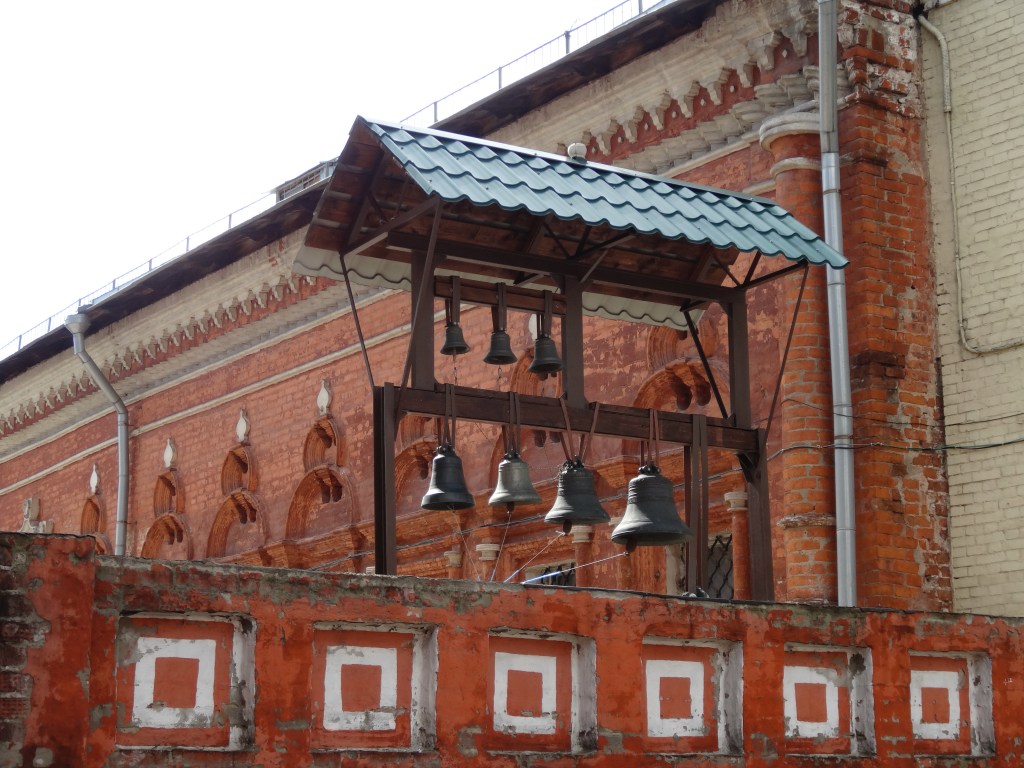
Alll’esterno di un monastero ortodosso di Mosca piccole campane di diverse dimensioni risuonano azionate da un campanaro per chiamare alla preghiera del vespro. Nel cuore della città (questo monastero si trova proprio nel centro della capitale russa) quel risuonare di note costituisce una provocazione, un invito al distacco, al recupero di sonorità antiche che sfidano quelle del traffico ma ancor più quelle indotte nella nostra vita da app, reels, video, compilation che si susseguono quasi inavvertite nelle nostre orecchie e nella nostra mente.
Outside an Orthodox monastery in Moscow, small bells of different sizes ring out, rung by a bell ringer to call to vespers prayer. In the heart of the city (this monastery is located right in the center of the Russian capital), this ringing of bells is a provocation, an invitation to detachment, to recover ancient sounds challenging the traffic, but even more the sounds induced in our lives by apps, reels, videos, compilations following one another nearly inadvertently in our ears and minds.
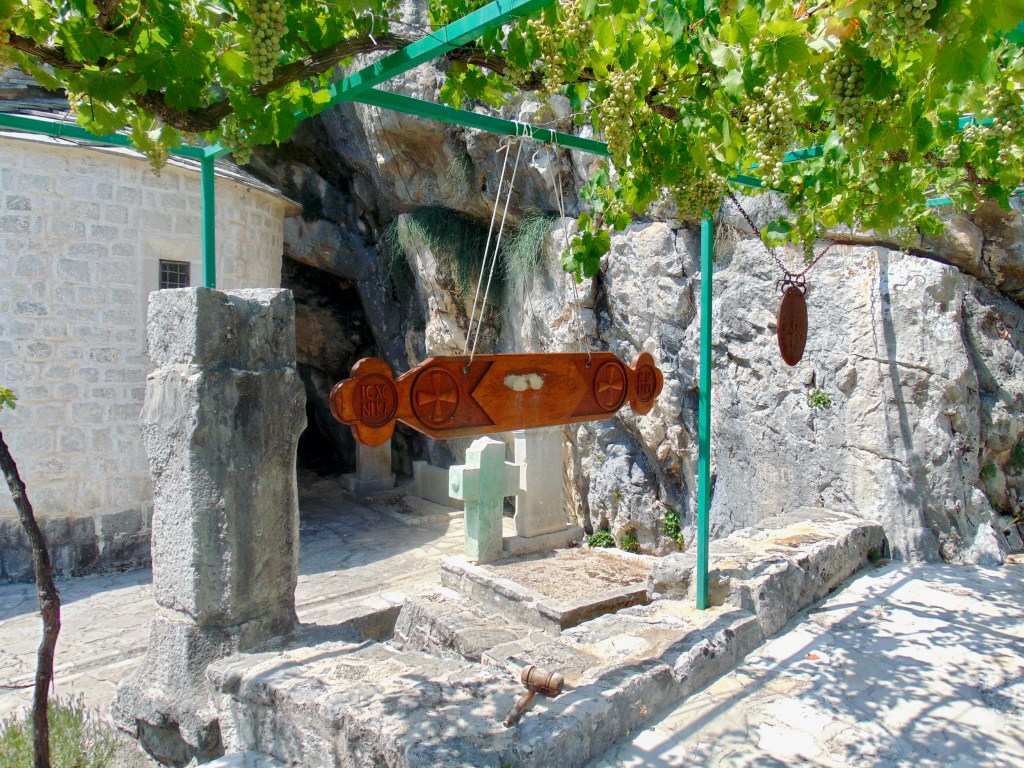
La “vibrazione positiva” può anche essere prodotta da un materiale diverso dal metallo con cui sono fatte le campane. Nei monasteri ortodossi (qui siamo vicino a Trebinje in Bosnia Erzegovina) il richiamo alla preghiera dei monaci viene praticato con lo simandro, una tavola di legno che viene percossa ritmicamente. Certo l’effetto è molto più secco e meno avvolgente ma si resta sempre sorpresi udendone il suono. Come sempre, si tratti di una campana o della voce di un muezizn che richiama alla preghiera, questa irruzione del sacro nella nostra quotidiana cacofonia provoca un attimo di sospensione e di sconcerto. Poi, si riprende la propria vita, magari arrivando persino a imprecare nei confronti di queste interferenze non volute.
Ci si chiude nella nostra apparente comfort zone rinunciando a farci stimolare da suoni antichi di grande potenza che ci chiamano alla preghiera, alla riflessione, a un piccolo attimo di distacco.
The ‘positive vibration’ can also be generated by a material other than the metal from which the bells are made. In Orthodox monasteries ( this is near Trebinje in Bosnia and Herzegovina) the monks’ call to prayer is made with the simander, a wooden board that is rhythmically struck. The effect is of course much more subtle and less immersive, but you are always surprised by hearing this sound. As usual, whether it is a bell or the voice of a muezzin calling to prayer, the irruption of the sacred into an everyday cacophony leads to momentary suspension and confusion. Then, we resume our lives, perhaps even going so far as to swear at this undesired interference.
We lock ourselves in our apparent comfort zone, renouncing to be moved by ancient powerful sounds calling us to prayer, reflection, and a brief detachment.

Lasciamoci allora avvolgere da un suono di campane, anche ripetuto e casuale, come quello delle campane donate a un tempio nepalese, che si accumulano senza ordine pronte però a risuonare quando si alza il vento vibrando tutte in modo diverso, producendo suoni spontanei e irregolari, ma aprendoci il cuore a nuovi paesaggi e a nuove sensazioni!
So let us be enveloped by the sound of bells, even repeated and random ones, like those donated to a Nepalese temple, which are piled up in no order but ready to resonate as the wind rises, all of them vibrating differently, generating spontaneous and irregular sounds, but opening our hearts to new experiences and new sensations!
Basta poco per allenare lo spirito. Non servono duri ritiri, astinenze, rivoluzioni nel proprio modo di vivere. Basta osservare in modo diverso quello che ci circonda: trovare luoghi speciali, riconoscere segni, seguire semplici percorsi che possono essere al tempo stesso fisici e spirituali.
Ecco alcuni suggerimenti che nascono dalle mie esperienze, dai miei viaggi, dalle mi riflessioni.
Possono adattarsi a tutti? Possono garantire le sensazioni che hanno trasmesso a me? Non pretendo di offrire ricette infallibili o universali, condivido piccole pillole, frammenti di vita, immagini, momenti, emozioni.
Training the spirit requires little. Hard retreats, abstinences, and revolutions in our way of life are not needed. It is enough to observe our surroundings in a different way: find special places, recognize signs, and follow simple paths that can be both physical and spiritual.
Following suggestions arising from personal experiences, travels, and reflections.
Can they suit everyone? Can they provide the sensations they conveyed to me? My claim is not to offer infallible or universal recipes, I just share small pills, snatches of life, images, moments, and emotions.
ALLENARE LO SPIRITO /SPIRITUAL TRAINING
1 – Allenare lo spirito/Spiritual training Osservare le nuvole/Watching the clouds
2- Allenare lo spirito/Spiritual training 2 Provare a nascondersi/Try to hide yourself
3- Sedersi e osservare/allenare lo spirito 3/Sit and watch/Spiritual Training 3
 The City Pilgrim
2 commenti