

Nascosto in un angolo tranquillo e ventoso della Renania Settentrionale – Westfalia, il Santuario Mariano di Kevelaer è il principale luogo di pellegrinaggio della Germania Settentrionale. A pochi chilometri dal confine olandese, la cittadina si è sviluppata attorno a una piazza circondata da edifici in stile neogotico che ha un fascino davvero particolare.
In a quiet, windy corner of North Rhine-Westphalia, there’s a little-known Marian shrine called Kevelaer. It’s the main place of pilgrimage in northern Germany. Just a few kilometres from the Dutch border, the town has developed around a square surrounded by neo-Gothic buildings that have a really special charm.

La si potrebbe definire la versione rigorosa di Altötting, l’altra città santuario tedesca che si trova in Baviera (ne ho parlato qui): Kevelaer è un borgo di case dagli alti frontoni di ispirazione fiamminga e anseatica, di cappelle neogotiche quanto Altötting è barocca ed esuberante come la regione in cui si trova.
In comune posseggono, isolata al centro della piazza che si è sviluppata nei secoli attorno a loro, la cappella (Gnadenkapelle) che custodisce l’immagine miracolosa.
You could call it the rigorous version of Altötting, the other German sanctuary town in Bavaria (I talked about it here): Kevelaer is as much a village of high gabled houses of Flemish and Hanseatic inspiration, of neo-Gothic chapels as Altötting is baroque and exuberant like the region in which it is located.
In common they have, isolated in the centre of the square that has developed around them over the centuries, the chapel (Gnadenkapelle) that houses the miraculous image.

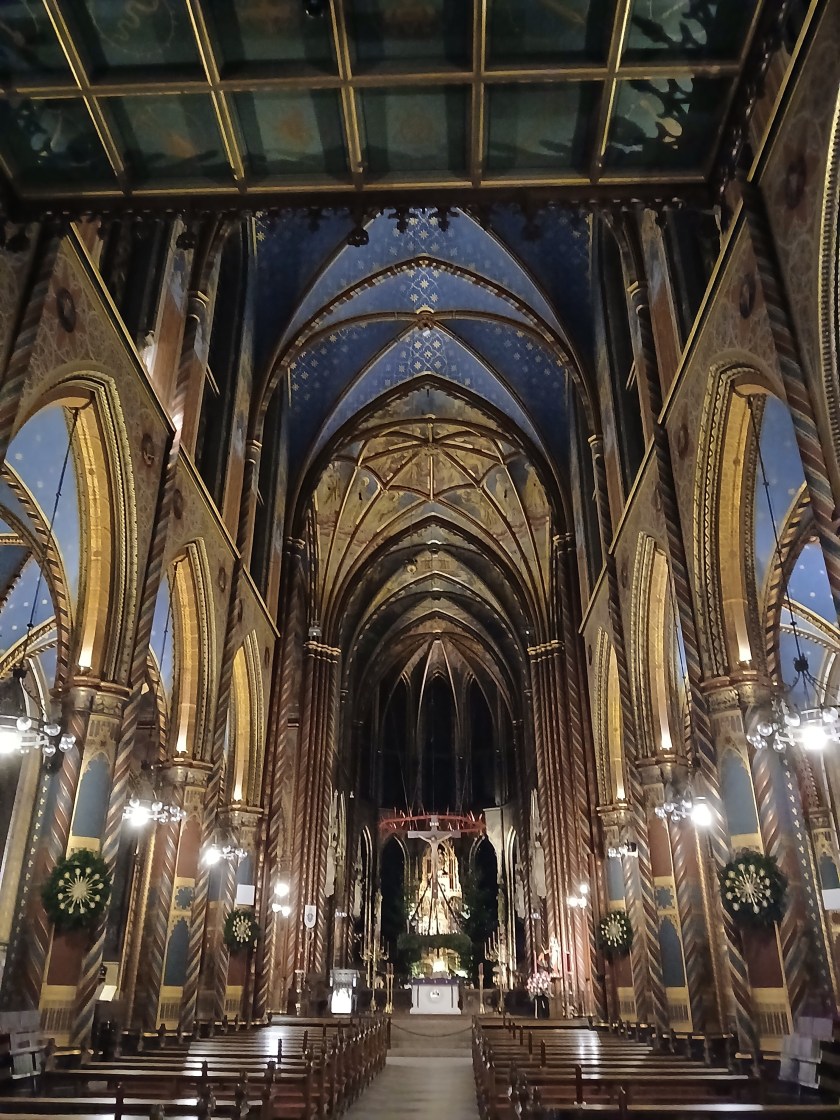
Ci sono alcuni aspetti dell’architettura gotica che sono entrati nel nostro immaginario comune, tra tutte l’assenza di colore, quasi che il colore sia un elemento frivolo e distraente, diminutivo della severità, dello slancio spirituale, della austera santità necessarie a una Casa di Dio. Si resta quindi abbastanza sconcertati entrando in questa grande basilica dove ogni superficie è invece ricoperta di affreschi e decorazioni geometriche.
Some aspects of Gothic architecture are well known, like the lack of colour. This is because colour is seen as a trivial and distracting element that takes away from the seriousness and religious feeling needed for a church. So, it can be a bit confusing when you go into this big church and see that everything is covered in frescoes and geometric designs.
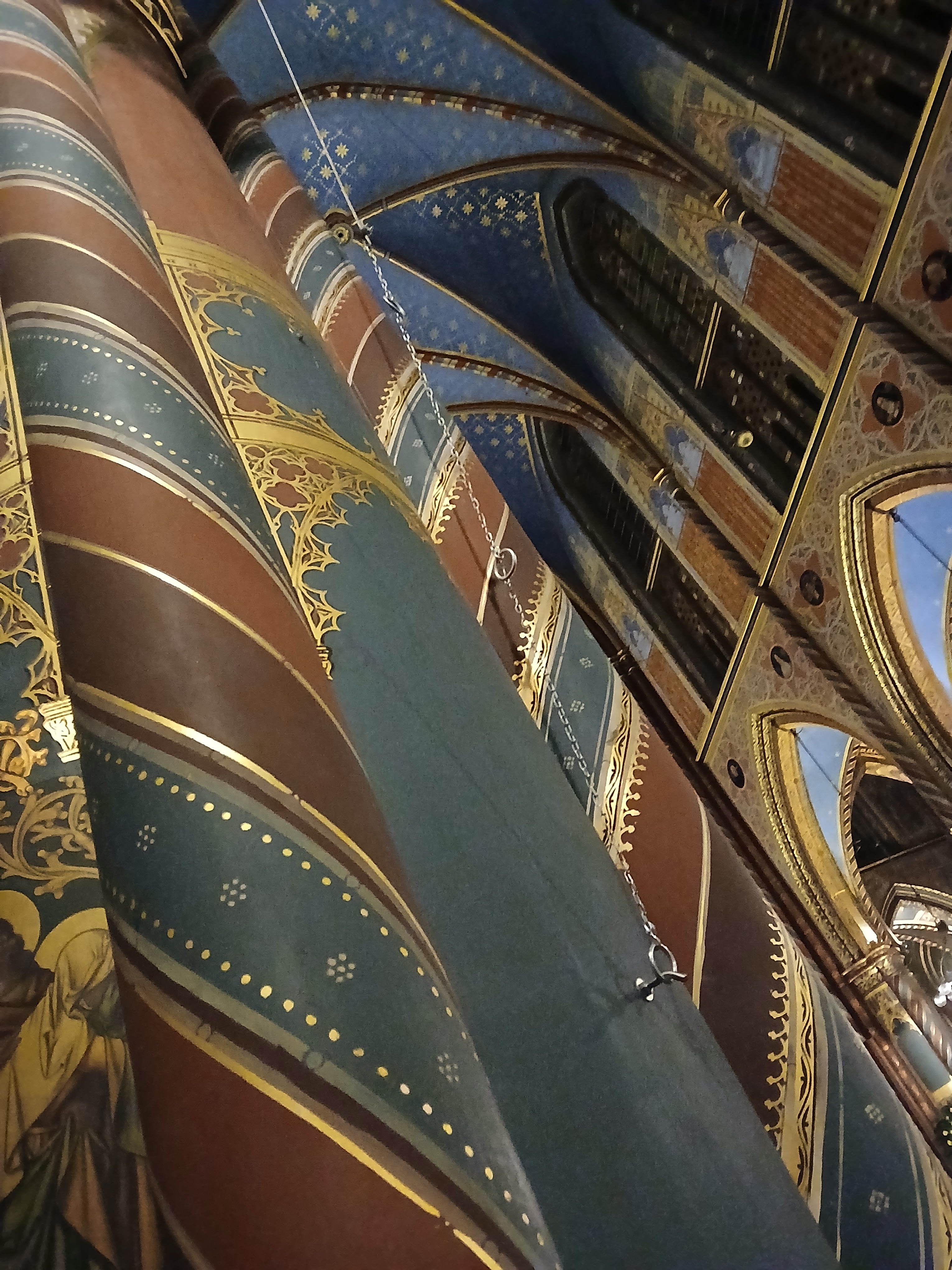
Anche il colore è però essenziale nella comprensione della spiritualità dell’arte gotica: non solo per le vetrate policrome, ma anche per la presenza originaria di colonne decorate e soprattutto di volte a crociera dipinte come cieli stellati.
Nulla di strano visto che il fine di tutto questo erano l’elevazione e il trasporto delle anime e dei pensieri di chi osservava verso un cielo per ora solo intravvisto. Costoro erano spesso persone semplici, spesso analfabeti che potevano così avere una visione efficace della promessa divina.
However, colour is also essential in understanding the spirituality of Gothic art: not only because of the polychrome stained glass windows, but also because of the original presence of decorated columns and above all cross vaults painted like starry skies.
Nothing out of the ordinary, since the purpose of all this was the elevation and transport of the souls and thoughts of the beholders towards a sky only glimpsed for now. These were often simple, often illiterate people who could thus gain an effective vision of the divine promise.

Proprio questo effetto di “elevazione” suscita in me la Basilica che con il suo slanciato campanile domina la silhouette di Kevelaer.
Costruito al centro della facciata, anzi integrato in essa, il campanile mi appare un ulteriore elemento di propulsione visiva e spirituale, enfatizzando come un vettore il portale d’ingresso e la grande finestra che lo sovrasta.
All’interno richiami bizantini di dorature, figure angeliche, volte celesti (sia in senso cromatico che ideale), luci ben diffuse.
Malgrado la sua decorazione esuberante questo non è l’edificio creato per accogliere l’immagine miracolosa (di quello parlo più sotto): la Basilica venne infatti eretta “solo” nel 1858 per accogliere i pellegrini sempre più numerosi.
Seduto sulle panche deserte in una sera fredda e silenziosa provo ad assimilare il concetto di “biblia pauperum”, ad estraniarmi da conoscenza e supponenza e scopro che In questa Basilica mi sento davvero bene.
Precisely this effect of ‘elevation’ arouses in me the basilica, which with its slender bell tower dominates Kevelaer’s silhouette.
Built in the centre of the façade, indeed integrated into it, the bell tower appears to me as a further element of visual and spiritual propulsion, emphasising like a vector the entrance portal and the large window above it.
Inside, Byzantine references of gilding, and angelic figures, celestial vaults (both in a chromatic and ideal sense), and well diffused lighting.
Despite its exuberant decoration, this is not the building created to house the miraculous image (more on that below): in fact, the basilica was erected ‘only’ in 1858 to accommodate the ever more numerous pilgrims.
Sitting on the deserted pews on a cold, silent evening, I try to assimilate the concept of the ‘biblia pauperum’, to extricate myself from knowledge and arrogance. and I discover that I feel really good in this Basilica.
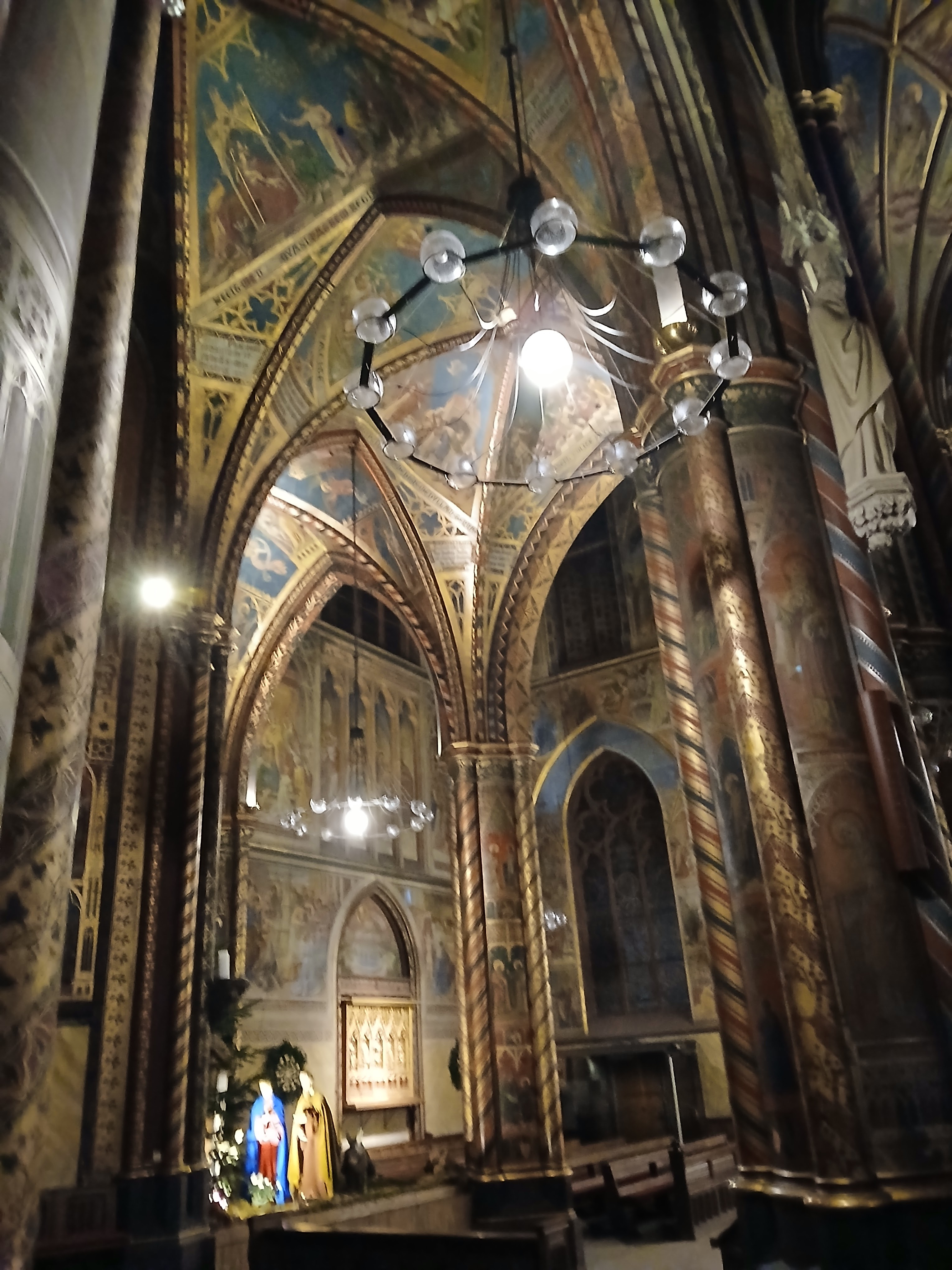


Per osservare l’immagine miracolosa, quella che ha dato origine a tutto, bisogna entrare nella piccola Gnadenkapelle, isolata al centro della piazza; talmente piccola che cinque persone raccolte in preghiera la riempiono.
In realtà la semplice persino banale stampa con l’effige della Vergine (perché di questo si tratta non di un’icona o di una preziosa tavola) si trova protetta da una grata alle spalle dell’altare in una angusta galleria. Tutto molto semplice, umile, come la storia che ha portato questa immagine seriale a far sorgere un santuario tanto importante.
Siamo nel 1641. C’è un viandante che sente una voce che lo invita a costruire un santuario, una moglie scettica che poi lo sogna, dei soldati che vogliono vendere un’immagine della Madonna che portano con loro ma che la moglie giudica troppo cara, un parroco che la raccoglie e poi, come sempre in successione, devozione, miracoli, grazie ricevute, pellegrinaggio.
Io credo profondamente alle fantastiche successioni e connessioni che si ritrovano in tutti i santuari mariani europei e ogni volta intimamente ne rimango turbato, sentendomi incapace di avere la semplicità necessaria per accogliere un mistero.
Davanti all’immagine, piccola e convenzionale la supponente attitudine scientifica e razionalista fa cortocircuito e il desiderio di comprendere trova difficoltà: nessuna magnificenza, nessuno splendore, solo semplice, umile fede. Accogli e sii felice.
Ancora una volta ci provo.
To see the miraculous image, the one that started it all, you have to enter the small Gnadenkapelle, isolated in the middle of the square; so small that five people gathered in prayer fill it.
In reality, the simple even banal print with the effigy of the Virgin (for this is what it is, not an icon or a precious panel) is protected by a grille behind the altar in a narrow gallery. All very simple, humble, like the history that brought this serial image to such an important sanctuary.
It is 1641. There is a wayfarer who hears a voice inviting him to build a shrine, a sceptical wife who then dreams about it, soldiers who want to sell an image of Our Lady that they carry with them but which the wife considers too expensive, a parish priest who collects it and then, as always in succession, devotion, miracles, graces received, pilgrimage.
I deeply believe in the fantastic successions and connections found in all European Marian shrines, and each time I am intimately disturbed by them, feeling incapable of the simplicity necessary to welcome a mystery.
In front of the small, conventional image, the arrogant scientific and rationalist attitude short-circuits and the desire to understand finds it difficult: no magnificence, no splendour, just simple, humble faith. Embrace and be happy.
Once again I try.
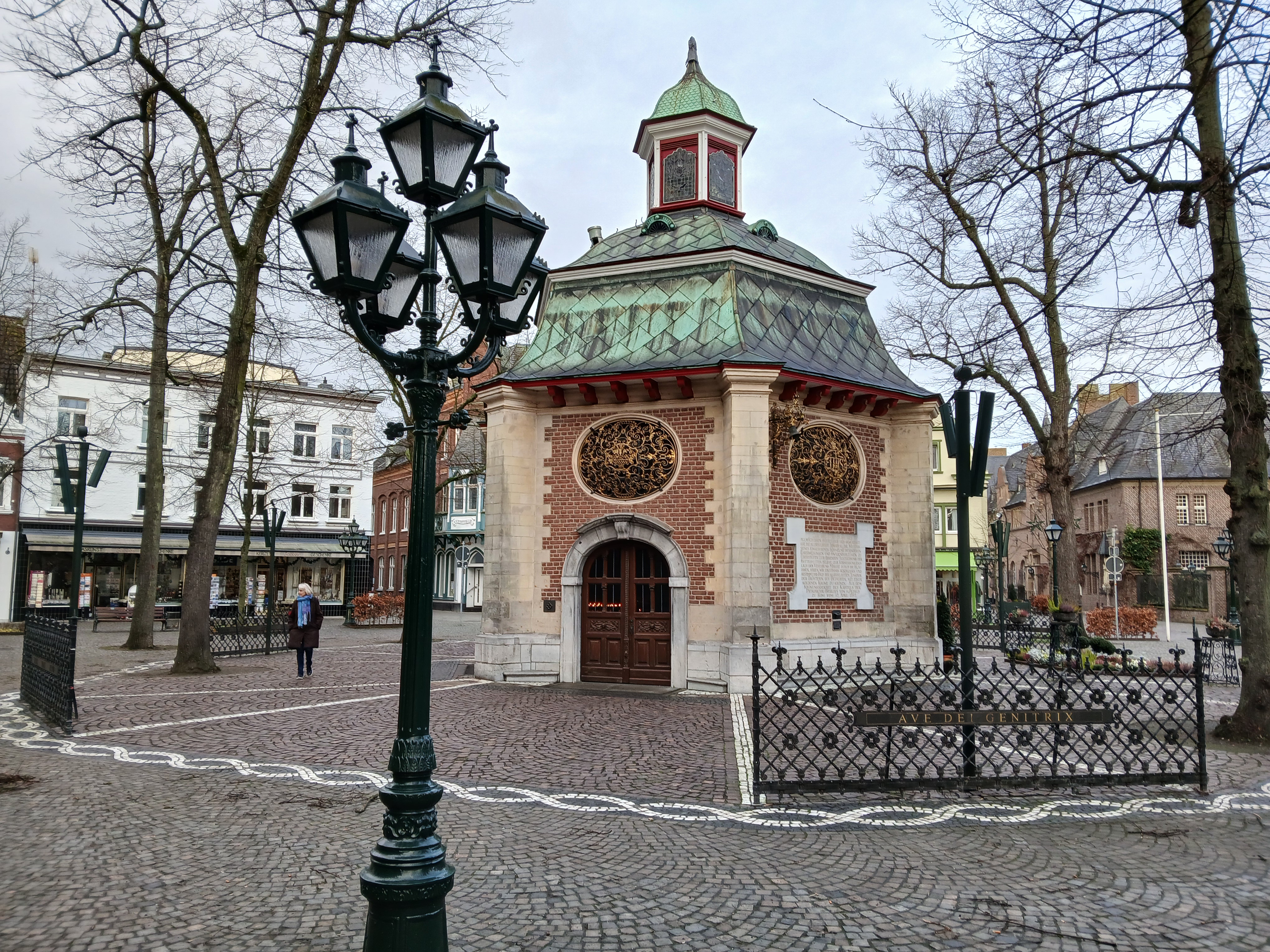
Non è un luogo spoglio la Gnadenkapelle, tutt’altro. È decorato in ogni sua parte: affreschi, stucchi, altari, ma il sillogismo tra nudità, semplicità, assenza e spiritualità mi è estraneo e lo trovo anzi piuttosto ipocrita e presuntuoso. Le forme vestono un mistero, un atto di fede nel modo che i devoti trovano più consono.
Questa piccola cappella ottagonale è calda e accogliente, invita a sedersi e a non pensare. Il pensiero è nemico della contemplazione e nei pochi secondi che mi sono concessi, visto lo spazio esiguo che devo condividere con altri pellegrini, riesco ad abbandonarlo, avvolto nella decorazione che paradossalmente non mi appare più costituita da dettagli o figure ma si fonde in un’unica fugace, emozionante, visione.
The Gnadenkapelle is not a bare place, far from it. It is decorated throughout: frescoes, stucco, altars, but the syllogism between nakedness, simplicity, absence and spirituality is alien to me and I find it rather hypocritical and presumptuous. The forms clothe a mystery, an act of faith in the way the devout find most appropriate.
This small octagonal chapel is warm and welcoming, inviting one to sit and not to think. Thought is the enemy of contemplation and in the few seconds I am allowed, given the small space I have to share with other pilgrims, I am able to abandon it, wrapped up in the decoration that paradoxically no longer appears to me as details or figures, but merges into a single fleeting, moving vision.

L’ambiente che mi ha più colpito a Kevelaer è stato però la Kerzenkapelle (Cappella delle Candele) la più antica tra quelle che si affacciano sulla piazza.
Tutto il suo fianco sinistro è infatti occupato da candele accese che creano una striscia luminosa sotto gli imponenti finestroni che illuminano la chiesa.
Tante candele accese fuori, centinaia di ceri e candele di ogni dimensione anche all’interno, ciascuno donato da privati, società sportive, enti, aziende.
Un campionario di devozione che si accompagna ad ex voto e stendardi.
Provo anche a immaginarmeli tutti accesi questi ceri che si addensano uno sull’altro ma credo che l’immaginazione non basti. Ogni sera per i Vespri ne vengono accese “solo” un centinaio creando un fiammeggiante contesto difficile da trovare altrove.
The room that impressed me most at Kevelaer, however, was the Kerzenkapelle (Chapel of Candles), the oldest of those facing the square.
Its entire left side is in fact occupied by lit candles that create a luminous strip under the imposing windows that illuminate the church.
Many candles lit outside, hundreds of candles and candles of all sizes inside too, each donated by private individuals, sports clubs, organisations, companies.
A sampler of devotion accompanied by votive offerings and banners.
I even try to imagine them all lit up, these candles clustered one on top of the other, but I think imagination is not enough. Every evening for Vespers, ‘only’ a hundred of them are lit, creating a flamboyant backdrop difficult to find elsewhere.


Kerzenkapelle interior. Hundreds of candles burning. Ph. Citypilgrimblog.
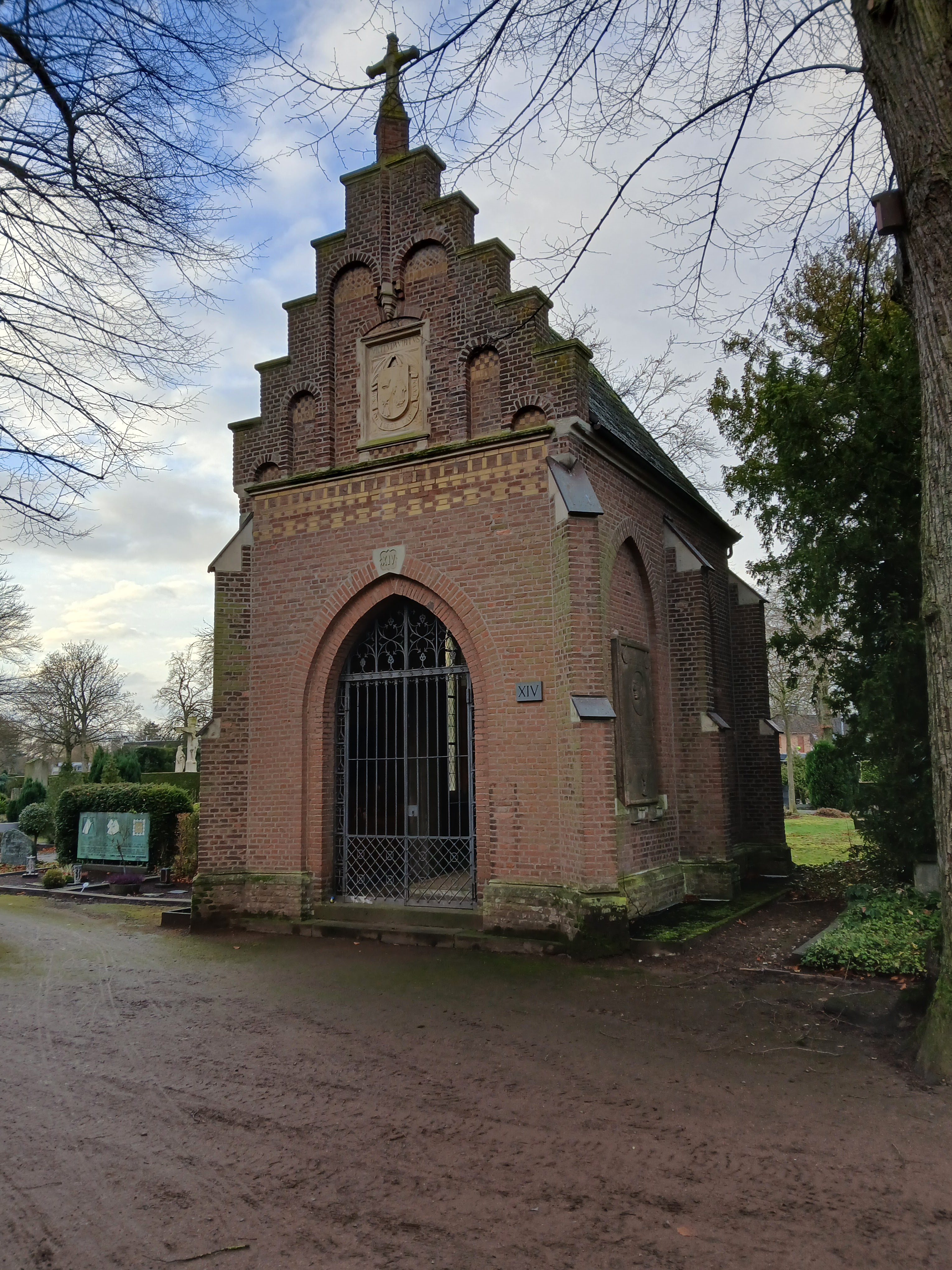
Kevelaer, piccola città di mattoni e case a frontoni ha altre cappelle, alcune integrate dentro gli edifici della canonica, altre sparse per il paese (perchè definirla città mi pare eccessivo). Ce n’è persino una di spiritualità ortodossa con tanto di iconostasi e icone e non può mancare il percorso della Via Crucis che si snoda in un parco.
Se vi capita di pellegrinare nel Nord della Germania e volete scoprire un luogo sorprendente dedicategli qualche ora, aggiungete la luce di una candela alle centinaia che vi ardono ogni giorno, passate con l’atteggiamento che riterrete più consono davanti all’immagine miracolosa. Non sarà tempo sprecato!
Kevelaer, a small town of bricks and gabled houses has other chapels, some integrated inside the rectory buildings, others scattered around the village (because to call it a town seems excessive). There is even an Orthodox spirituality chapel, complete with iconostasis and icons, and you can’t miss the Way of the Cross that winds through a park.
If you happen to be on a pilgrimage in northern Germany and want to discover a surprising place, devote a few hours to it, add the light of a candle to the hundreds that burn there every day, pass with the attitude that you consider most appropriate in front of the miraculous image. It will not be time wasted!


 The City Pilgrim