

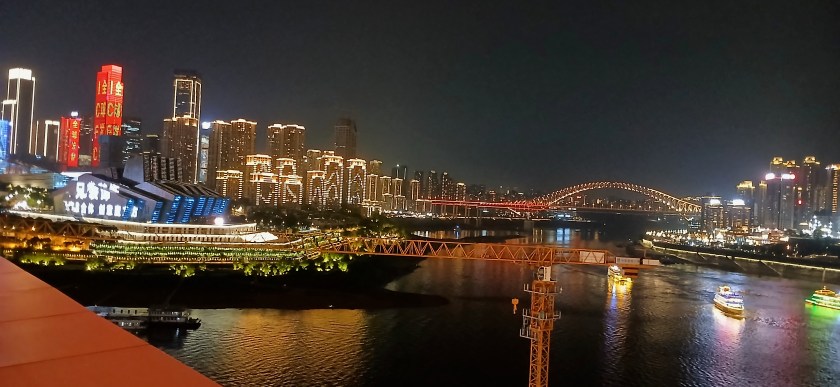
Chongqing è città di spettacolari luci, futuristiche visioni, vitalità giovanile, aspri dislivelli, scale mobili e ascensori, piccanti specialità ma anche memoria viva della resistenza cinese all’invasione giapponese. Pur inebriato da questa entusiasmante quotidianità mi sono chiesto: esisteranno angoli spirituali a Chongqing?
Chongqing is a city of spectacular lights, futuristic visions, youthful vitality, rugged terrain, escalators, elevators, and spicy specialties. It is also a living memory of Chinese resistance to the Japanese invasion. While intoxicated by this exciting everydayness, I asked myself: will spiritual corners exist in Chongqing?”

Il tempio degli Arhat The Arhat Temple
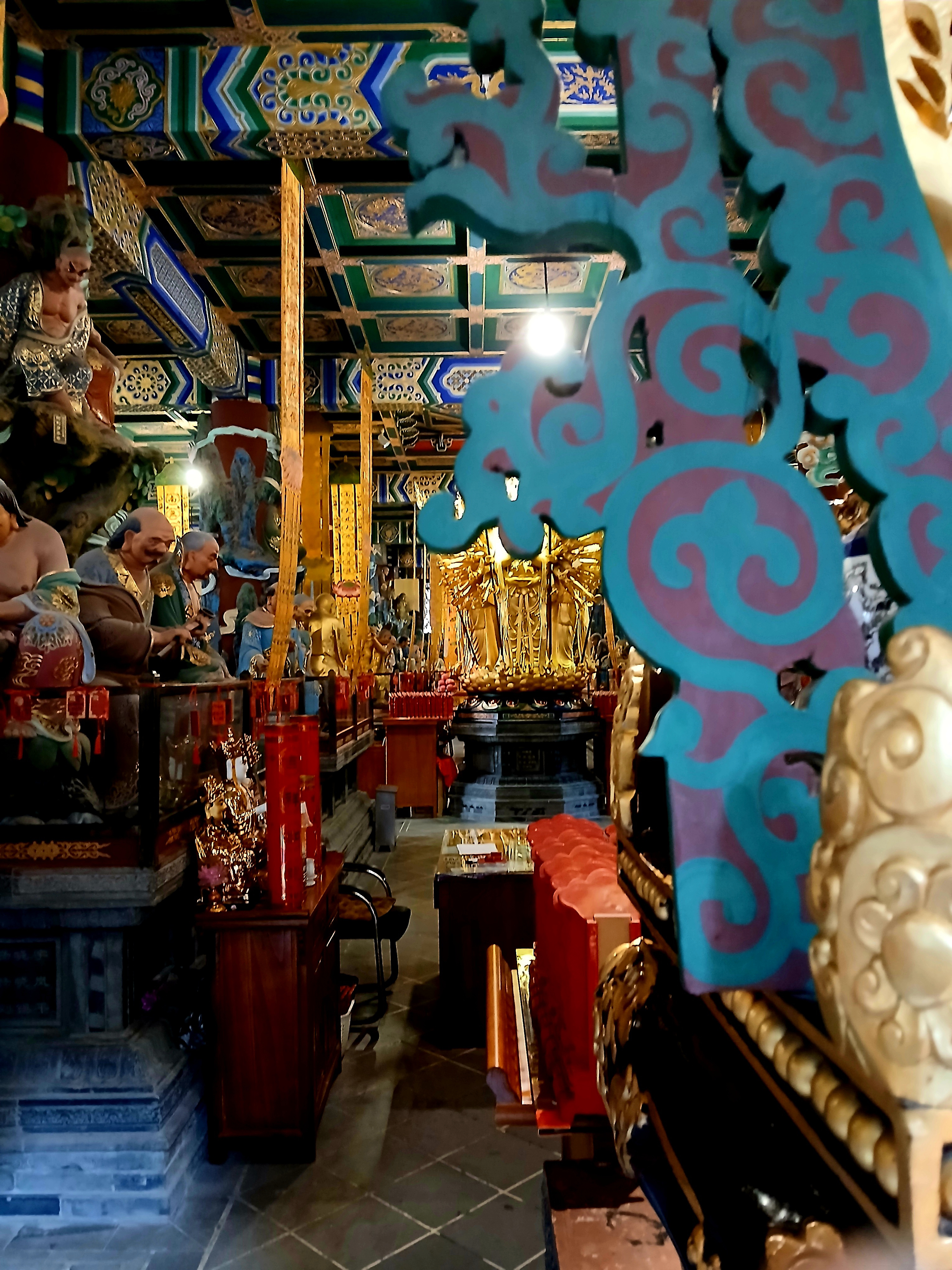
“Dopo aver svoltato proseguimmo dritte fino alla porta principale, dove mia madre mi ordinò di fermarmi e di sistemarmi i vestiti. Ogni bodhisattva, mi istruì, controllava un destino; se mi fosse prostrata davanti a quello che governava il mio, avrei avuto vita fortunata…. Se avessi superato l’ingresso del tempio col piede destro, avrei dovuto contare le cinquecento statue degli araht disposte in doppia fila iniziando da destra in base agli otto numeri relativi alla mia nascita – anno, mese, giorno e ora – senza saltarne nessuno, né scegliere da me. Quello davanti a cui mi sarei fermata sarebbe stato il mio arhat protettore. Se invece fossi entrata col piede sinistro, avrei dovuto iniziare a contare da sinistra.” ( da Figlia del Fiume di Hong Yin, traduzione dal cinese di Federica Passi, Mondadori, 1998).
After we turned, we continued straight to the front door. There, my mother ordered me to stop and adjust my clothes. She instructed me that each bodhisattva controlled a destiny and that if I prostrated myself before the one who ruled mine, I would have a lucky life. If I passed the temple entrance with my right foot, I had to count the five hundred statues of the arhat arranged in two rows, starting from the right, according to the eight numbers related to my birth—the year, month, day, and hour—without skipping any of them or choosing one for myself. The statue I stopped in front of would have been my protective arhat. If I had entered with my left foot, I would have had to start counting from the left.” (From Hong Yin’s Daughter of the River, translated by myself from the Chinese/Italian transaltion by Federica Passi, Mondadori, 1998).

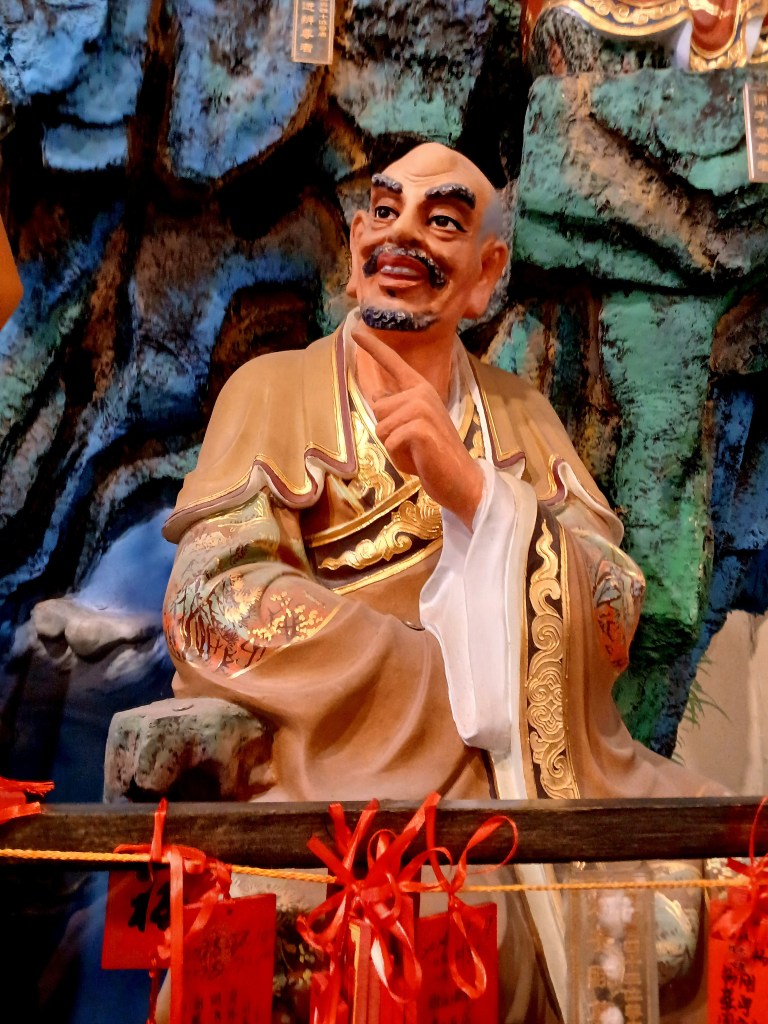

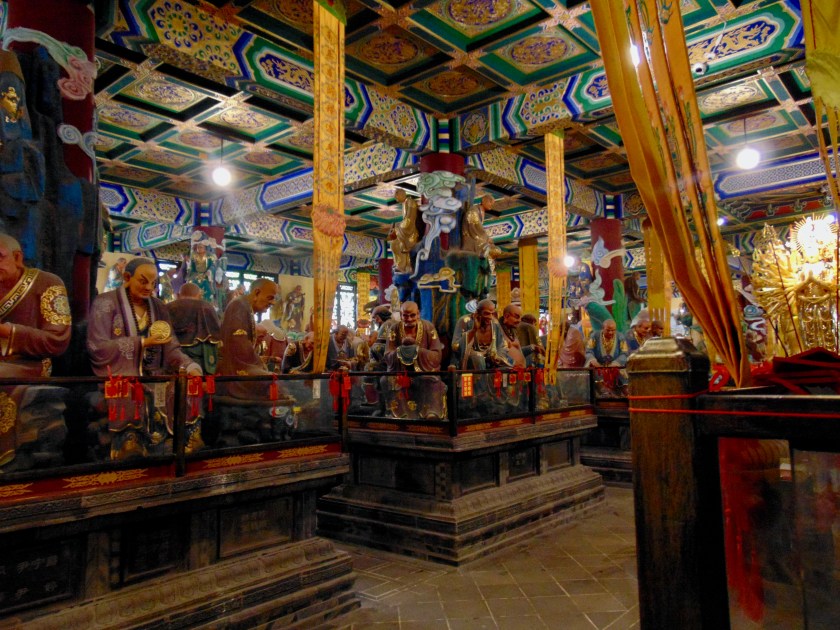
Guidato da queste indicazioni mi addentro nella inquietante Sala dei 500 Arhat (in cinese luohan), una delle tante di questo labirintico insieme di padiglioni circondato da grattacieli proprio nel cuore del distretto di Yuzong, provando a trovare il mio protettore. Ben presto però mi confondo, distratto dall’osservazione di queste statue che riproducono personaggi assai bizzarri, verosimilmente copie dal vero, ciascuno corrispondente a uno degli immortali che la tradizione buddhista mahayana identifica come intermediari tra la triste realtà umana e il Nirvana. Mi perdo nella stupefacente galleria di volti, atteggiamenti, costumi che mi costringe più volte ad interrompere la conta. Chi sarà quindi il mio protettore?
Following these directions, I entered the haunting Hall of the 500 Arhats (Luohan in Chinese), one of many in the labyrinthine complex of pavilions surrounded by skyscrapers in the heart of the Yuzong district. I was trying to find my protector. However, I soon become confused and distracted by the amazing gallery of faces, attitudes, and costumes of these statues, which depict bizarre characters that are probably copies from life. Each statue corresponds to one of the immortals that the Mahayana Buddhist tradition identifies as intermediaries between the sad human reality and Nirvana. I lose myself in the amazing gallery of faces, attitudes, and costumes, forcing me to stop counting several times. So, who will be my protector?
Prospettive luminose /Bright prospects
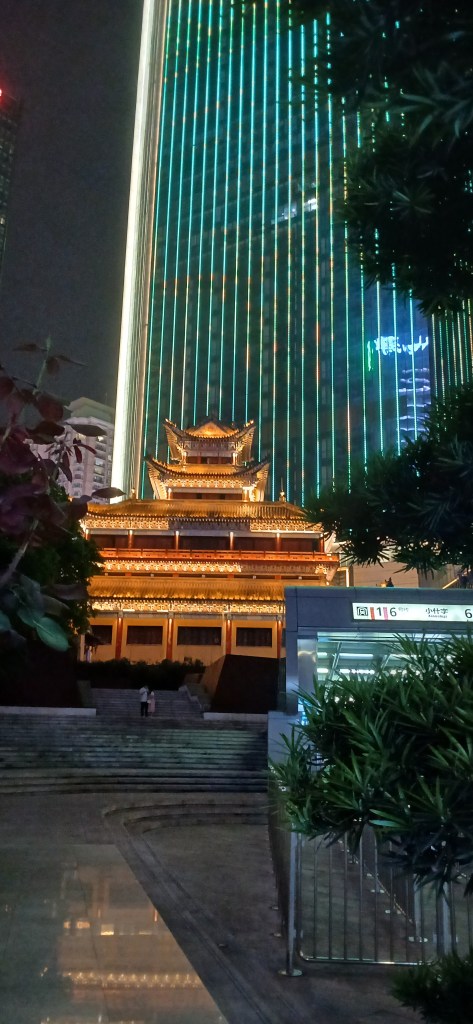
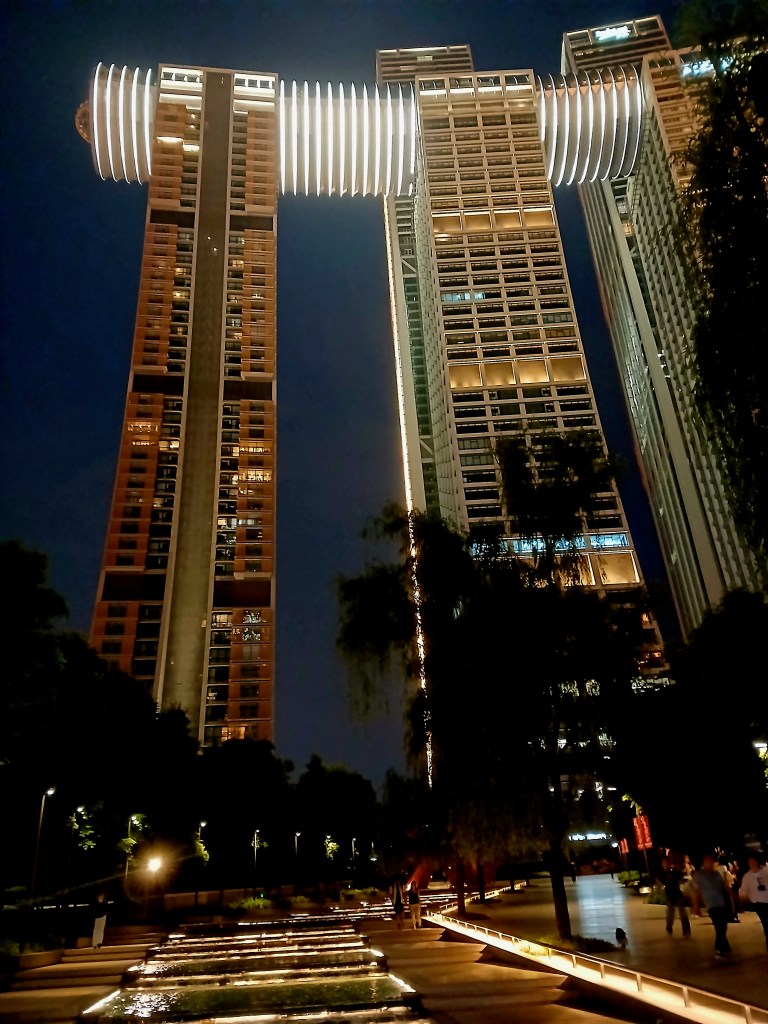
Ritorno verso sera e il tempio illuminato disegna la sua antica sagoma luminosa su uno sfondo di grattacieli dove oramai le finestre sono tutte spente. È bello vagare di notte nelle metropoli asiatiche quando il silenzio si appropria delle gigantesche cattedrali commerciali che tacciono nel buio. Allora Chongqing diventa magica con le luci che si riflettono nei suoi due fiumi equiparando edifici antichi e audaci costruzioni contemporanee in un’unica quinta sfuggente perché la particolare conformazione morfologica della città, con le rive che si impennano dalle rive dei fiumi, favorisce giochi di prospettiva sempre sorprendenti.
Ho sempre pensato che il concetto di luce sia alla base di ogni esperienza spirituale e, mentre cammino per le vie di Chongqing, provo l’azzardo di estendere il concetto a quanto incontro per le strade della città con risultati in verità non sempre appaganti.
Tuttavia continuo a sostenre che cercare il brivido della trascendenza anche dove essa apparentemente non dimora sia uno degli esercizi più stimolanti per un citypilgrim!
As evening falls, I return and see the illuminated temple casting its ancient, luminous silhouette against a backdrop of skyscrapers, all of whose windows are now dark. Wandering around Asian cities at night, when silence descends on gigantic commercial cathedrals, is wonderful. Chongqing becomes magical then, with lights reflecting in its two rivers. Ancient buildings and bold contemporary constructions are equated in a single, elusive backdrop because the city’s particular morphological conformation, with its banks rising from the riverbanks, favors ever-surprising plays of perspective.I have always thought that light is fundamental to every spiritual experience. As I walk through Chongqing’s streets, I extend this concept to what I encounter, with mixed results. Nevertheless, I maintain that seeking transcendence, even where it does not seem to exist, is one of the most stimulating exercises for a city pilgrim.
Il soffio del drago a Shibati /Dragon’s breath in Shibati
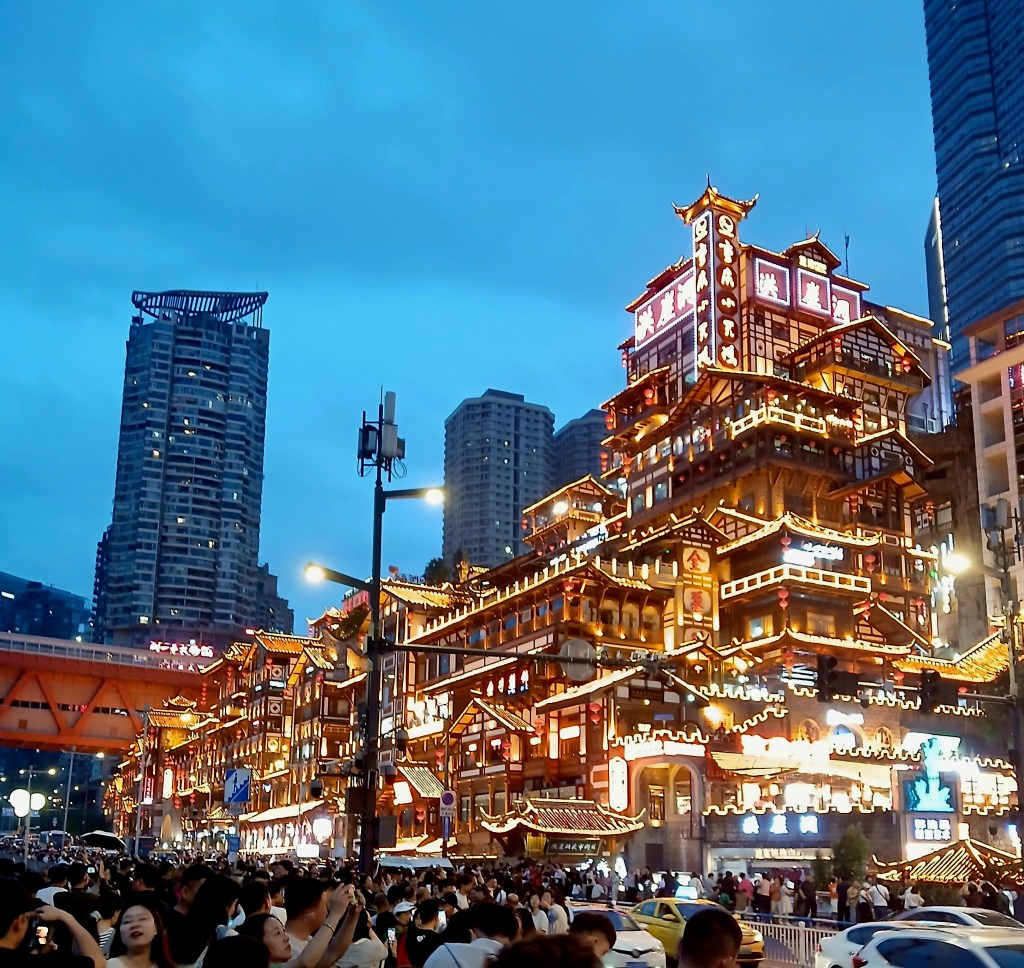
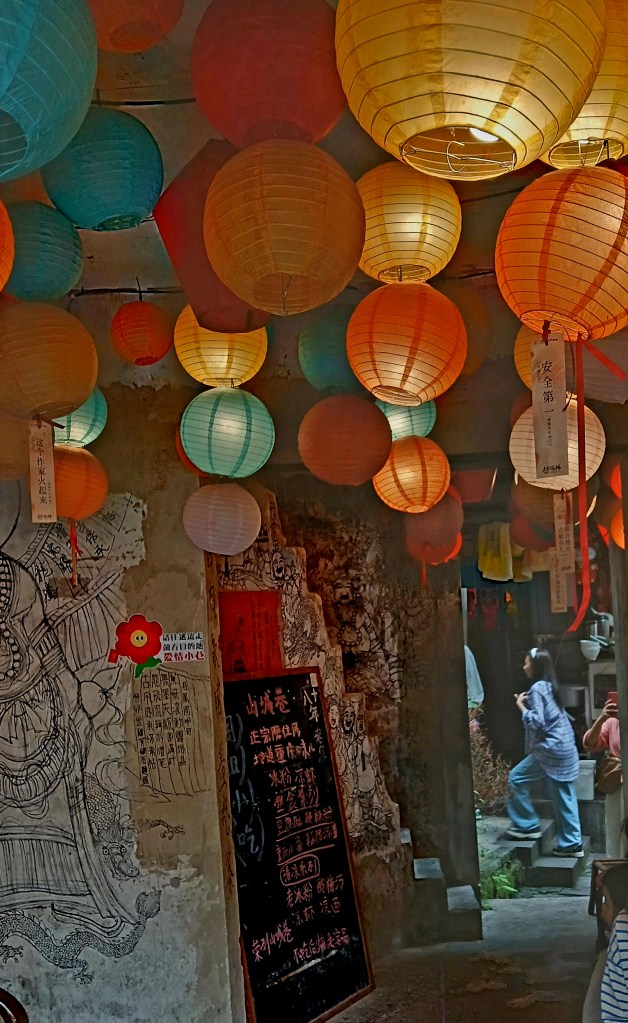
Dopo aver cercato invano il mio spirito guida nel tempio degli arhat, sfido perplesso lo sguardo di più profane divinità nel distretto di Shibati, un intrico di scalinate, piazzette e soprattutto di edifici commerciali che celebra la assai praticata religione dello shopping che qui si veste di effetti speciali, fumi, riflessi, suoni che assai contrastano con la pace del non lontano tempio.
Ne rimango disorientato ma cosa speravo di ottenere? La soddisfazione eccitata che leggo però sul volto delle centinaia di “pellegrini” che si affannano su e giù per le scale mi convince presto di essere un’eccezione. Un drago mi soffia sul volto il suo vapore sperando di inebriarmi ma non casco da tempo in simili tranelli!
After searching in vain for my spirit guide in the Temple of the Arhats, I challenged the gaze of more profane deities in the Shibati District, a maze of stairways and small squares. Above all, it is a place of commercial buildings that celebrate the widely practiced religion of shopping. Here, it is dressed up with special effects, smoke, reflections, and sounds that contrast sharply with the peace of the nearby temple.
I am disoriented. What did I hope to achieve? The excited satisfaction on the faces of the hundreds of “pilgrims” rushing up and down the stairs convinces me that I am in the minority. A dragon blows vapor in my face, hoping to intoxicate me. But I haven’t fallen for such tricks in a long time!

Scalinate perdute /Lost stairways
Raffrontata alla ortogonale Shanghai e alla concentrica Beijing Chongqing è una città inafferrabile e spiazzante, sterminata (con i suoi 32 milioni di abitanti è il comune più popoloso del mondo!)
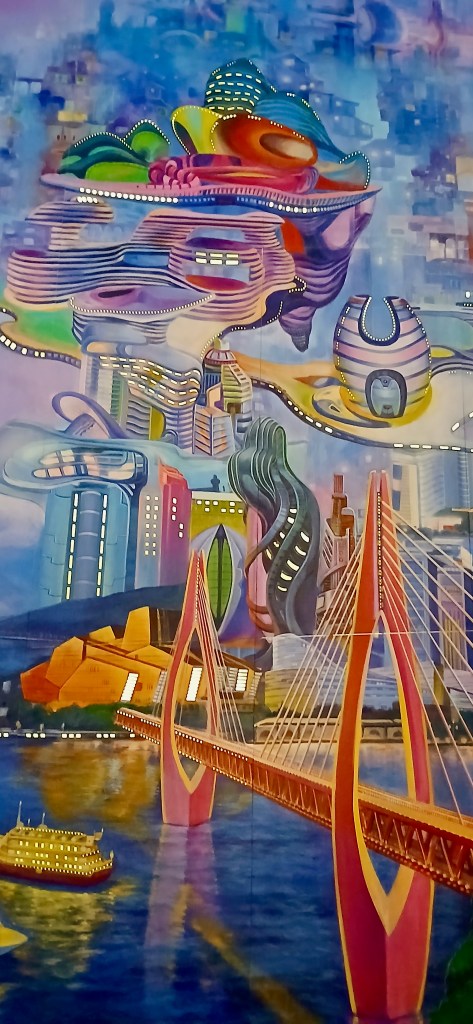
Un plastico che si trova nell’avveniristico museo dedicato alla storia della città disegna con effetti luminosi e non poco orgoglio il cuore luminoso della città contemporanea. Ricerco invano le ripide scalinate popolate di pescatori e lavandaie descritte nel romanzo di Hong Yin ma è uno sforzo vano. Scopro un ricordo, affidato a un murales che si trova nel pittoresco quartiere di Longmenhao e provo a immaginare i suoni, le fatiche, gli odori che dovevano permeare l’area attorno al possente e limaccioso Yangtze portatore di ricchezza, inondazioni, incontri con popoli diversi.
Unlike the organized Shanghai and Beijing, Chongqing is an elusive and unsettling city. With 32 million inhabitants, it is the most populous municipality in the world!
A model in the futuristic museum dedicated to the city’s history depicts the vibrant heart of contemporary life with lighting effects and no small amount of pride. I search in vain for the steep stairways populated by fishermen and washerwomen described in Hong Yin’s novel, but it is a futile effort. Instead, I discover a memory entrusted to a mural in the picturesque Longmenhao district and try to imagine the sounds, toil, and smells that must have permeated the area around the mighty, muddy Yangtze—bringer of wealth, floods, and encounters with different peoples.


Incanto al tempio Huayan /Enchantment at Huayan Temple
Mi capita poi ci attraversare un passaggio coperto nel quartiere un poco hipster di Mountain City Alley, pieno di locali e raffinate boutique ricavate in edifici storici e trovare, un sotto scala, dei graffiti di ispirazione buddista. Subito mi fanno ripensare alle statue che ho visto il giorno prima in uno dei tanti piccoli templi che compongono lo splendido e poco visitato complesso buddista di Huayan Sì, tappa imperdibile per ogni cercatore di sacro a Chongqing. Qui tra laghi, pagode e ascolto di sutra cantati da monaci buddisti ho passato una intera giornata camminando nel verde, attraversando ponti, salendo scale verso solitarie pagode e statue buddiste.
As I was walking through the slightly hipster neighborhood of Mountain City Alley, which is full of bars and upscale boutiques housed in historic buildings, I happened upon Buddhist-inspired graffiti under the stairs. It immediately reminded me of the statues I had seen the day before at Huayan Si, a splendid and little-visited Buddhist complex made up of many small temples. It is a must-see for anyone seeking the sacred in Chongqing. There, surrounded by lakes, pagodas, and Buddhist monks chanting sutras, I spent the day strolling through lush greenery, crossing bridges, and climbing stairs to secluded pagodas and Buddhist statues.


Sapori contrastanti /Contrasting flavors
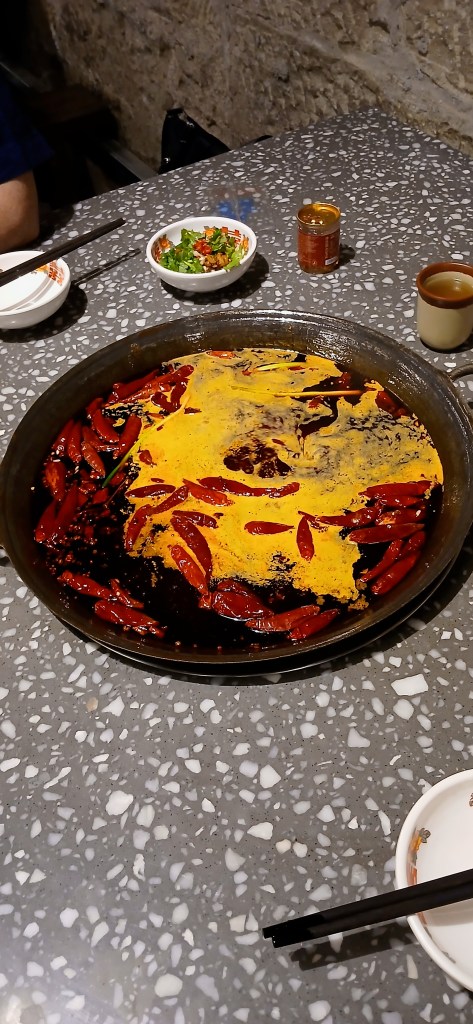
Mi sono fermato per una sosta nel ristorante vegetariano del complesso Huayan Sì che propone una raffinata e gustosa cucina buddista (foto sotto a destra). Sapori decisi e delicati, leggerezza e ingredienti variopinti. Che differenza con quanto propone un altro dei riti laici di Chongqing: la degustazione del cibo per cui la città e conosciuta nel mondo ovvero la micidiale Chongqing Hot Pot! Non si può infatti sfuggire alla tentazione di sfidare la terribile la pentola colma di olio ribollente e piccante oltre ogni immaginazione in cui immergere ogni tipo di pietanza, dalle carni più estreme alle semplici verdure. Un luogo di grande suggestione in cui farlo è il ristorante allestito in uno dei bunker scavati ai tempi della resistenza ai bombardamenti giapponesi! Indossate un bavaglino, chiudete gli occhi e via…
I stopped for a break at the vegetarian restaurant in the Huayan Sì complex, which serves refined and delicious Buddhist cuisine (see photo below). The flavors are strong yet delicate, and the ingredients are light and colorful. This is quite different from another of Chongqing’s secular rituals: tasting the food for which the city is known worldwide—the deadly Chongqing Hot Pot! It’s hard to resist the temptation to try the pot filled with boiling oil and spices beyond imagination, into which you dip all kinds of food, from extreme meats to simple vegetables. One evocative place to try it is the restaurant set up in a bunker dug during the resistance to Japanese bombing. Put on a bib, close your eyes, and dive in!

Il gioco delle porte /Doors as a game
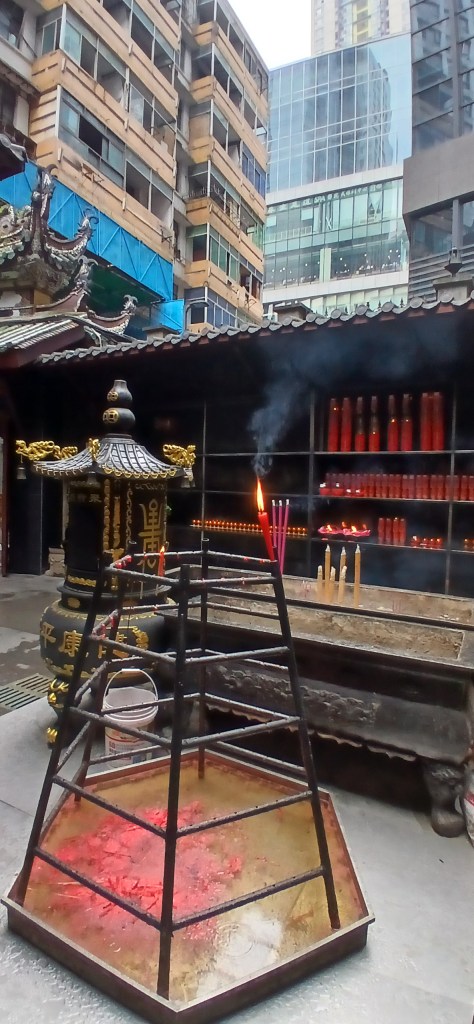
Addentrandomi tra i grattacieli di Yuzong vedo una piccola porta che parrebbe indicare l’ingresso a un tempio. Entro e mi ritrovo in un piccolo spazio ricavato tra palazzi residenziali in cui un numero sorprendente di persone prega, fa offerte, consulta indovini ma soprattutto acquista rimedi naturali nella austera farmacia di medicina tradizionale. Il profumo di erbe si mescola con quello degli incensi e ancora una volta, come avviene spesso in ogni città del mondo, basta varcare una porta per trovarsi in uno spazio speciale, isolato dal tempo, in cui non è tanto la bellezza o l’originalità di quel che vedi a colpirti quanto la possibilità stessa di esserci.
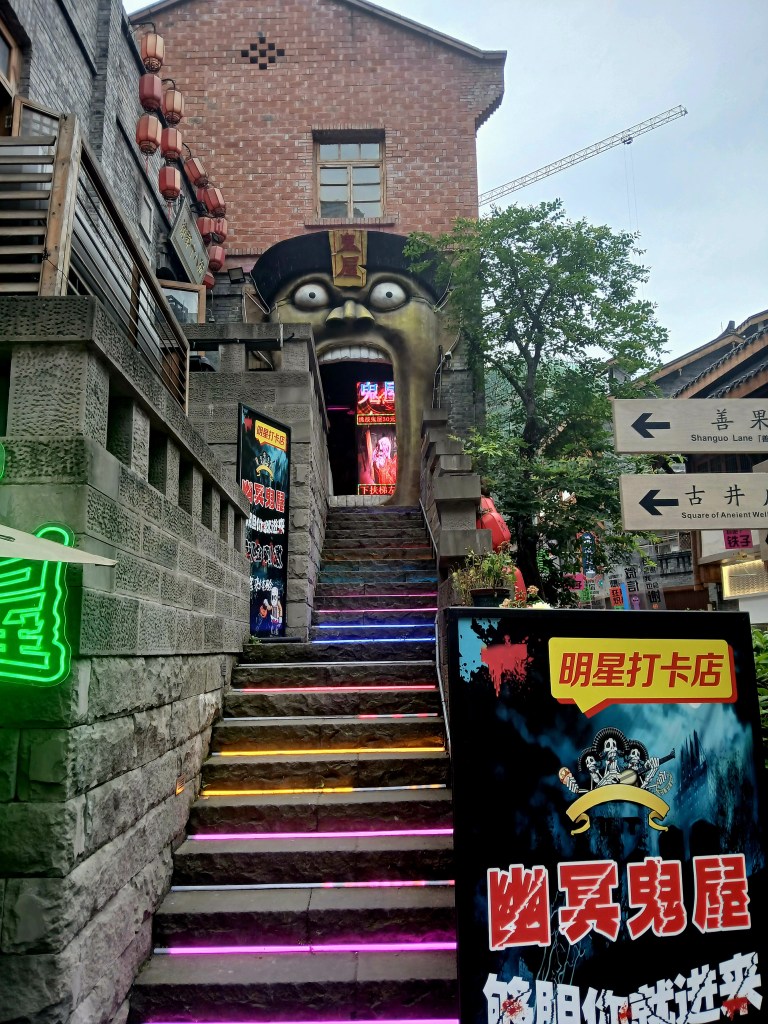
Varcando un altra porta aperta nella bocca gigantesca di un mandarino zombie si penetra in un diverso angolo di irrealtà: se nel piccolo tempio si era andati a ritroso qui si viene spinti in avanti tra frenesie elettroniche, effetti speciali, suggestioni aliene. Gli spazi a Chongqing si celano e si svelano in modo assolutamente casuale come si addice a una città illogica e rampante, nel senso più completo del termine, dove raggiungere ogni luogo costa fatica.
As I walk through the streets of Yuzong among the skyscrapers, I notice a small door that appears to be the entrance to a temple. I enter and find myself in a small space nestled between residential buildings. A surprising number of people are praying, making offerings, and consulting fortune tellers. Most of all, they are purchasing natural remedies at the traditional medicine pharmacy. The scent of herbs mingles with that of incense, and once again, as often happens in cities around the world, I find myself in a special space, isolated from time. It’s not so much the beauty or originality of what I see that strikes me, but rather the very possibility of being there.
Passing through another open door, this one in the giant mouth of a zombie mandarin, I enter a different corner of unreality. If the small temple pushed me backwards, here I am pushed forward amid electronic frenzy, special effects, and alien suggestions. The spaces in Chongqing are hidden and revealed completely randomly, as befits an illogical, rampant city in the truest sense, where reaching any place requires effort.
Scale, scale mobili, ascensori /Stairs, escalators, elevators
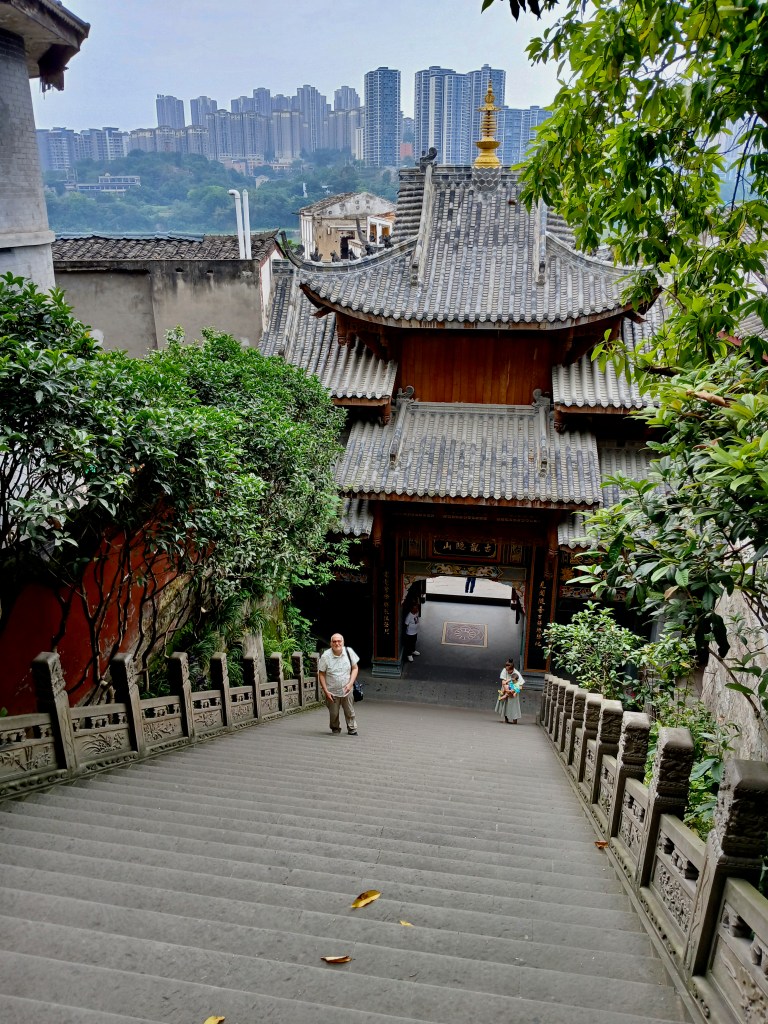
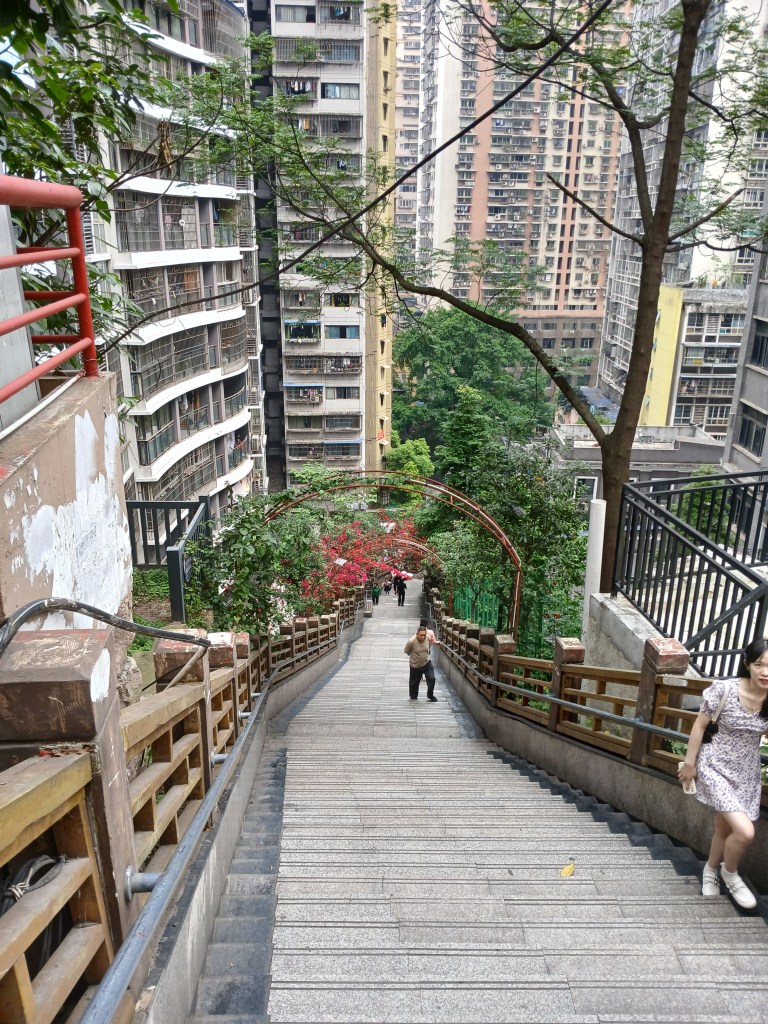
Ovunque si vada a Chongqing si incontrano scale il che non ne fa una meta ideale per pigroni o viziati cittadini. Si fanno scale per raggiungere templi come quello su più livelli che si trova nel sobborgo di Chiqikou, escursione imperdibile anche per chi resta a Chongqing pochi giorni, o semplicemente per raggiungere due strade che corrono parallele sulle pendici delle colline. Per fortuna esistono numerose scale mobili e qualche ascensore che permettono si superare i dislivelli senza troppa fatica anche se chi segue questo blog conosce la mia posizione sul salire le scale come esperienza spirituale.
(Salire (o scendere) una scala. Allenare lo spirito 8/Climbing (or descending) a ladder. Spiritual training 8.)
No matter where you go in Chongqing, you will encounter stairs. This makes it an ideal destination for active travelers, but not for lazy or spoiled city dwellers. You have to climb stairs to reach temples, such as the multilevel one in the Chiqikou suburb, which is an unmissable excursion even for those staying in Chongqing for only a few days. You also have to climb stairs simply to reach two parallel roads on the hillsides. Fortunately, there are numerous escalators and a few elevators that allow you to overcome the height differences without too much effort. However, those who follow this blog know my stance on climbing stairs as a spiritual experience.
(Climbing or descending a ladder. Spiritual training 8.)
Ma Chongqing è anche… /But Chongqing is also…
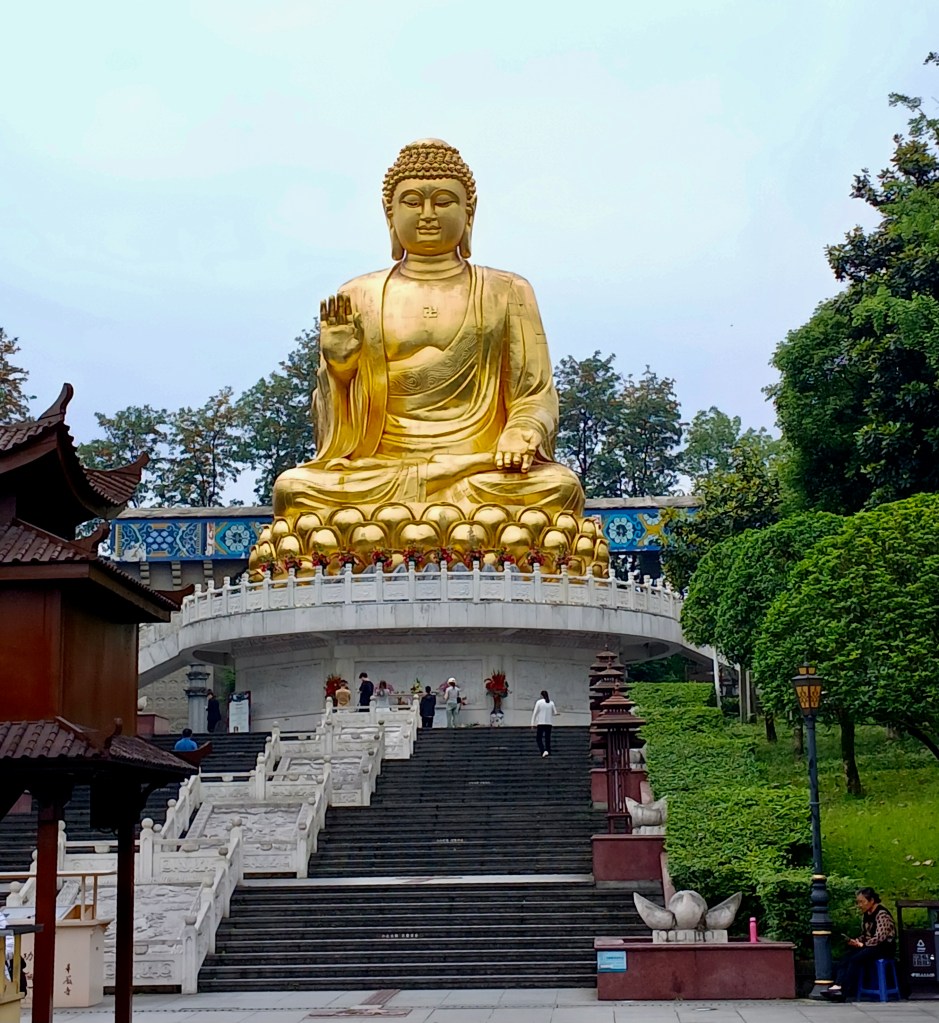
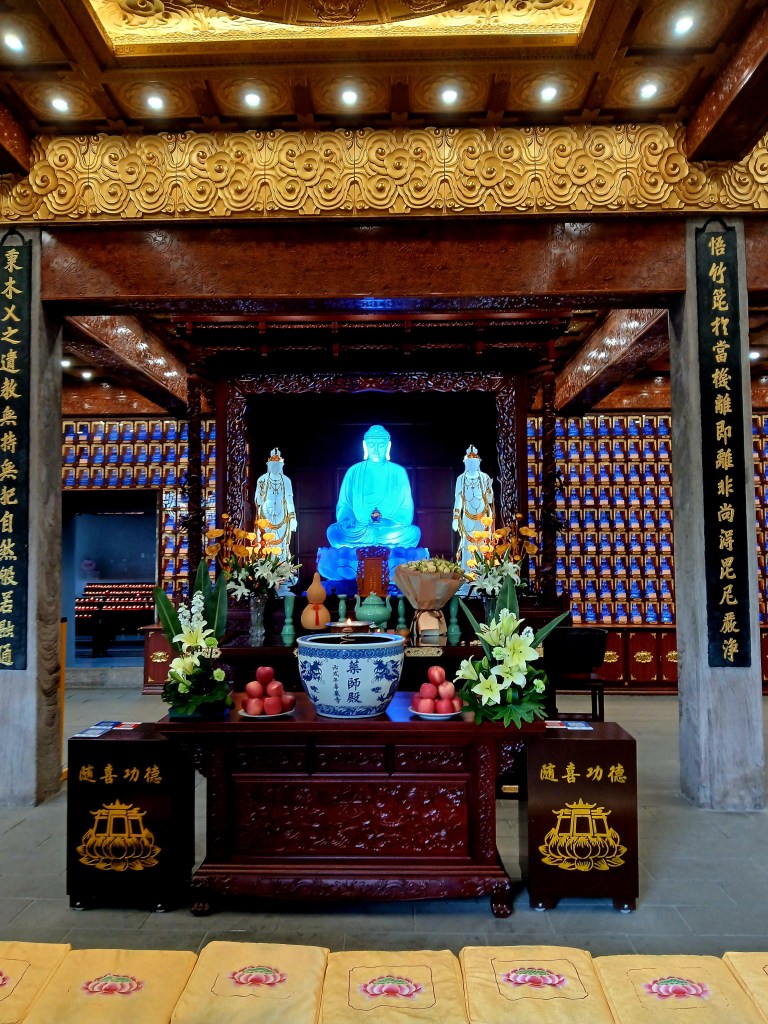
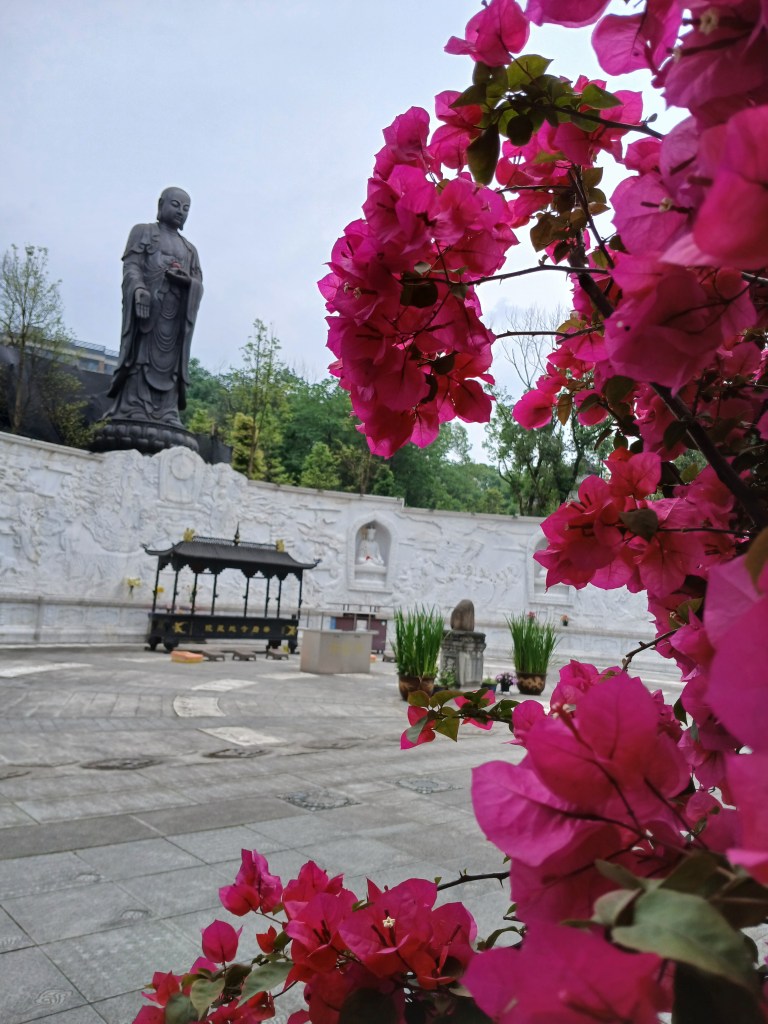
… Buddha giganti, Buddha luminosi, Buddha benedicenti
… Giant Buddhas Luminous Buddhas Blessing Buddhas

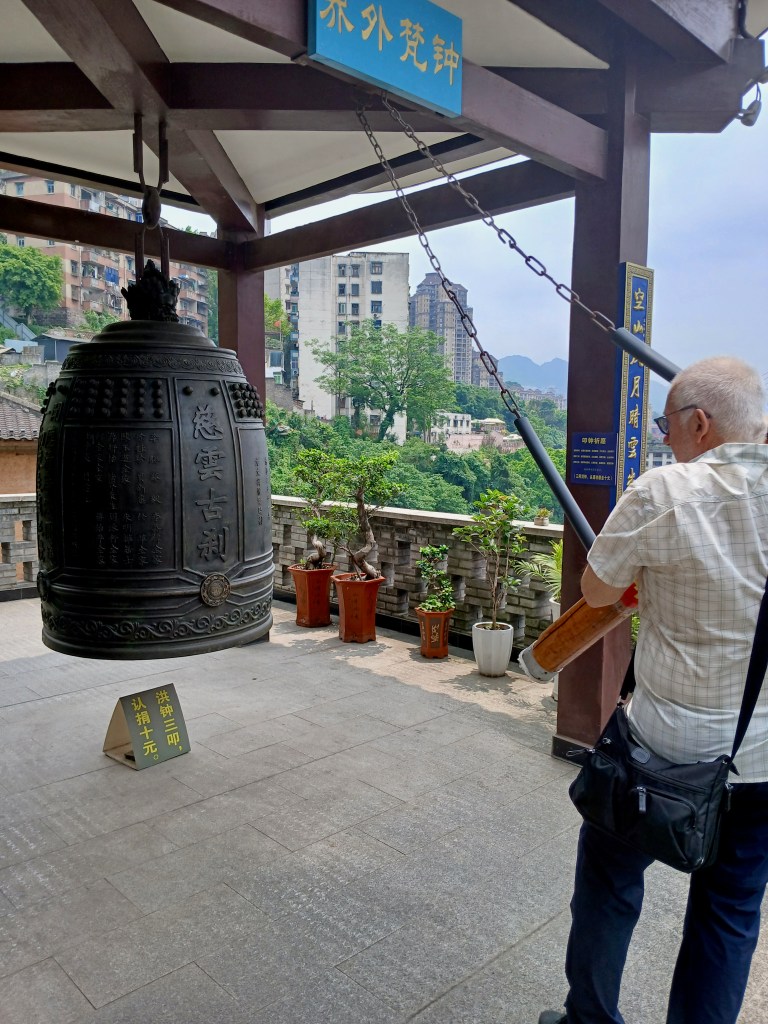
… templi verticali sul cui tetto si può ammirare lo Yangtze e suonare una campana per propiziarsi l’aiuto divino (Ciyun Temple).
… vertical temples on whose roofs you can admire the Yangtze River and ring a bell to invoke divine help (Ciyun Temple).
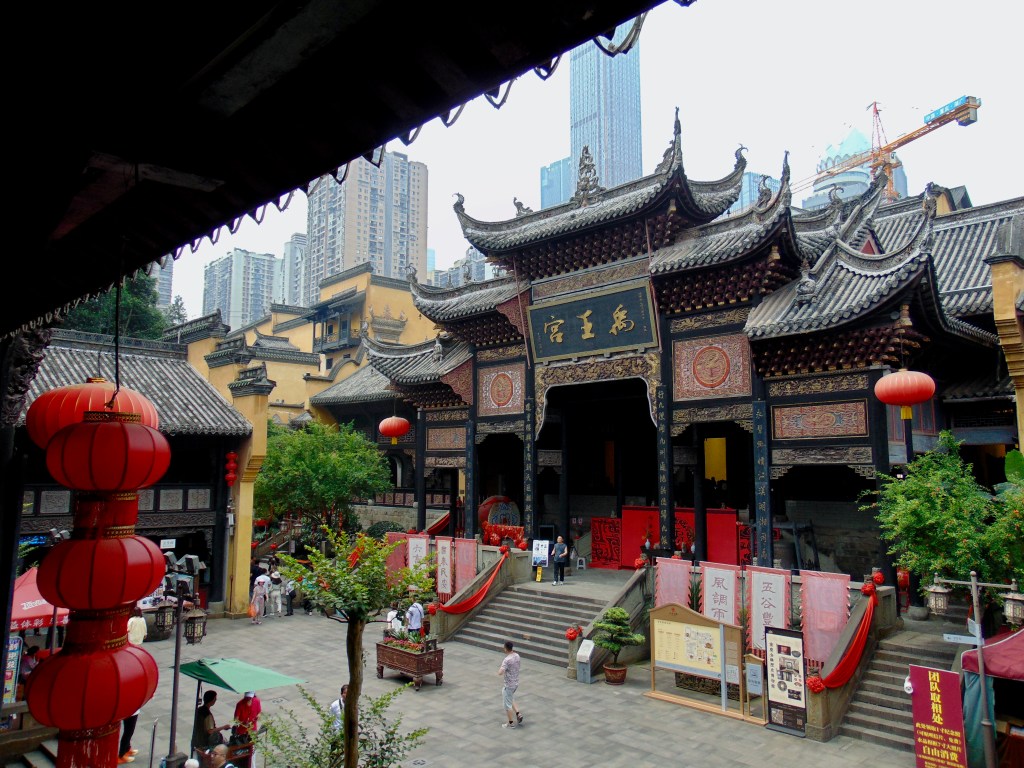
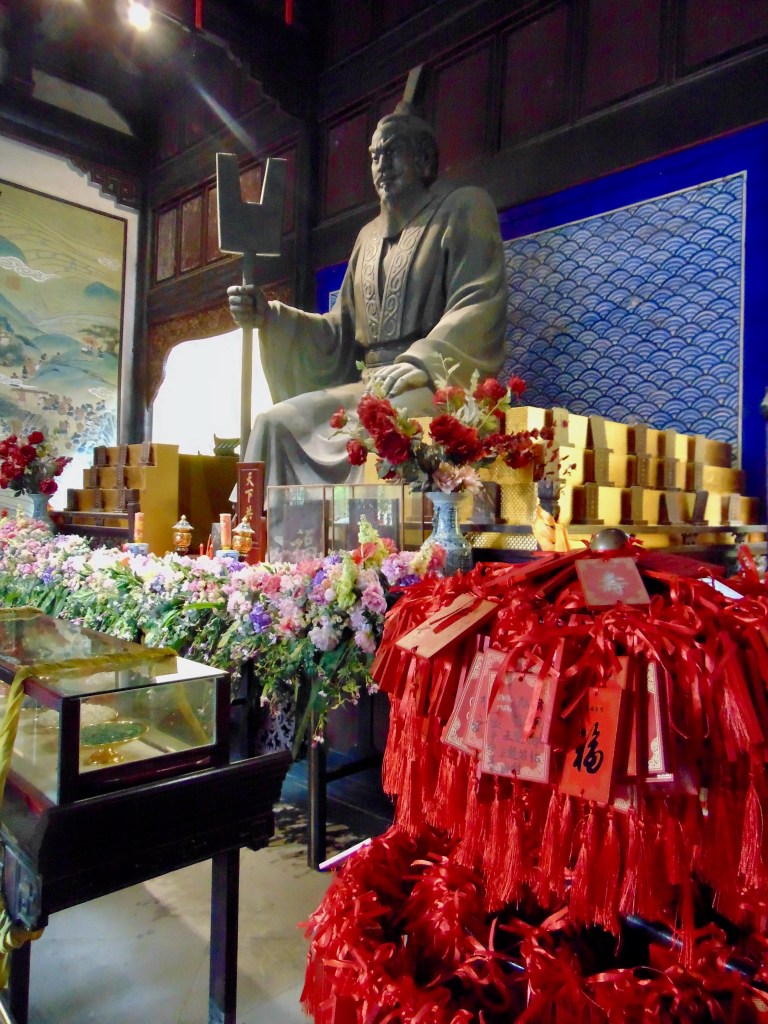
… e il grande e spettacolare complesso di Huguang Guild Hall, spazio riservato alle corporazioni di mercanti provenienti da altre province dove si trovano templi delle loro divinità tutelari.
… and the large and spectacular Huguang Guild Hall complex, a space reserved for merchant guilds from other provinces, where temples dedicated to their patron deities are located.
 The City Pilgrim